St. Louis Style Pizza

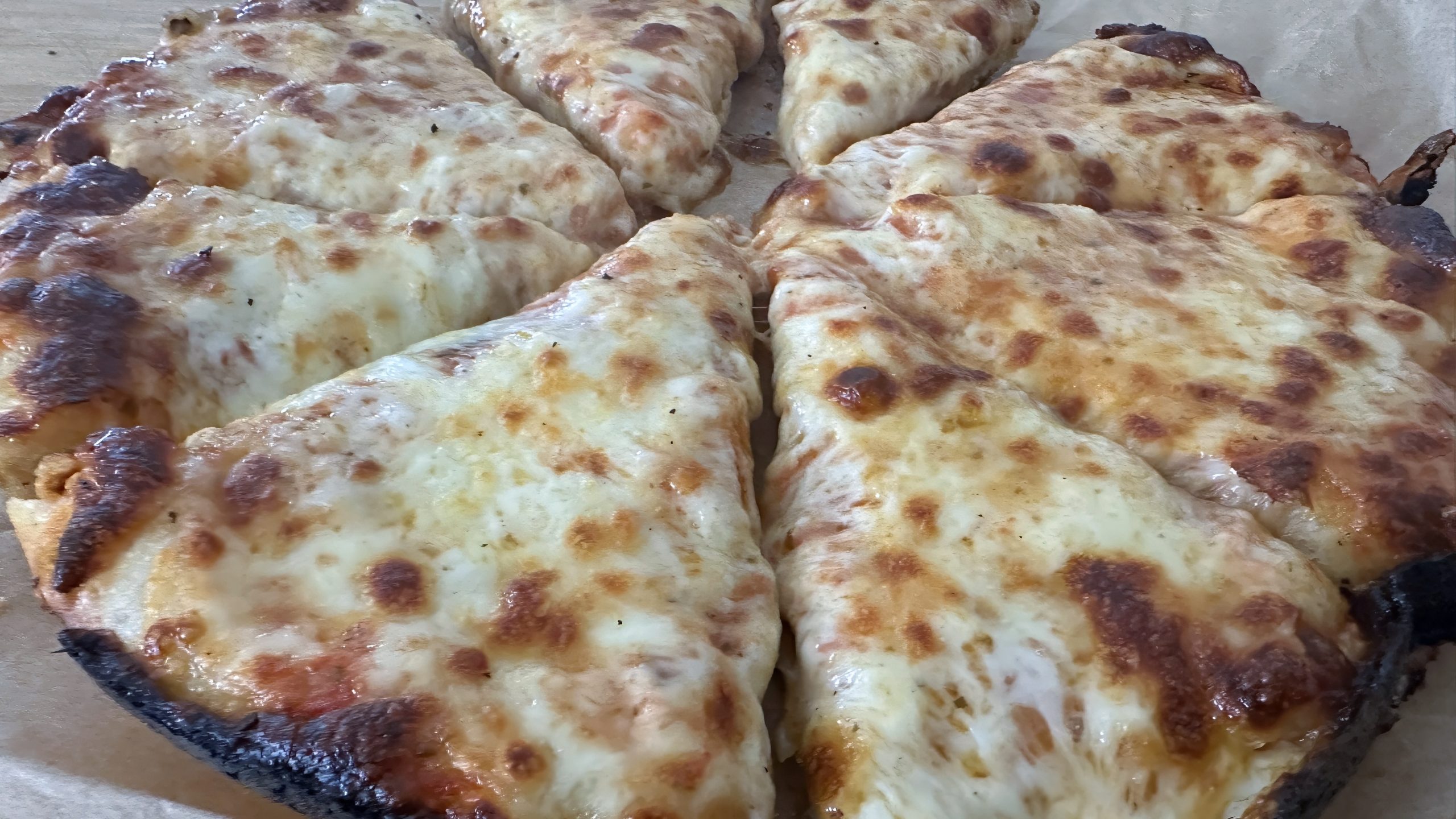
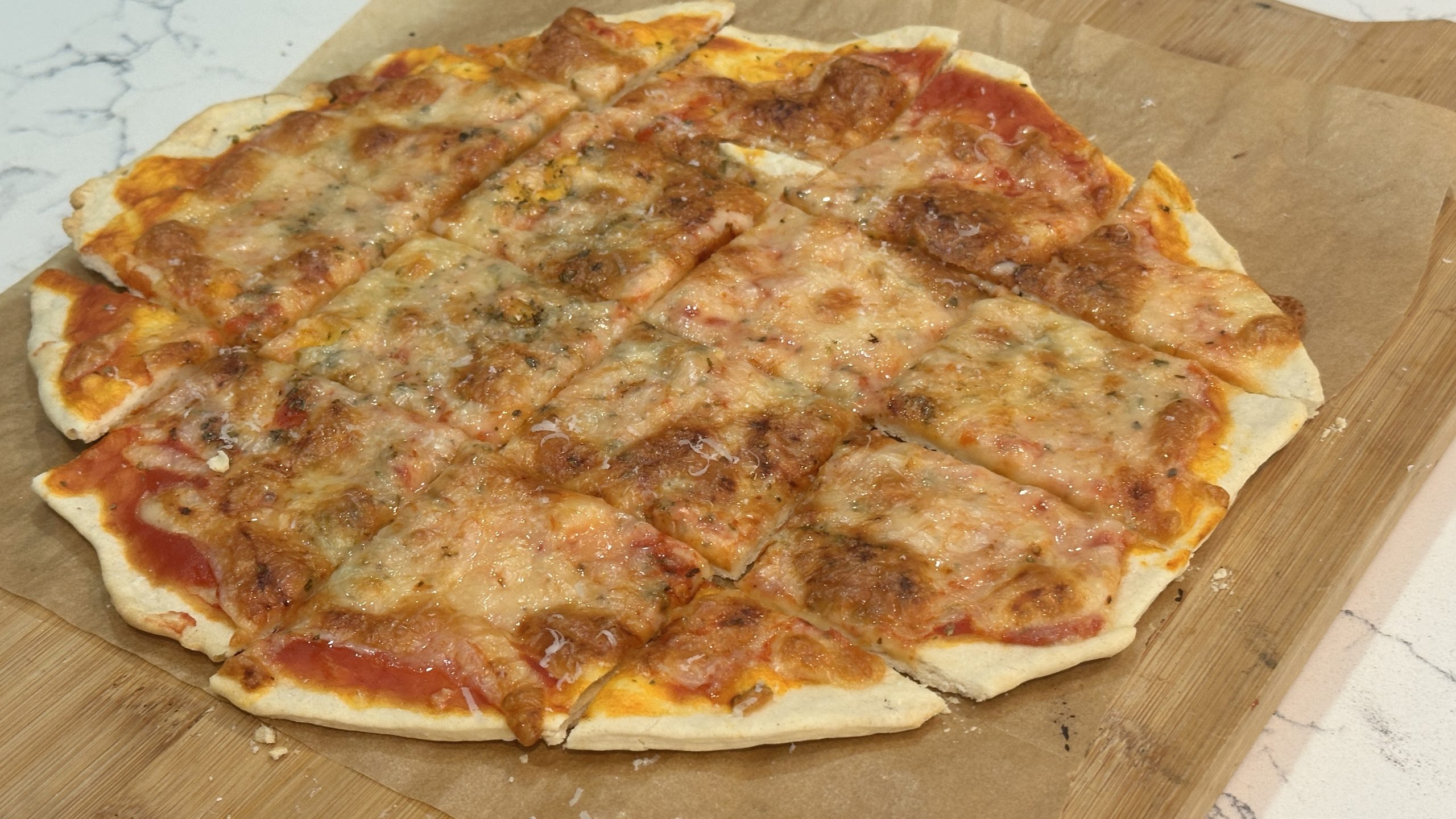
If you’ve never had St. Louis-style pizza, get ready for something totally unexpected. This Missouri-born creation defies every traditional pizza rule in the best way possible—starting with the fact that it’s cut into squares, not slices. That’s right, in St. Louis, pizza isn’t served in the familiar triangle shape but instead in a grid of bite-sized squares, thanks to what’s known as the “party cut” or “tavern cut.” But the unique slicing method is just the beginning of what sets this style apart.

First and foremost, the crust is unlike any other. Instead of a chewy, airy dough, St. Louis-style pizza has an ultra-thin, cracker-like crust that snaps rather than bends. There’s no yeast involved, which means the dough stays flat and crispy, giving each bite a satisfying crunch. This makes it one of the few pizzas that you definitely cannot fold—and honestly, you wouldn’t want to. The crisp texture is the backbone of the entire experience.

Then there’s the cheese—and this is where things get really St. Louis. Unlike most pizzas that use mozzarella, St. Louis-style pizza is topped with Provel cheese, a hyper-local blend of cheddar, Swiss, and provolone. Provel is an acquired taste—it’s ultra-melty, creamy, and has a slight smoky, buttery flavor. While some people love its gooey texture, others find it almost too processed. But for St. Louisans, Provel is non-negotiable. You’ll even find it in toasted ravioli, another local specialty. If you order a St. Louis-style pizza outside of Missouri, chances are they’ll swap in mozzarella, but if you want the real deal, it’s gotta be Provel.

As for the sauce, St. Louis keeps things sweet and tangy. Unlike the bright, acidic sauces of Neapolitan or New York-style pizza, St. Louis pizza sauce often has a touch of sugar, creating a slight sweetness that balances the saltiness of the Provel cheese. It’s usually spread in a thin layer, so the sauce never overwhelms the crispy crust.

And finally, we have the toppings. Since the crust is thin and crispy, St. Louis-style pizza can handle a lot of toppings without getting soggy. Popular choices include Italian sausage, pepperoni, mushrooms, onions, and green peppers, though some places get more creative. One classic St. Louis topping combo is bacon and onion, a salty-sweet mix that plays well with the Provel.

While the “who invented St. Louis pizza?” debate continues, one name always comes up: Imo’s Pizza. Founded in 1964 by Ed and Margie Imo, this family-owned business turned the local style into a full-blown institution. Today, Imo’s is to St. Louis what Domino’s is to the rest of America—a citywide staple with dozens of locations serving up thin, crispy, Provel-smothered pies.

Outside of Missouri, St. Louis-style pizza remains a bit of a cult favorite. Some people can’t get enough of the crispy crust and melty Provel, while others struggle to embrace its unconventional approach. But love it or hate it, St. Louis-style pizza is one of the most distinct and proudly regional pizzas in the U.S. It’s not trying to be New York, Neapolitan, or Chicago deep-dish—it’s doing its own thing, unapologetically.

So, if you ever find yourself in St. Louis, forget the debate over whether Provel is real cheese, embrace the party cut, and dive into a crispy, cheesy, square-shaped bite of Missouri’s finest. Just don’t ask for a slice.
Fried Pizza (Fritta)

In the narrow alleyways of Naples’ Quartieri Spagnoli, pizza fritta emerged during World War II as necessity transformed crisis into culinary innovation. When Allied bombing damaged many wood-fired ovens and ingredients became scarce, Neapolitan pizzaioli turned to a different cooking method – deep frying. What began as a wartime adaptation became a cherished street food tradition that persists today.

Pizza fritta starts with the same dough as traditional Neapolitan pizza, but instead of being baked, it’s sealed into a half-moon shape and immersed in boiling oil. The filling traditionally consists of ricotta, small pieces of ciccioli (pork), and black pepper, though modern versions might include provola, salami, or tomato sauce. The frying process creates a golden, crispy exterior while steaming the filling inside, resulting in a perfect contrast of textures.

This style of pizza gained fame through the “friddarielle” – women who sold pizza fritta from street stands, often on credit to hungry workers. The most famous was Fernanda Speranza, known as “Queen of the Fried Pizza,” who fed thousands during Naples’ post-war reconstruction. These vendors would call out “Oggi a otto!” (Pay in eight days!), allowing customers to eat now and pay later – a system of trust that helped sustain communities through hard times.

In modern Naples, pizza fritta exists in two main forms: the traditional filled half-moon and the open-faced montanara, where the dough is fried then topped with tomato sauce and cheese before a quick finish in the oven. Both styles represent Naples’ ability to elevate humble ingredients into celebrated dishes through technique and tradition.

The renaissance of Neapolitan pizza has brought renewed attention to pizza fritta, with high-end restaurants now offering refined versions alongside street vendors maintaining traditional preparations. Yet its essence remains unchanged – a testament to Neapolitan ingenuity and resilience, transformed from wartime necessity into culinary heritage.

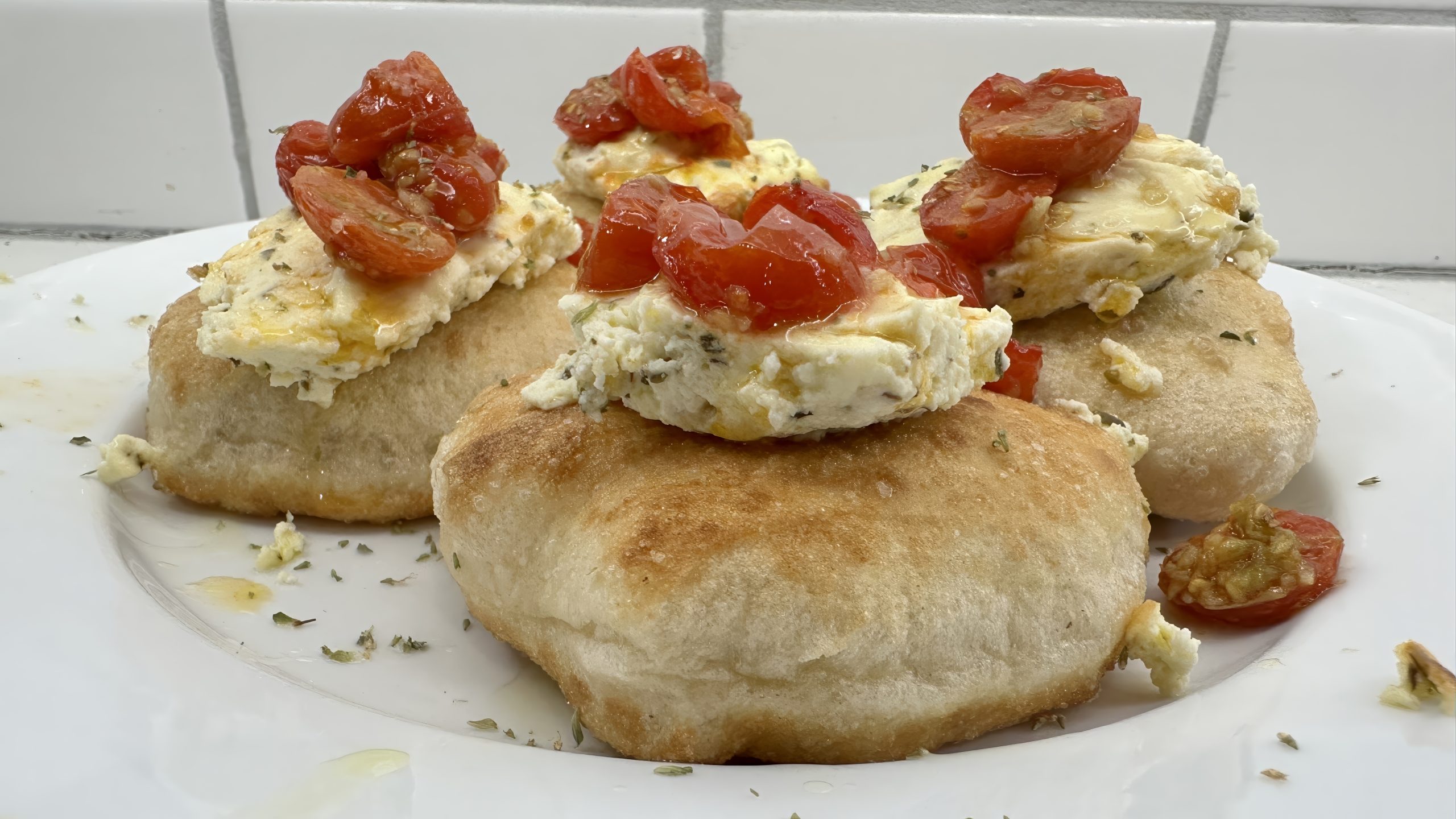
I had my first true Pizza Fritta in Naples and it was transcendent. I know that sounds like hyperbole but it was crispy and soft at the same time and the tomato and cheese toppings were both salty and sweet and overall it was what people think of when they say “taste explosion” – I knew I wanted to recreate it at home but kept delaying it in favor of easier pizzas. I knew I wanted to use the roasted tomatoes similar to what I had in Italy but wanted to jazz it up. I decided some baked ricotta would be a nice salty counterpoint to the sweet tomatoes and I was right. This really was an easy thing to make and it was delicious. I ate three before I remembered to leave a couple for my wife.

Marinara Pizza

Marinara Pizza: The Essential Neapolitan Classic

In the bustling port city of Naples, the marinara pizza stands as a testament to simplicity’s enduring appeal. Despite its seafaring name, this pizza contains no fish or seafood. Instead, it earned its moniker from the mariners’ wives who would prepare these simple, cheese-less pizzas for their husbands returning from long fishing voyages in the Bay of Naples. The marinara’s ingredients – tomatoes, garlic, oregano, and olive oil – were shelf-stable, making it the perfect provision for sea journeys.

The marinara represents pizza in its most elemental form. The dough, made only with flour, water, salt, and yeast, is stretched whisper-thin in the center while maintaining a puffy cornicione (rim). The sauce consists of hand-crushed San Marzano tomatoes, their natural sweetness enhanced by sea salt. Fresh garlic, sliced or minced, provides punch, while dried oregano adds an herbaceous note that intensifies during baking. A drizzle of extra virgin olive oil completes the composition.

This minimalist approach demands technical perfection. With no cheese to mask imperfections, each element must be impeccable. The dough must develop complex flavors through long fermentation. The tomatoes must strike the perfect balance between sweet and acidic. The garlic must be sliced thin enough to cook in the pizza’s brief time in the 900°F wood-fired oven.

The marinara holds special status as one of only two pizzas recognized by the Associazione Verace Pizza Napoletana, alongside the Margherita. It represents not just Neapolitan cuisine but the city’s maritime history and working-class roots. In its absence of expensive ingredients like cheese or cured meats, it reminds us that true culinary greatness often emerges from necessity rather than luxury.

Today, as pizza evolves with elaborate toppings and innovative techniques, the marinara remains unchanged – a benchmark against which a pizzaiolo’s skill can be measured. With nowhere to hide flaws, it demands and rewards mastery of the fundamentals. In an age of excess, its restraint feels revolutionary, proving that four simple ingredients, when handled with care and respect, can create something transcendent.

Argentinian Pizza

In Buenos Aires, pizza isn’t just food – it’s a cultural institution that rivals the city’s famed steakhouses. Born from the massive Italian immigration wave of the late 19th and early 20th centuries, Argentine pizza evolved into something distinctly its own, reflecting both its Italian roots and the abundance of its new home.

The defining characteristic of Argentine pizza is its cheese – and lots of it. While Neapolitan pizzas use a restrained amount of mozzarella, Argentine pizzerias pile on thick layers of mozzarella, often using locally produced quesillo that creates the signature chewy, stretchy texture locals call “correoso.” The cheese doesn’t just cover the pizza; it blankets it completely, often approaching a half-inch in thickness.

The crust provides another point of departure from Italian tradition. Argentine pizza bases are thicker than Neapolitan style but thinner than Sicilian, with a texture closer to focused bread. This hearty base is necessary to support the generous toppings that characterize the style. The dough is often enriched with fat, creating a more tender crust that still maintains enough structure to handle the weight of its abundant toppings.

Perhaps most distinctive is the “media masa” (half dough) variant, where the usual crust is doubled in thickness. This style, particularly popular in Buenos Aires’ pizzerias, creates something closer to a cheese-topped focaccia than a traditional pizza. It’s often served as a starter or late-night snack, demonstrating how thoroughly pizza has been integrated into Argentine dining culture.

Toppings reflect local tastes and ingredients. The “fugazza,” a direct descendant of Genoese focaccia, comes loaded with sweet onions and sometimes without tomato sauce. The “fugazzeta” adds that distinctive thick layer of cheese to the onion-laden base. Another popular variant is the “fainá,” a chickpea flatbread served atop the pizza slice – a custom that originated in Genoa but has been preserved in Argentina while fading in its homeland.

The pizza is typically eaten at traditional pizzerias where it’s served on metal trays and often consumed standing at high tables. Unlike the individual pies common in Italy and America, Argentine pizzas are generally large and shared, reflecting the communal dining culture of the country. The slices are cut smaller than their American counterparts, encouraging sharing and sampling of multiple varieties.

This adaptation of Italian pizza represents more than just culinary evolution – it’s a metaphor for Argentine culture itself, where European traditions were transformed by local abundance and preferences into something uniquely porteño. In every overflowing slice of mozzarella and generous portion of fainá, you’ll find the story of immigration, adaptation, and the creation of a new culinary tradition that pays homage to its roots while proudly asserting its own identity.

This went over very well – who knew that loading an entire block of cheese onto a pizza would be a hit? The dough was chewy but with crispy edges providing a counter texture. The sauce was tangy and reminiscent of NY pizza. It was one of the pizzas that is likely to enter a more permanent rotation once I go back to my regularly scheduled pizza program.

Detroit Pizza

Detroit-Style Pizza: Motor City’s Square Slice Revolution

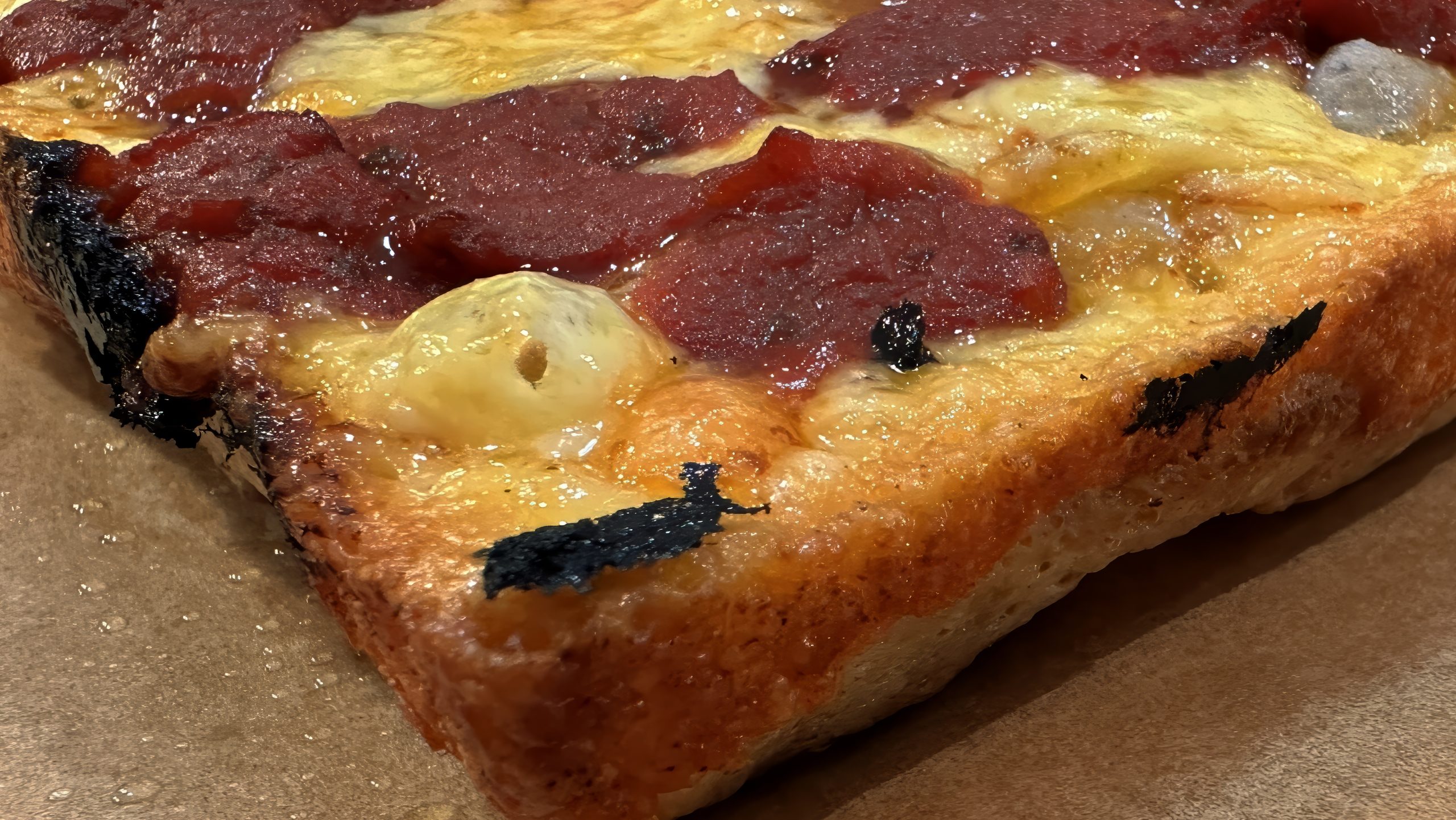
In the pantheon of American pizzas, Detroit-style stands apart – a testament to industrial ingenuity and the city’s automotive heritage. Born in the post-war boom of the 1940s, this distinctive square pie first emerged at Buddy’s Rendezvous, where automotive parts trays, originally used to store small machine parts, were repurposed as pizza pans. These blue steel pans, with their high sides and excellent heat conductivity, would become the cornerstone of a new pizza tradition.

What sets Detroit-style pizza apart is its architectural approach to layering. Unlike traditional pizzas, it begins with a thick, high-hydration dough that, when baked, creates a light, airy crumb structure reminiscent of focaccia. The high edges of the industrial pans allow the dough to climb during baking, creating a caramelized crust that pizza enthusiasts call “the crown.” This crust, when properly executed, offers a satisfying crunch that gives way to a chewy interior.

Perhaps most iconoclastic is the layering sequence. Wisconsin brick cheese, a semi-soft cheese with a high butterfat content, is cubed rather than shredded and spread edge to edge. During baking, the cheese melts into every corner of the pan, creating the signature caramelized edges that Detroit pizza is famous for. The sauce, rather than forming the base, is typically applied last in thick, bold stripes across the top – a technique known as “racing stripes” in homage to the city’s automotive culture.

This reversal of the traditional pizza construction isn’t mere novelty. The cheese-first approach allows the fats to protect the dough from becoming soggy, while its direct contact with the hot pan creates a lacy, crispy cheese crust that has become the style’s hallmark. The late application of sauce ensures it remains bright and vibrant, providing a fresh contrast to the rich, caramelized underpinnings.

The style remained a regional specialty for decades, beloved in Michigan but relatively unknown elsewhere. However, in the past decade, Detroit-style pizza has emerged as a national phenomenon. Artisan pizzerias across the country now offer their interpretations, while major chains have introduced Detroit-style options to their menus. This expansion hasn’t diluted its character – if anything, it’s strengthened the appreciation for the technical precision required to achieve those perfectly caramelized edges and airy crust.

Detroit-style pizza embodies its city’s spirit – practical in its origins, innovative in its execution, and unapologetically bold in its presentation. It’s a reminder that great food often emerges from the intersection of necessity, available materials, and the creative spirit of working-class communities. In every pan-formed corner and racing stripe of sauce, you’ll find a slice of Detroit’s industrial heritage, transformed into something uniquely delicious.

I’ve always been a fan of Sicilian pizzas – especially the sweet sauce that usually accompanies it. The issue here is that it’s so hit and miss when it comes to local pizzerias. There was a spot where I used to live called Joe’s pizza that crushed the Silician pie. I used to crave it and sometimes, even after I moved 40 minutes away, I’d swing back and get it just to scratch that itch. I haven’t been able to find a good Sicilian pizza around me so I’ve been tinkering with different combos of dough, sauce, and cheese to try to recreate that memory of the perfect square slice.

NY Sicilian Pizza

Lets start with a little history lesson.

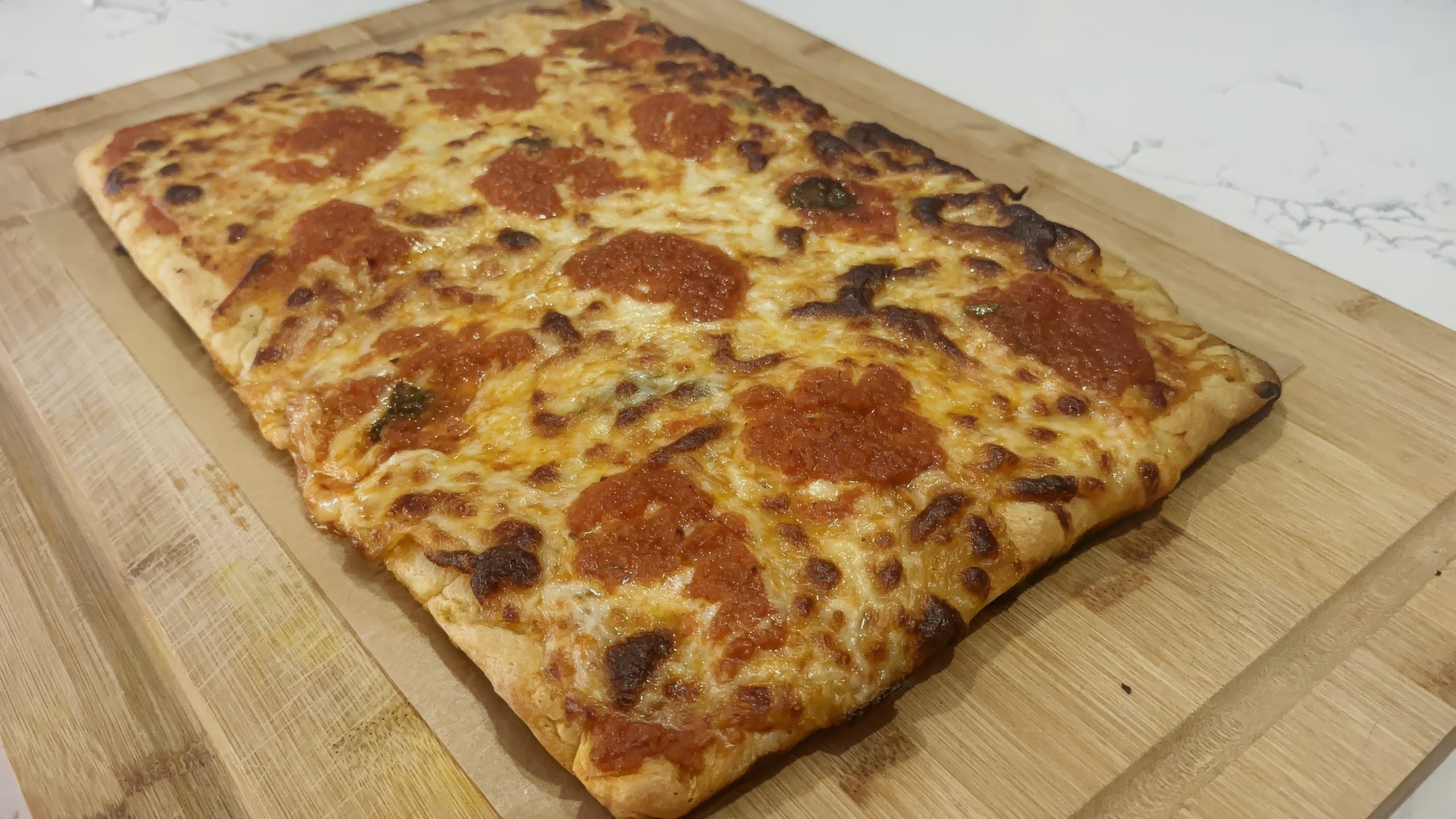
Step into any New York pizzeria, and among the rotating carousel of thin-crust slices, you’ll likely spot a distinctive rectangular pie with a thick, pillowy crust that commands attention. This is Sicilian pizza – a style that has evolved from its Mediterranean origins to become a beloved fixture in the American pizza landscape.

Unlike its round Neapolitan cousin, Sicilian pizza traces its lineage to sfincione, a focaccia-like bread topped with tomatoes, anchovies, and hardy mountain cheese that sustained workers in Palermo’s ancient streets. The word sfincione itself comes from the Latin “spongia,” meaning sponge – an apt description for the light, airy dough that characterizes this style.

When waves of Sicilian immigrants arrived in New York in the late 19th and early 20th centuries, they brought this hearty tradition with them. But like all immigrant foods, it adapted to its new home. American abundance meant more cheese – typically a generous layer of mozzarella rather than the traditional caciocavallo. The anchovies often disappeared, replaced by more familiar toppings. What remained constant was the distinctive thick crust, achieved through a long fermentation process that creates a bread-like base sturdy enough to support a generous layer of toppings while maintaining its characteristic lightness.

In New York, the Sicilian slice underwent another transformation. Pizzerias began baking it in well-oiled square pans, creating a crispy bottom that contrasts beautifully with the fluffy interior. This technique, combined with the generous portions typical of American pizzerias, turned the Sicilian slice into a filling meal that could sustain workers during long shifts – much like its ancestor did in the streets of Palermo.

Today’s New York Sicilian pizza is a study in textural contrasts. The bottom crust develops a golden-brown crackle from its contact with the oil-slicked pan. The interior crumb stays tender and airy, while the top crust becomes a canvas for sauce and cheese, which often caramelizes at the edges during baking. A proper Sicilian slice should have corners worth fighting over, where the cheese has become one with the crust in a feat of delicious alchemy.

While some pizzerias treat their Sicilian pies as an afterthought, the best practitioners approach them with the same reverence as their round pies. The dough requires careful attention – too much handling will deflate the precious air bubbles that give it its characteristic texture. The sauce needs to be thick enough to avoid soggy bread but not so heavy that it weighs down the crust. It’s a delicate balance that, when achieved, creates something greater than the sum of its parts.

This transformation – from Sicilian bread to New York slice – represents the beautiful evolution of immigrant foods in America. It honors its origins while embracing new ingredients and techniques, creating something both familiar and distinctive. The Sicilian slice is more than just pizza; it’s a testament to the way food cultures can adapt and thrive in new environments while maintaining their essential character.

In an era where artisanal pizza-making often focuses on Neapolitan authenticity, the Sicilian slice remains proudly Italian-American, neither fully Italian nor typically American, but something uniquely its own. It’s a reminder that some of our most beloved foods come from this cultural interchange, where old-world traditions meet new-world abundance to create something entirely unique.

I’ve always been a fan of Sicilian pizzas – especially the sweet sauce that usually accompanies it. The issue here is that it’s so hit and miss when it comes to local pizzerias. There was a spot where I used to live called Joe’s pizza that crushed the Silician pie. I used to crave it and sometimes, even after I moved 40 minutes away, I’d swing back and get it just to scratch that itch. I haven’t been able to find a good Sicilian pizza around me so I’ve been tinkering with different combos of dough, sauce, and cheese to try to recreate that memory of the perfect square slice.

Margherita Sbagliata

Margherita Sbagliata is a pizza that turns tradition on its head while still honoring the essence of what makes a classic Margherita so beloved. In Italian, “sbagliata” means “mistaken” or “wrong,” a word that suggests a happy accident or an intentional twist on the original. Much like the Negroni Sbagliato, where prosecco replaces gin for a lighter, sparkling take on the cocktail, Margherita Sbagliata takes the familiar ingredients of a traditional Pizza Margherita and rearranges them in a way that challenges expectations while delivering a completely satisfying experience.

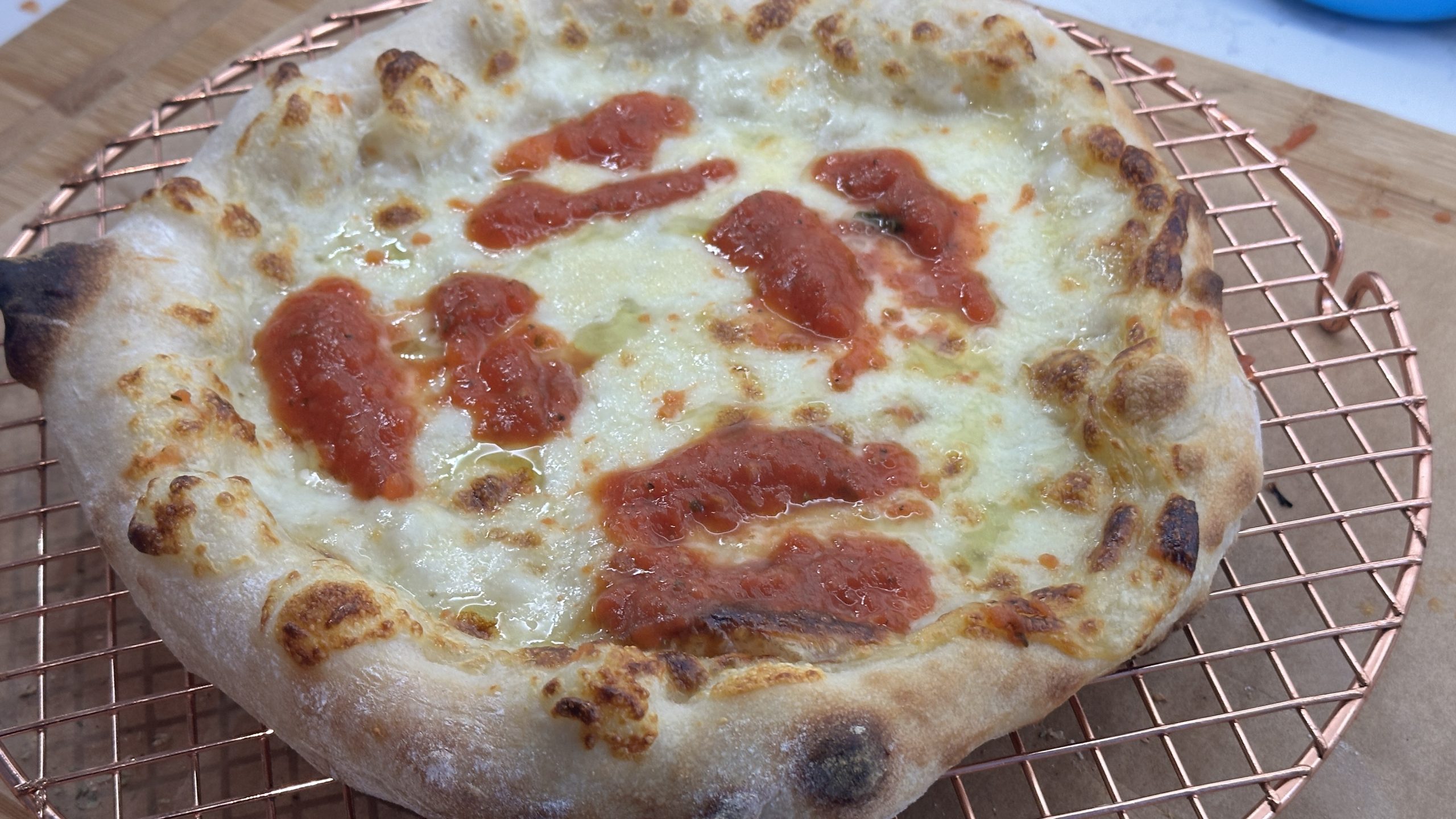
At first glance, it might not even look like a Margherita pizza. The typical structure—red tomato sauce, white mozzarella, and green basil, meant to mirror the Italian flag—is flipped, reimagined, or even deconstructed depending on the pizzeria or chef making it. In some versions, the tomato is no longer the base but instead appears in chunks, roasted or semi-dried, scattered atop a white pizza, where a layer of fior di latte or burrata takes center stage. The result is a pizza that still tastes unmistakably like a Margherita but with a different balance of textures and flavors. Instead of a thin layer of tomato sauce seeping into the dough, the concentrated bursts of roasted or blistered cherry tomatoes add a more intense, almost jammy sweetness that contrasts beautifully with the creaminess of the cheese.

Another version of the Margherita Sbagliata plays with the cooking process, adding the tomato only after the pizza has baked, rather than spreading it onto the dough before it goes into the oven. This method, sometimes referred to as a reverse Margherita, allows the crust to develop a deeper char and crispness without absorbing moisture from the sauce, resulting in a more defined chew and crunch. When the pizza comes out of the oven, crushed or puréed tomatoes—sometimes raw, sometimes lightly cooked—are spooned over the bubbling cheese, creating a fresh and slightly unexpected contrast between the warm crust and the bright acidity of the tomato.

Some interpretations go even further, introducing ingredients like stracciatella, ricotta, or even smoked mozzarella to enhance the richness of the cheese element. Instead of the traditional basil leaf, some versions finish with a basil-infused oil or delicate microgreens, offering the herbal note in a more subtle, modern way. The flexibility of Margherita Sbagliata makes it an exciting canvas for chefs to experiment with while still keeping it firmly rooted in Italian tradition.

Despite the changes in presentation and technique, the fundamental appeal of this pizza remains the same as the original Margherita: a perfect harmony of dough, tomato, cheese, and basil. The “mistaken” part of its name is, in reality, anything but a mistake—it’s a rethinking of a classic that brings out different elements of its flavor profile, sometimes highlighting the brightness of the tomatoes, sometimes leaning into the creaminess of the cheese, sometimes emphasizing the crispness of the crust. It’s a variation that celebrates tradition while embracing the creativity that has always been a part of Italian cooking.

In Naples, where pizza is treated with near-religious devotion, you’re more likely to find the traditional Margherita reigning supreme, but in cities like Rome, Milan, and even international pizza hubs in New York or London, Margherita Sbagliata has carved out a niche as a modern, inventive alternative. Whether ordered in a trendy pizzeria or recreated at home with high-quality ingredients, it offers a fresh perspective on something familiar, proving that even a classic like the Margherita still has room for reinvention.

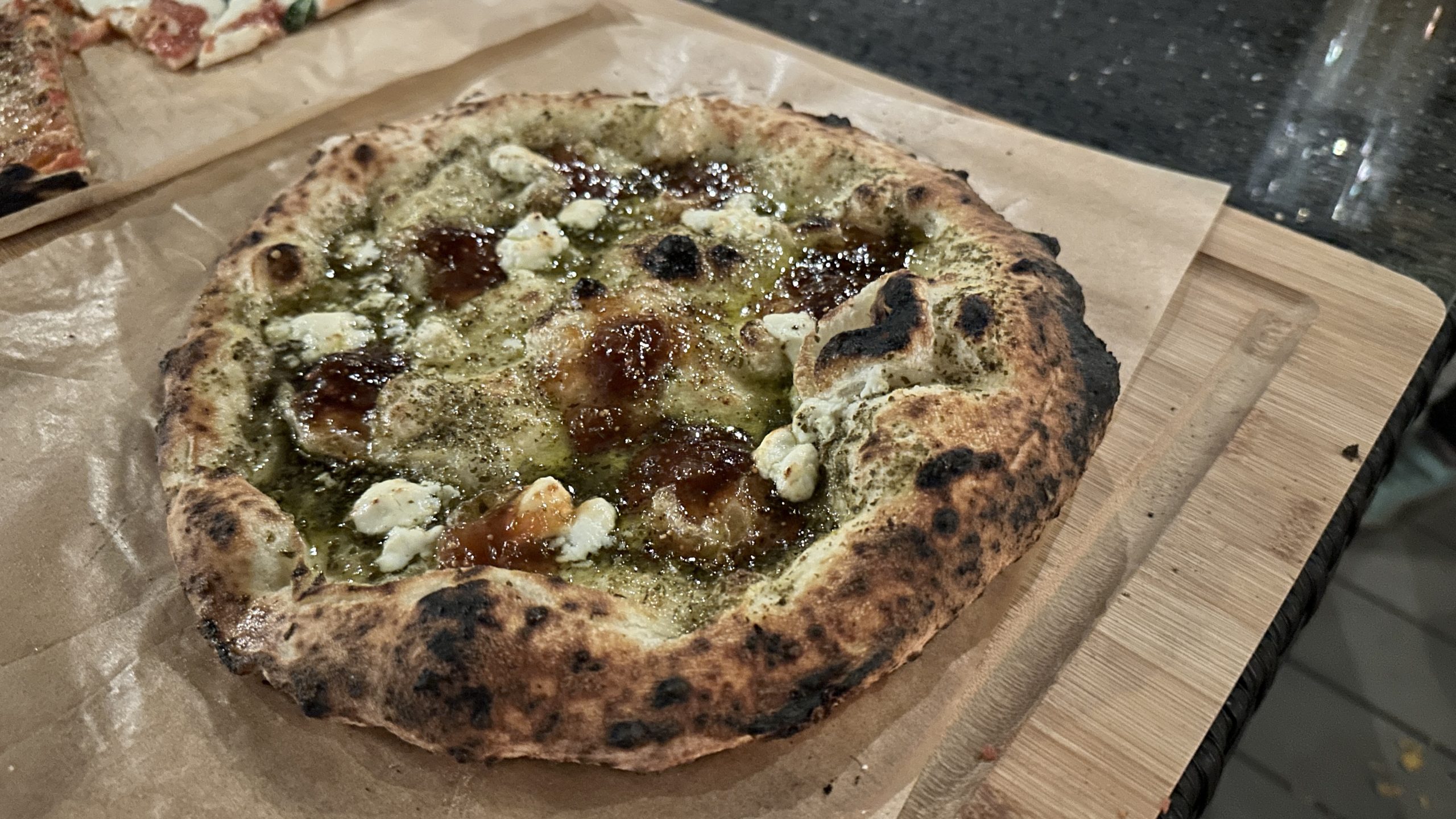
Pizza: Pesto sauce with fig jam and goat cheese

This one is a crowd favorite.

Maybe 15 years ago someone gifted me a food basket and it had some fig jam in it. I tried some on crackers and it was pretty good but it was a big jar and I was wondering what I could possibly do to use up all this fig jam.

I was having some friends over for some pizza in a few weeks and I started to brainstorm how I could integrate the jam into a pizza. I knew the jam was really sweet so I needed a savory counterpart so that was the goat cheese and I didn’t think a tomato sauce would mesh well with the jam so I made a savory pesto sauce to use as the base.

here’s the fun part – I didn’t test it out. I ran out of time and just made the pizzas and watched people for their reactions. Fortunately for me almost everyone had the same reaction ‘This in interesting let me try it and see.. ohhhh my GOD give me more!’

This is a pizza that stays in the rotation and when people come over for pizza nights they almost always request it so I keep a jar of fig jam in the fridge next to the peso on the off chance I want to make one of these pizzas on short notice!

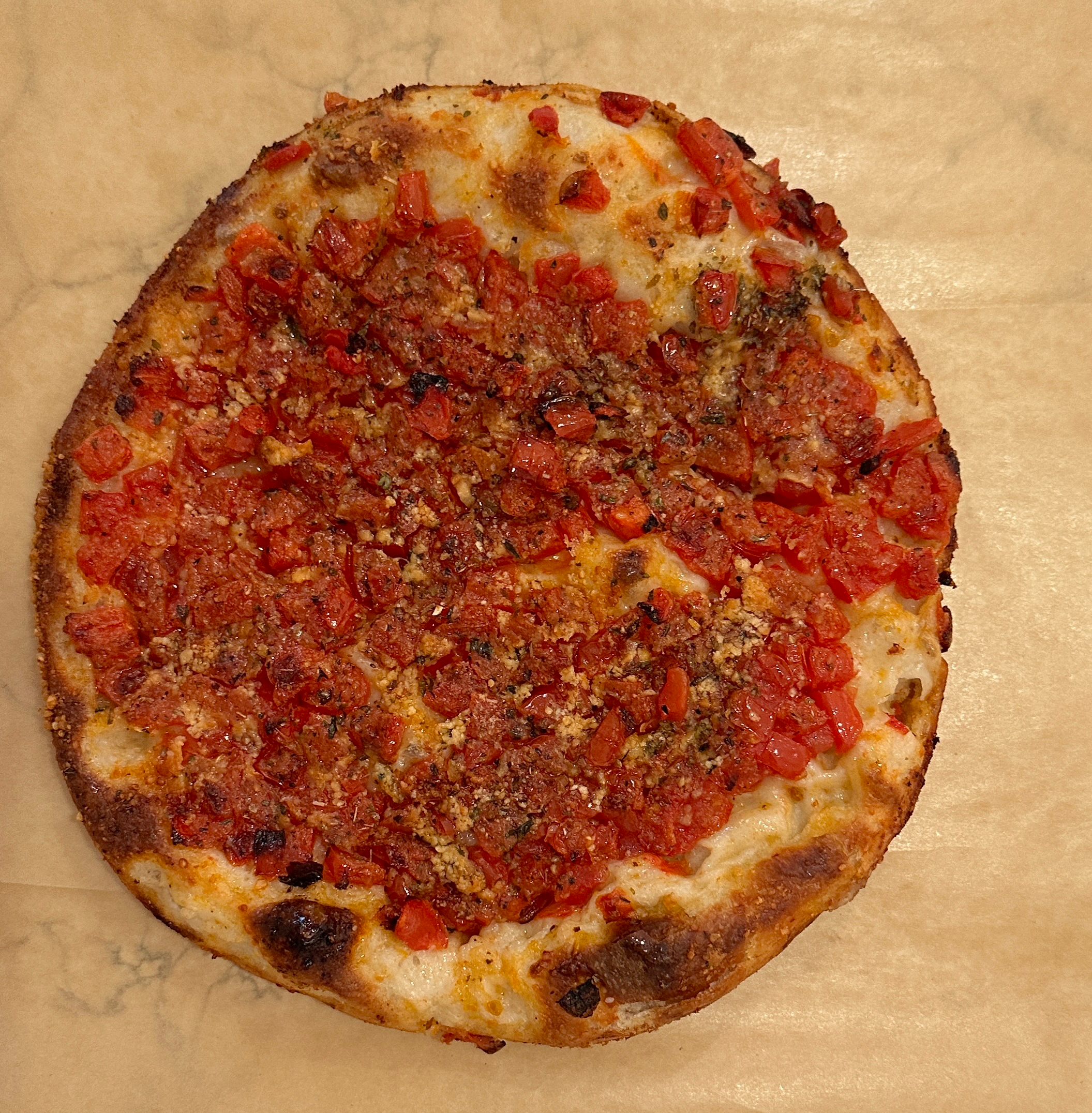
Pizza: Grandpa Mike’s ‘Affogatz’

This is an odd one. My grandfather Mike was a NY Italian and I’m pretty sure this is his NY accent butchering ‘a foccacia’ – but that’s what he called it and it was a central part of every holiday held in their house. He would grow his own tomatoes and then make a bunch of these pizzas then freeze them for the holidays. They held up in the freezer surprisingly well and it was one of the things I most looked forward to when visiting them for the holidays. I would also steal big slices of it and smuggle it out wrapped tinfoil so I could eat it like a cave troll later in the privacy of my room and not have to share it

Now – we all loved this pizza and when I was in my early teens he showed me how to make it (since I was the only one that showed any interest in cooking he felt I was worthy). I remember him patiently walking me through the steps and me paying close attention but NOT TAKING NOTES. So when he passed a few years later my grandmother asked me if I could make some ‘affogatz’ for her and I panicked because I barely remembered what he taught me at all.

That began the trip down the rabbit hole of trying to recreate a taste from memory. I knew he often bought pizza dough from the store so I started there but it didn’t really match the texture of the pizza so I turned to making a quick 2 hour rise dough that fit the flavor profile (it wasn’t a long proofed dough – it has a more bready consistency). I knew plum tomatoes were the answer because other tomatoes were too wet. I remember him walking me through crushing the tomatoes after they are cut and that helps ensure it cooked a bit more evenly but the texture was off.

The spice profile was pretty easy to nail – salt, lots of pepper, and a proprietary blend of seasonings were easy to isolate as I knew he had a very limited spice cabinet so it wasn’t hard to deduce what he used.

So I had the pizza, I had the flavors but the texture just wasn’t what I remembered. It took me a few years but I was making some other dish when it clicked in my mind that he cooked the tomatoes and drained them before he put them on the pizza.

The last piece of the puzzle was solved and now I can reliably recreate this unique dish for my family and hopefully inspire one of my future grand-kids to take up the torch and keep the tradition alive (the recipe is in the family cookbook now so it’s safe and preserved for the future)

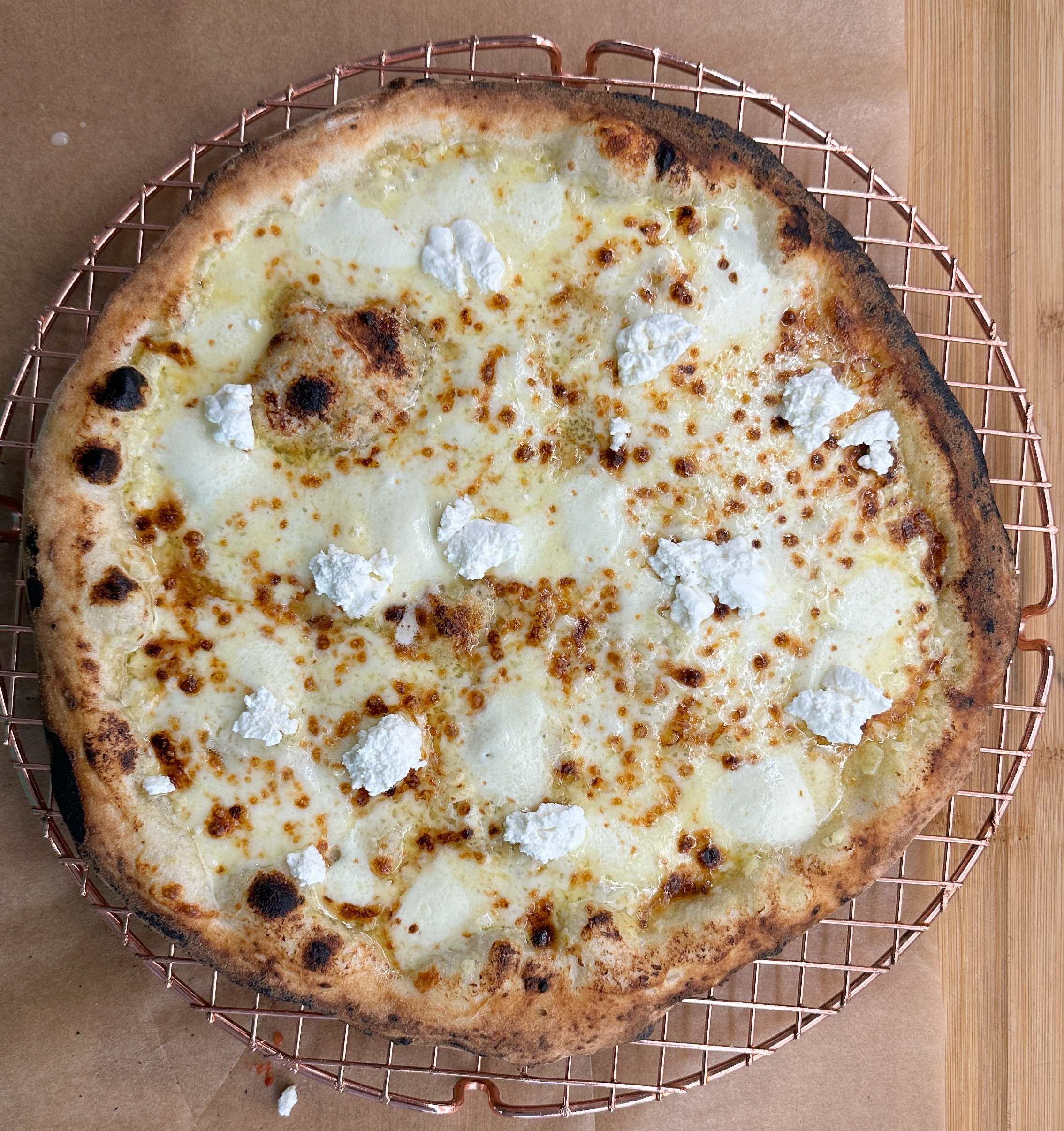
Tony’s White Pie

I came into the white pie lifestyle later in life. I was a read sauce kinda guy then one day there was a meetup with friends and someone insisted I try the white pie. It was revelatory but I thought to myself I could improve this.

How did I improve it? Garlic. a LOT of garlic. I made a quick bechamel but infused it with a ton of crushed garlic then added in a slight bit of red pepper flakes for something to cut through the richness of the sauce, the mozzarella, the ricotta, and the Parmesan cheese.

It seems like it would be too much but somehow it works and the flavors all meld together to make something special. I’s my wife’s favorite pizza and whenever I have company over for some pizzas it’s usually one of the ones I break out to impress the crowd.