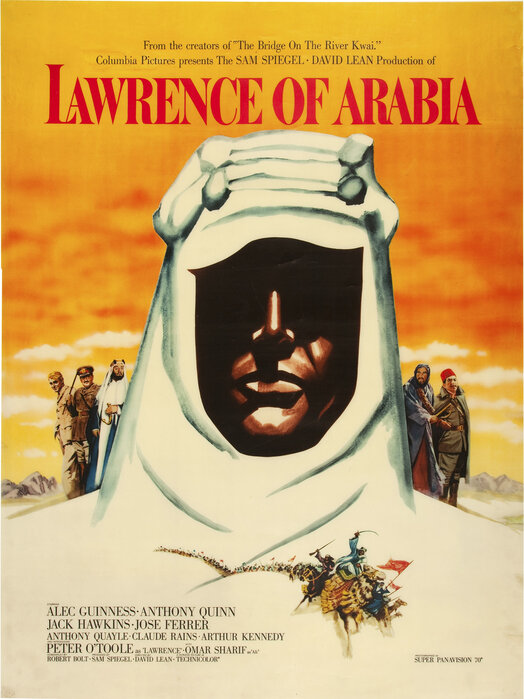
Lawrence of Arabia

Let me take you through this monumental epic, which manages to feel both impossibly vast and deeply personal at the same time.

The story begins with Lawrence’s death in a motorcycle accident (ironically, after surviving all his desert adventures), before rewinding to show us the eccentric British Army lieutenant in Cairo, where his insubordinate attitude and scholarly interests make him stick out like a sore thumb in the military bureaucracy. When he’s assigned as a liaison to the Arab Bureau, it’s partly because his superiors just want him out of their hair – though this “punishment” ends up changing the course of history.

The film really hits its stride when Lawrence meets Prince Feisal (Alec Guinness, doing his best with a role that really should have gone to an Arab actor). Here we get our first glimpse of Lawrence’s growing infatuation with Arab culture and his emerging messiah complex. His first major achievement – crossing the “uncrossable” Nefud Desert to attack Aqaba from the unprotected landward side – establishes his reputation for achieving the impossible. The scene where he returns alone into the desert to rescue a lost man perfectly encapsulates his character: equal parts messiah, madman, and military genius.

The film takes a darker turn after Lawrence’s capture in Daraa. The sequence where he’s “entertained” by the Turkish Bey (though the film leaves the specifics of his torture and possible sexual assault ambiguous) marks a crucial turning point. O’Toole’s performance becomes increasingly unhinged after this – his eyes take on a wild gleam, and his actions become more brutal. The massacre of the Turkish column at Tafas, where Lawrence orders “no prisoners,” shows just how far he’s fallen from the idealistic officer we met in Cairo.

What makes the film particularly fascinating is how it refuses to either fully condemn or celebrate Lawrence. Was he a liberator or another kind of colonizer? A friend to the Arab people or someone playing at being Arab? The film suggests all these things might be true simultaneously. There’s a brilliant scene where Lawrence stares at his reflection in a dagger’s blade, seemingly unsure of who he’s become – it’s worth the price of admission alone.

The political machinations in the background are equally compelling. While Lawrence is leading his Arab army to victory, the British and French are already carving up the Middle East in the Sykes-Picot Agreement. There’s a devastating moment when Lawrence realizes his promises of Arab independence were hollow – he was just another tool of colonial policy, despite his genuine belief in the Arab cause.

The film’s technical achievements are staggering. Consider the famous cut from Lawrence blowing out a match to the rising desert sun – it’s taught in every film school for a reason. The battle sequences are enormous in scale (no CGI armies here – those are thousands of real extras), yet Lean never loses sight of the human drama. The scene where Lawrence walks atop a captured Turkish train, soaking in the adulation of his men, tells us everything about his psychological state without a word of dialogue.

Special mention has to go to the supporting cast. Omar Sharif’s Sherif Ali transforms from would-be assassin to Lawrence’s closest friend and voice of reason. Anthony Quinn’s Auda abu Tayi steals every scene he’s in, bringing a magnificent swagger to the Bedouin chief who fights “because it is my pleasure.” Even smaller roles, like Claude Rains as the craftily pragmatic Mr. Dryden, add depth to the political intrigue.

The film’s handling of Lawrence’s sexuality and gender expression was remarkably ahead of its time, even if it couldn’t be explicit about it. His famous line “The trick is not minding that it hurts” takes on multiple meanings, and his delight in wearing Arab robes speaks to someone finding freedom in a different cultural identity.

Most impressively, “Lawrence of Arabia” manages to be both a celebration and critique of the heroic narrative. It shows us Lawrence’s achievements in all their glory while simultaneously questioning the very nature of Western intervention in the Middle East – questions that remain painfully relevant today. By the end, when Lawrence returns to England in his British uniform, looking uncomfortable and out of place, we understand that he’s a man who belongs nowhere – too Arab for England, too English for Arabia, and perhaps too mythologized to ever be truly understood.

The film’s nearly four-hour runtime might seem daunting, but like the desert itself, it operates on its own sense of time. This is cinema at its most ambitious and accomplished – a character study painted on the largest possible canvas, where the spectacular desert vistas serve as both backdrop and mirror to Lawrence’s internal journey. It’s a reminder of what movies can achieve when they aim for true greatness.

★★★★★ David Lean’s sweeping masterpiece “Lawrence of Arabia” swallows you whole like the endless sea of sand that serves as its majestic backdrop. Peter O’Toole, in his career-defining role, brings T.E. Lawrence to life with a hypnotic intensity that borders on feverish – watching his transformation from prissy British officer to messianic desert warrior feels like witnessing someone slowly lose their grip on sanity under the merciless Arabian sun. The supporting cast is a feast of powerhouse performances, with Omar Sharif’s dignified Sherif Ali and Anthony Quinn’s thunderous Auda abu Tayi practically vibrating with barely contained energy. Yes, this epic runs longer than a camel can go without water (216 glorious minutes), but every frame of Freddie Young’s cinematography is a painting come to life, from shimmering mirages to the most famous match cut in cinema history. Maurice Jarre’s sweeping score doesn’t so much accompany the film as possess it. While modern viewers might raise an eyebrow at white actors playing Arab roles (a problematic Hollywood tradition that persisted far too long), the film’s exploration of colonialism, identity, and the price of greatness remains startlingly relevant. Lean’s direction transforms what could have been a stuffy biographical film into a psychological odyssey that’s both intimate character study and grand spectacle. Like the desert itself, “Lawrence of Arabia” seems to exist outside of time – massive, mesmerizing, and absolutely essential.

Worldwide Food Tour – Russia

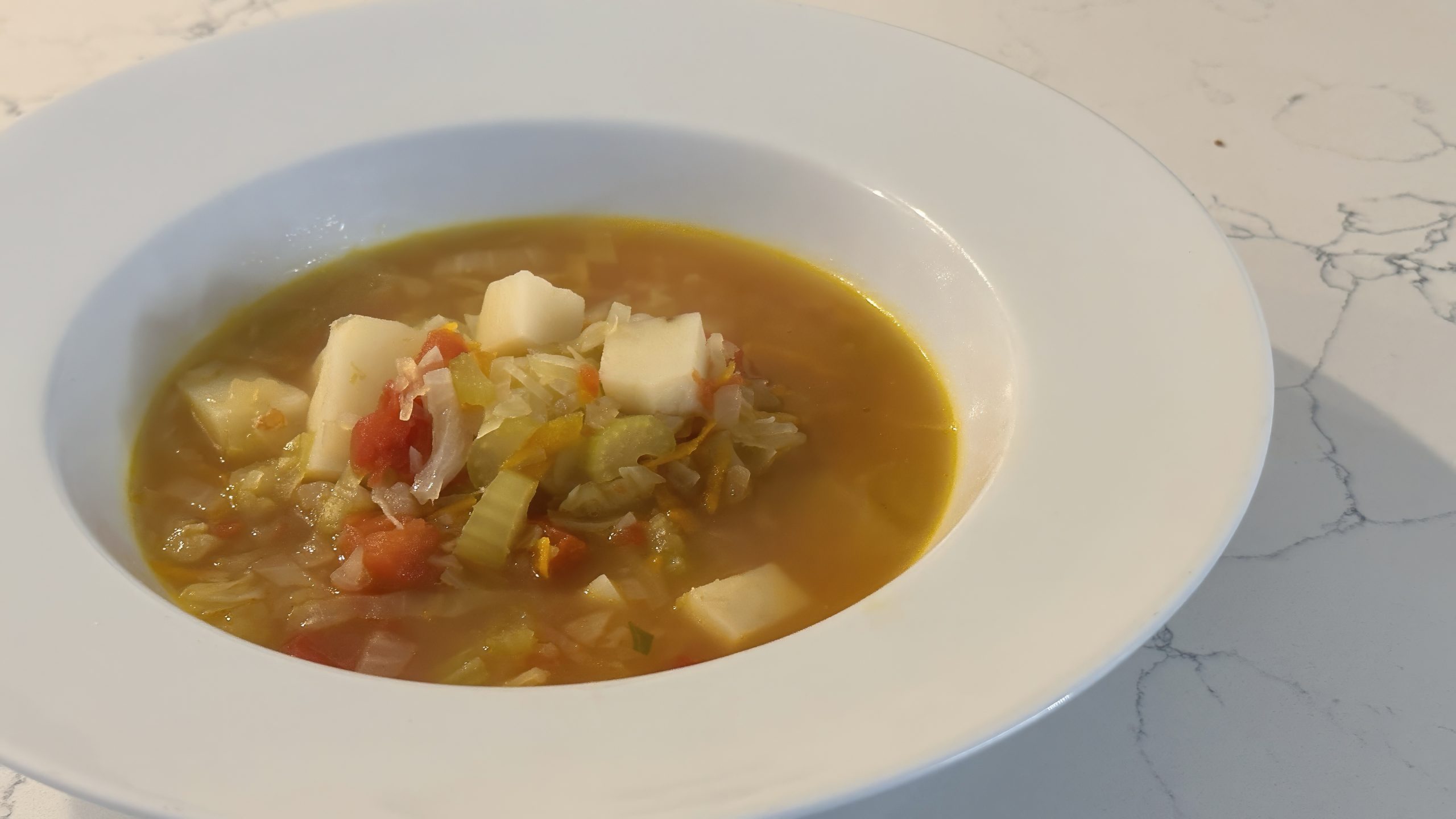
Shchi is a traditional Russian cabbage soup that has been a cornerstone of Russian cuisine for over a thousand years. The basic version combines fresh or fermented cabbage with meat broth (typically beef), root vegetables like carrots and potatoes, onions, and aromatic herbs. In leaner times or during Orthodox fasting periods, a meatless version called “empty shchi” was common.

The soup has a hearty, tangy flavor profile, especially when made with sauerkraut. The long, slow cooking process allows the flavors to meld together, creating a rich broth where the sweetness of carrots balances the sourness of cabbage. It’s often finished with fresh dill and a dollop of sour cream (smetana).

Russian black bread (černyj xleb) is the traditional accompaniment to shchi. This dense, dark sourdough rye bread gets its distinctive color and complex flavor from a combination of rye flour, molasses, and sometimes coffee or dark beer. The bread often includes caraway seeds and has a slightly sour taste with a thick, chewy crust and moist interior.

The history of these foods is deeply intertwined with Russian culture. Shchi was so fundamental to Russian diet that there’s an old saying: “Щи да каша – пища наша” (Shchi and porridge are our food). The soup’s popularity was partly due to cabbage being one of the few vegetables that could be preserved through the long Russian winters.

Black bread similarly became a staple because rye could grow in the harsh Russian climate where wheat often failed. During the Siege of Leningrad in World War II, the recipe for the city’s black bread was adjusted to include sawdust and other fillers, becoming a symbol of both survival and suffering.

Together, shchi and black bread represent the resourcefulness and endurance that characterized much of Russian peasant cuisine, creating deeply nourishing food from available ingredients that could sustain people through harsh winters and difficult times.

NY Mets vs Atlanta Braves

Braves 4, Mets 0

The Mets were on a five game winning streak and looking great. Then  I rolled into town and brough my bad sports luck with me, Goodbye 5 game win streak hellooo losing streak!

I had went with some Mets fans to the game as they were celebrating the 25th anniversary of the Mercury Mets. An ill-fated promotion in 1999 where the Mets pretended they were from the planet Mercury coming to earth to play baseball (https://www.mlb.com/video/taking-a-look-back-at-the-mercury-mets) – with some really awful uniforms and hilarious graphics on the big board.

Since I had no horse in the race I sat back and just enjoyed the nice summer day as Marcel Ozuna and Matt Olsen took it to the Mets back-to-back. Citi Field is really nice and I like that its walkable all around the stadium. Around the fourth inning we got up and went out to the center field patio which we discovered to our delight had a whiskey bar. We hung out there watching the game and enjoying our scotches for a while being entertained by the drunken Mets fans just doing their Mets thing.

After an inning or two hanging out with the people we went back to our seats (picking up some 40’s on the way) an caught the rest of the game which was quiet until the bottom of the ninth when the Mets started to rally putting a few men on base for Pete Alonso. My friends started to get excited – were they going to be present for an epic Mets comeback? Sadly no, as Alonso struck out stranding the runners Mets lose.

Overall the vibe at Citi Field was great I’d go to more games there but getting to Queens is a major hassle. After the game we popped over to the Queens night market and I highly recommend it. There was such a variety of different cuisines offered up at a reasonable cost. I sampled about 10 different cuisines while I was there taking furious notes for my ‘cooking around the world’ goals (although I doubt I could source Yak meat locally)

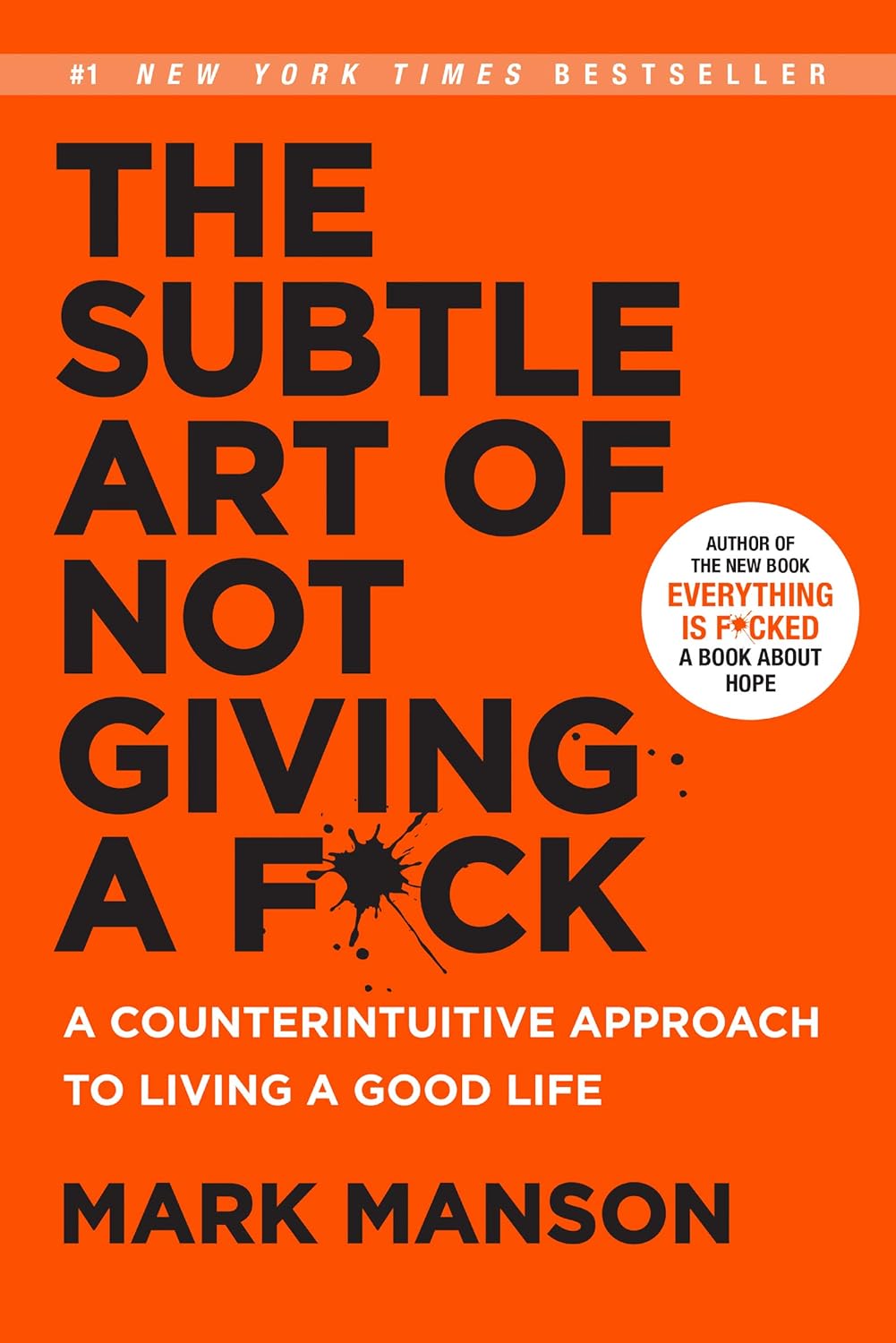
The Subtle Art of Not Giving a Fuck: Mark Manson

Ever had that friend who tells you to “just chill” while you’re having a meltdown? Mark Manson is that friend, except he’s actually making sense – most of the time. His counterintuitive self-help book has sold millions of copies, proving that people really do give a fuck about not giving a fuck.

Manson’s central premise is refreshingly blunt: life is hard, you’re not special, and that’s perfectly okay. In a world saturated with toxic positivity and Instagram-perfect lives, his message hits like a cold shower – uncomfortable at first, but oddly refreshing once you get used to it.

The book’s core argument is that we should be selective about what we care about rather than trying to not care at all (plot twist!). It’s like having a limited number of fucks to give, and Manson is teaching us how to invest them wisely. Think of it as mindfulness for the cynical millennial.

Key Takeaways:

  • Happiness comes through solving problems, not avoiding them
  • Values are the key to meaningful living, but many of us have garbage values (ouch)
  • Suffering is inevitable and useful; it’s what gives life meaning
  • You’re not special, and that’s liberating
  • Taking responsibility for everything in your life is the real key to not giving a fuck

The Good:
Manson has a gift for making complex philosophical concepts digestible through crude humor and pop culture references. He’s basically what would happen if Nietzsche wrote for BuzzFeed, and somehow it works. His writing style is engaging, and his use of personal anecdotes adds authenticity to his arguments.

The book succeeds in cutting through the noise of traditional self-help wisdom. Instead of promising the moon, it tells you to be content with your slice of earth. It’s anti-self-help self-help, and there’s something deeply satisfying about that paradox.

The Critical Points:
Here’s where things get interesting (and where I might ruffle some orange-covered feathers):

  1. The Irony Paradox: For a book about not giving a fuck, it spends an awful lot of time telling you exactly what to give a fuck about. It’s like a zen master who won’t stop talking about silence.
  2. Oversimplification: While the book’s accessibility is a strength, it sometimes veers into oversimplification territory. Complex psychological concepts get reduced to quippy one-liners, which might leave readers with an incomplete understanding of deep-seated issues.
  3. Privilege Blind Spots: Manson’s perspective sometimes comes across as that of a relatively privileged person who has the luxury of choosing what to care about. Not everyone has that freedom.
  4. Repetitive Arguments: By the halfway point, you’ve basically got the message. The rest feels like variations on the same theme – kind of like this criticism about repetition being repetitive.
  5. The Style Can Be Grating: The constant profanity and forced casualness might work for some readers, but it can feel like your uncle trying to be “hip with the kids.”

The Bottom Line:
Despite its flaws, “The Subtle Art” is a valuable addition to the self-help genre, if only for its willingness to punch holes in the bubble of relentless positivity. It’s like a literary version of that friend who tells you what you need to hear rather than what you want to hear.

The book isn’t perfect, but then again, that’s kind of its point. It’s a self-help book for people who are skeptical of self-help books, and in that niche, it excels. Just don’t expect it to revolutionize your life – and again, that’s kind of the point.

Rating: ⭐⭐⭐⭐ out of 5
Perfect for: Millennials tired of being told to manifest their best life
Not for: Those who can’t handle profanity or prefer their self-help with a side of crystals

Final Thought: In a world where everyone’s trying to sell you the secret to eternal happiness, there’s something refreshing about a book that tells you to lower your expectations – even if it does so while secretly raising them.

NY Yankees vs. Tampa Bay Rays

Tampa Bay Rays 9, Yankees 1

Let me start by pointing out I’m a huge Yankees fan. I’ve been one since I was a kid and I always try to go to a few games each year even after I moved pretty far from the stadium. I managed to get to three Yankees game this year and they lost every one.  Not close games either – they got curb stomped each time and one of them was a world series game!

This was one of the few games I saw this year where I had a bunch of friends with me and I was hoping for an exciting game but was got was an epic meltdown by Nestor Cortes and a Yankee offense that completely disappeared. Now I’ll give Bradley his due – he was on fire leading up to this game and he continued that by shutting down the Yankees but they looked completely lost out there (a worrying trend that continued into the post season)

Watching the Rays tee off on Yankee pitching gave me Bugs Bunny vibes [insert gif] – It was frustrating to watch all parts of the team fail to show up. It’s like this all the time against Tampa – it seems like the Rays have the Yankees number. In fact – I usually try not to go to games when Tampa is in town for that very reason but when you are trying to coordinate the schedules of actual adults with actual responsibilities you take what you can get!

I mean it was still a day game at Yankee stadium with my boys so we had made our own entertainment since the product on the field wasn’t doing it for us and enjoyed the time we were there  – anytime I’m at the stadium is a good time in my book and the Yankees did eventually end up in the world series…

Which they lost to the Dodgers in embarrassing fashion. 

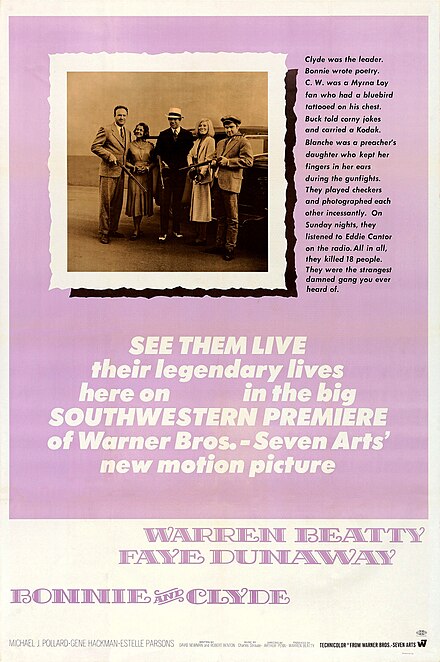
Bonnie and Clyde

In 1931 West Dallas, Bonnie Parker finds Clyde Barrow attempting to steal her mother’s car. Rather than being alarmed, she’s intrigued by his dangerous edge. When Clyde reveals his prison time and shows off his gun (subtlety isn’t his strong suit), Bonnie is captivated. He seals the deal by robbing a store just to impress her, and suddenly this small-town waitress sees her ticket out of a life of serving coffee and settling for mediocrity.

Their early crime spree is more comedy than criminal masterstroke. Clyde’s first attempt at a bank robbery goes sideways when there’s no money in the bank – turns out the Depression hit everyone hard. They start small, knocking over grocery stores and gas stations, with Clyde fumbling his way through hold-ups while Bonnie cheers from their stolen getaway cars. There’s a particularly telling scene where Clyde can’t even park properly during a robbery, much less shoot straight.

The Barrow Gang really takes shape when they pick up C.W. Moss, a gas station attendant who knows cars better than he knows common sense. Then comes Clyde’s brother Buck, fresh out of prison himself, with his wife Blanche, a preacher’s daughter who’s about as suited for crime as a penguin is for the Sahara. Her constant hysteria provides an interesting counterpoint to Bonnie’s cool-as-a-cucumber approach to their lifestyle.

The film delves into some fascinating character dynamics, particularly around Clyde’s impotence (both literal and metaphorical – the film’s not exactly subtle about this symbolism). Bonnie’s frustration with their physical relationship leads to one of the most intimate scenes in the movie – and it involves a Coca-Cola bottle, of all things.

Their rise to fame is meticulously detailed. They take photos like celebrities, with Bonnie hamming it up with a cigar and gun, creating iconic images that would make their way into newspapers across the country. They even have a brief encounter with a farmer whose house has been repossessed by the bank – a scene that positions them as Robin Hood figures, even though their robberies were more self-serving than philanthropic.

The violence escalates gradually but significantly. What starts as warning shots turns into casualties, with each death hardening them a little more. There’s a particularly brutal scene where they kidnap a young cop, share laughs with him, then have to kill him – a moment that shows how far they’ve fallen from their early romantic notions of being outlaws.

The beginning of the end comes at their hideout in Joplin, Missouri. A shootout with the police leaves two officers dead, but they escape with rolls of film that would later become famous photos of their gang. However, their luck starts running thin. A subsequent shootout at a motor court proves catastrophic – Buck takes a bullet to the head but doesn’t die immediately, leading to scenes of Blanche’s devastating breakdown as she watches her husband slowly slip away.

The final act is set in motion by C.W.’s father, Malcolm Moss, who makes a deal with the authorities. The ambush is meticulously planned by Frank Hamer and his team, who wait by the side of a rural road in Louisiana. The famous ending sequence shows Bonnie and Clyde sharing a look – a moment of unspoken understanding – before their car is riddled with enough bullets to make Swiss cheese jealous. Director Arthur Penn films their deaths in a balletic slow motion that somehow manages to be both brutal and beautiful.

Throughout the film, there’s a recurring theme of Bonnie’s desire for fame and recognition. She writes poetry about their exploits, ensures their stories make the papers, and seems more concerned with how history will remember them than with the morality of their actions. In a darkly ironic twist, she gets her wish – just not quite in the way she imagined.

The film also weaves in subtle commentary about the media’s role in creating celebrities out of criminals, the economic desperation of the Depression era, and the death of the American frontier spirit – all themes that resonate surprisingly well even today. Though at its heart, it remains a story about two kids playing at being outlaws until the game becomes all too real.

★★★☆☆ “Bonnie and Clyde” revolutionized American cinema with its bold blend of violence and romance, even if some of its performances now feel as theatrical as a high school production of “Romeo and Juliet.” Warren Beatty and Faye Dunaway attack their roles with the subtlety of a tommy gun, chewing through scenes with wild-eyed abandon that occasionally threatens to overshadow the film’s groundbreaking narrative. Gene Hackman provides a more measured performance as Buck, though Estelle Parsons as Blanche seems determined to shatter every window in Texas with her piercing screams. Yet despite these melodramatic tendencies, the film’s importance cannot be overstated – it helped usher in New Hollywood with its frank depiction of violence, sexuality, and moral ambiguity, while its influential editing techniques and unflinching finale remain powerful even today. The story of these Depression-era outlaws may be heightened by its performances, but its examination of celebrity culture, violence, and American mythology laid the groundwork for countless films to follow, making it an essential piece of cinema history, even if you occasionally need to turn down the volume.

Pacers at Nets

Nets 115, Pacers 111

I remember when the Nets were in Jersey – they were kind of a second class team for most of my childhood memory but I always kinda rooted for them as one of the two Jersey teams (them and the Devils) and they had a few good years that were exciting to watch (I really enjoyed how Jason Kidd moved the ball).  When they moved to Brooklyn I stopped paying attention. They didn’t get a lot of TV time and the Barclay’s center was a pain to get to. They had a small resurgence in the first few years when they signed Durant, Irving, and Harden but while they were all transcendent players, as a team it just never clicked and after a few years that big three broke apart.

I was going to be in NYC for another event so I decided now’s a good a time as any to check out the Barclays center. I grabbed a resale ticket and hopped on the subway to begin my trek out to Brooklyn. I had to switch a few times but it was nice that the subway station is right under the stadium so all I had to do was walk out and it was right there.

I must say the arena really is beautiful – I really liked the curved architecture and the interiors were modern and had some really diverse food and drink choices. I was pleasantly surprised at how easy it was to walk around and get to my seat (compared to some arenas where it felt like a cattle chute)

The game was pretty exciting – a back and forth affair that was fast paced and high scoring (a good palette cleanser for that awful sixers/knicks game). It was interesting to me how interactive the non-game elements were compared to more conservative teams. They had dance crews, flag teams, contests, and at the half they had some local rappers come out and spit some verses. I felt like they were intentional in making it a more local grounded product than those guys over at MSG. I felt like they understood that young fans need constant entertainment to stay engaged and they were leaning into it.

As much as Halliburton annoys me as a fan he was on fire and pretty much carrying the Pacers. There were a few really standout plays – notably the fake pass/windmill dunk by Claxton and the full court alley-oop that Toppin slammed down. The score was close at the end and Halliburton tried to bring them back but a long three pointer clanged off the rim and the Nets got the board sealing the win and stopping the furious comeback attempt.

I enjoyed my first visit to the Barclay’s center – it is a good place to watch some basketball. Too bad it’s such a pain to get to from where I live.

Argentinian Pizza

In Buenos Aires, pizza isn’t just food – it’s a cultural institution that rivals the city’s famed steakhouses. Born from the massive Italian immigration wave of the late 19th and early 20th centuries, Argentine pizza evolved into something distinctly its own, reflecting both its Italian roots and the abundance of its new home.

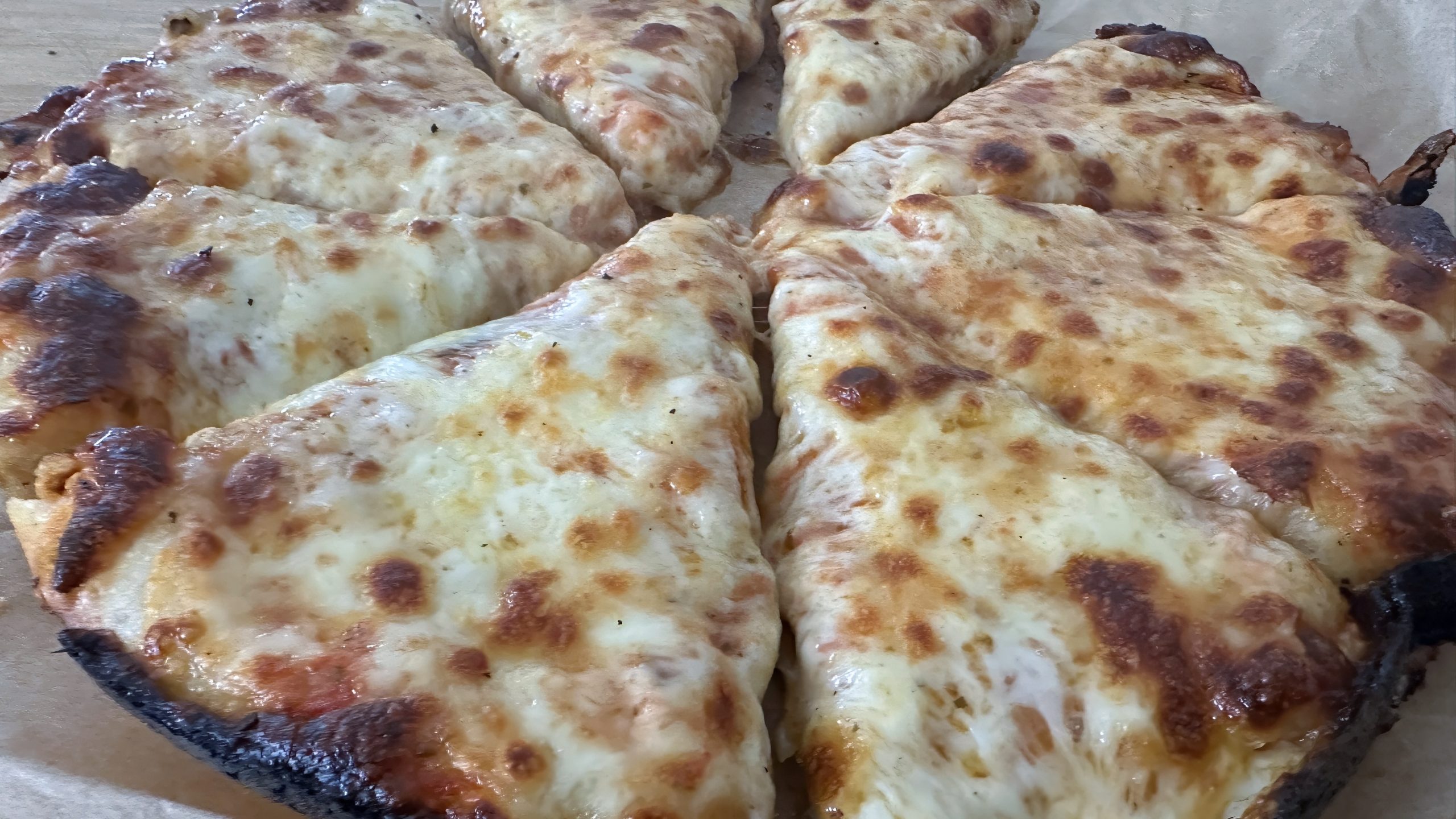
The defining characteristic of Argentine pizza is its cheese – and lots of it. While Neapolitan pizzas use a restrained amount of mozzarella, Argentine pizzerias pile on thick layers of mozzarella, often using locally produced quesillo that creates the signature chewy, stretchy texture locals call “correoso.” The cheese doesn’t just cover the pizza; it blankets it completely, often approaching a half-inch in thickness.

The crust provides another point of departure from Italian tradition. Argentine pizza bases are thicker than Neapolitan style but thinner than Sicilian, with a texture closer to focused bread. This hearty base is necessary to support the generous toppings that characterize the style. The dough is often enriched with fat, creating a more tender crust that still maintains enough structure to handle the weight of its abundant toppings.

Perhaps most distinctive is the “media masa” (half dough) variant, where the usual crust is doubled in thickness. This style, particularly popular in Buenos Aires’ pizzerias, creates something closer to a cheese-topped focaccia than a traditional pizza. It’s often served as a starter or late-night snack, demonstrating how thoroughly pizza has been integrated into Argentine dining culture.

Toppings reflect local tastes and ingredients. The “fugazza,” a direct descendant of Genoese focaccia, comes loaded with sweet onions and sometimes without tomato sauce. The “fugazzeta” adds that distinctive thick layer of cheese to the onion-laden base. Another popular variant is the “fainá,” a chickpea flatbread served atop the pizza slice – a custom that originated in Genoa but has been preserved in Argentina while fading in its homeland.

The pizza is typically eaten at traditional pizzerias where it’s served on metal trays and often consumed standing at high tables. Unlike the individual pies common in Italy and America, Argentine pizzas are generally large and shared, reflecting the communal dining culture of the country. The slices are cut smaller than their American counterparts, encouraging sharing and sampling of multiple varieties.

This adaptation of Italian pizza represents more than just culinary evolution – it’s a metaphor for Argentine culture itself, where European traditions were transformed by local abundance and preferences into something uniquely porteño. In every overflowing slice of mozzarella and generous portion of fainá, you’ll find the story of immigration, adaptation, and the creation of a new culinary tradition that pays homage to its roots while proudly asserting its own identity.

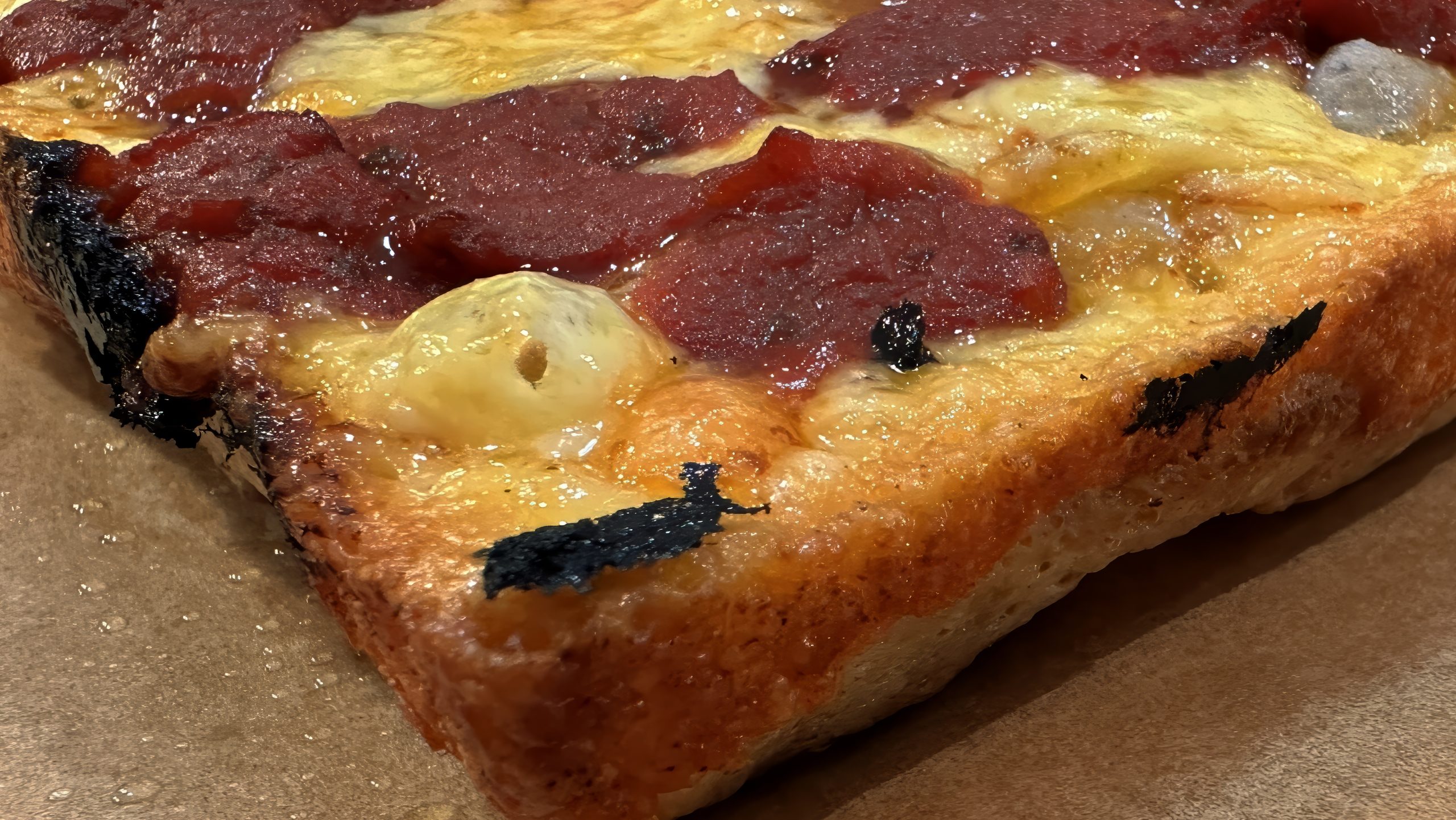
This went over very well – who knew that loading an entire block of cheese onto a pizza would be a hit? The dough was chewy but with crispy edges providing a counter texture. The sauce was tangy and reminiscent of NY pizza. It was one of the pizzas that is likely to enter a more permanent rotation once I go back to my regularly scheduled pizza program.

Worldwide Food Tour – Nigeria

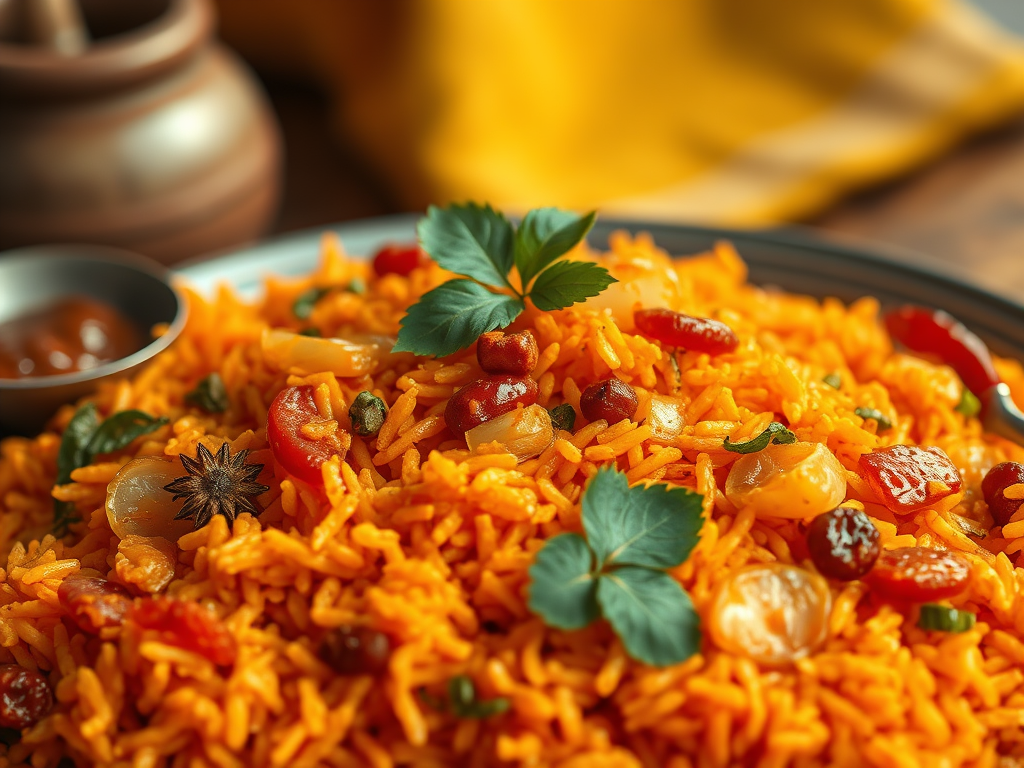
Jollof rice is a beloved West African dish consisting of rice cooked in a rich tomato-based sauce with onions, peppers, and a complex blend of spices. The rice absorbs the sauce as it cooks, taking on a distinctive orange-red color and intense flavor.

The dish typically includes garlic, ginger, thyme, curry powder, and sometimes Scotch bonnet peppers for heat. Regional variations exist – Nigerian Jollof often uses long-grain rice and a smokier flavor, while Ghanaian Jollof tends to use jasmine rice and a different spice profile.

Jollof’s origins are traced to the Wolof people of Senegal, where it was known as “thieboudienne.” It spread throughout West Africa during the Mali Empire’s trading period. Today, it’s a source of friendly rivalry between West African nations, particularly Nigeria and Ghana, over who makes the best version.

The dish is essential at celebrations and gatherings, from weddings to family dinners. Its popularity has spread globally, becoming a symbol of West African cuisine and cultural identity.

Detroit Pizza

Detroit-Style Pizza: Motor City’s Square Slice Revolution

In the pantheon of American pizzas, Detroit-style stands apart – a testament to industrial ingenuity and the city’s automotive heritage. Born in the post-war boom of the 1940s, this distinctive square pie first emerged at Buddy’s Rendezvous, where automotive parts trays, originally used to store small machine parts, were repurposed as pizza pans. These blue steel pans, with their high sides and excellent heat conductivity, would become the cornerstone of a new pizza tradition.

What sets Detroit-style pizza apart is its architectural approach to layering. Unlike traditional pizzas, it begins with a thick, high-hydration dough that, when baked, creates a light, airy crumb structure reminiscent of focaccia. The high edges of the industrial pans allow the dough to climb during baking, creating a caramelized crust that pizza enthusiasts call “the crown.” This crust, when properly executed, offers a satisfying crunch that gives way to a chewy interior.

Perhaps most iconoclastic is the layering sequence. Wisconsin brick cheese, a semi-soft cheese with a high butterfat content, is cubed rather than shredded and spread edge to edge. During baking, the cheese melts into every corner of the pan, creating the signature caramelized edges that Detroit pizza is famous for. The sauce, rather than forming the base, is typically applied last in thick, bold stripes across the top – a technique known as “racing stripes” in homage to the city’s automotive culture.

This reversal of the traditional pizza construction isn’t mere novelty. The cheese-first approach allows the fats to protect the dough from becoming soggy, while its direct contact with the hot pan creates a lacy, crispy cheese crust that has become the style’s hallmark. The late application of sauce ensures it remains bright and vibrant, providing a fresh contrast to the rich, caramelized underpinnings.

The style remained a regional specialty for decades, beloved in Michigan but relatively unknown elsewhere. However, in the past decade, Detroit-style pizza has emerged as a national phenomenon. Artisan pizzerias across the country now offer their interpretations, while major chains have introduced Detroit-style options to their menus. This expansion hasn’t diluted its character – if anything, it’s strengthened the appreciation for the technical precision required to achieve those perfectly caramelized edges and airy crust.

Detroit-style pizza embodies its city’s spirit – practical in its origins, innovative in its execution, and unapologetically bold in its presentation. It’s a reminder that great food often emerges from the intersection of necessity, available materials, and the creative spirit of working-class communities. In every pan-formed corner and racing stripe of sauce, you’ll find a slice of Detroit’s industrial heritage, transformed into something uniquely delicious.

I’ve always been a fan of Sicilian pizzas – especially the sweet sauce that usually accompanies it. The issue here is that it’s so hit and miss when it comes to local pizzerias. There was a spot where I used to live called Joe’s pizza that crushed the Silician pie. I used to crave it and sometimes, even after I moved 40 minutes away, I’d swing back and get it just to scratch that itch. I haven’t been able to find a good Sicilian pizza around me so I’ve been tinkering with different combos of dough, sauce, and cheese to try to recreate that memory of the perfect square slice.