Like Ron says – I love scotch. I rarely drink anything else and have developed quite a taste for it. That being said – I’m not one of those scotch snobs who waves the glass around talking about tasting notes in an affected tone of voice. However – I can taste the difference of scotches based on the region and sometimes even the maker (Macallan is my favorite) and have in the past done tastings of 20 and 25 year old scotch (notably in Vegas on the rooftop bar of the Rio – that was a good time) so I have a baseline of what good aged scotch tastes like.
I’ve always wanted to try a 30 year scotch – I’ve never pulled the trigger over the years due to the cost and the uncertainty (is this REALLY 30 year scotch?) so I knew I’d have to go to a reputable scotch bar in order to ensure I’m getting what I paid for. I did some research and found a really sophisticated scotch bar in the village in NYC called ‘The brandy library’. When I walked in I realized it was called that because it has library shelves all along the walls but instead of books they were bottles of scotch, bourbon, brandy, and other spirits. We had our own table and scotch expert to help us out. I explained I’m looking for a 30 year scotch with a preference for Speyside whiskeys but could be convinced to go Islay if he thinks there’s a 30 year worth it (the smokiness might be a bit much)
After some back and forth and explaining that as much as I’d love to have a Macallan 30 – I’m not about to drop $1,000 for a dram of it we settled on a highly rated 30 year from a distillery called Benriach which he said won some awards and punches way above it’s price.
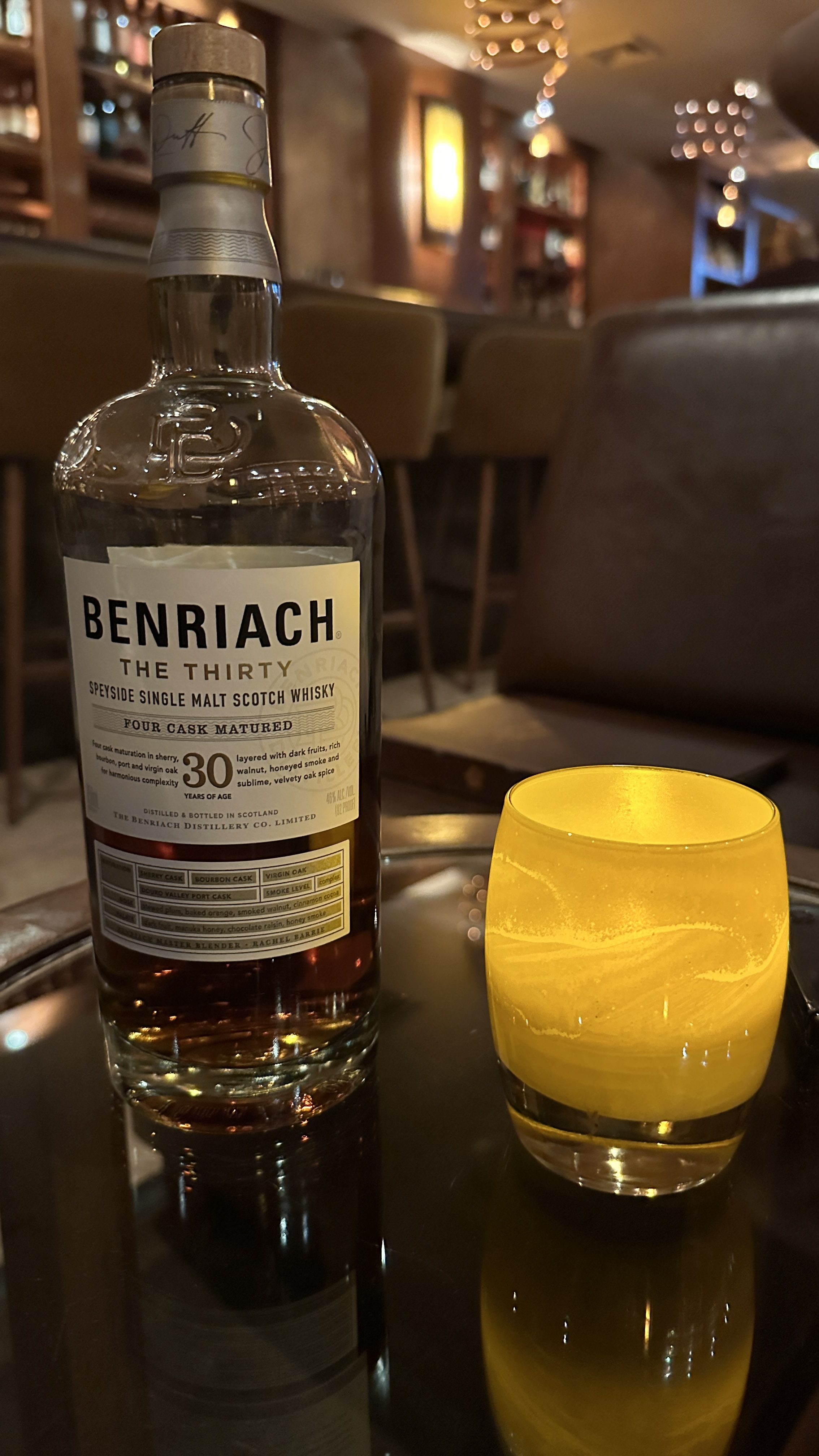
Here’s what the tasting notes he gave me were:
COLOR:Mahogany
NOSE: Stewed plum, baked orange, smoked walnut and cinnamon cocoa
PALATE: Dark fruit, manuka honey and chocolate raisin, with a long and complex smoked honey finish
SMOKE LEVEL: Complex
He gave me a small sample (I love this place – letting me have a sip to see if it’s agreeable before giving me the full dram) and I really liked it so we agreed this would be my scotch and he poured me a healthy dram and the color was so dark I just spend the first few minutes just looking at it
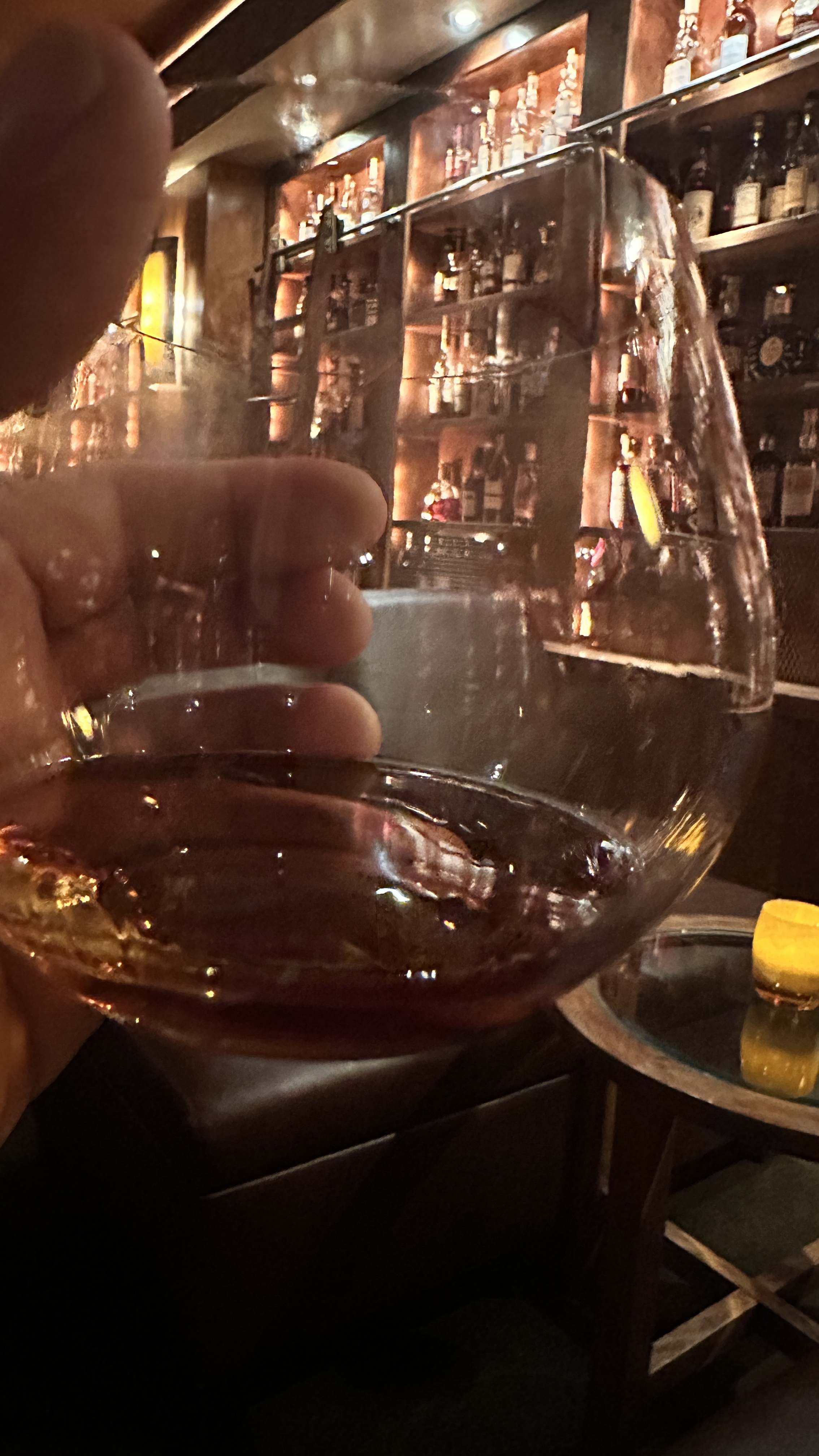
When I took that first whiff I didn’t get all the tasting notes but it smelled strongly of honey with an undercurrent of caramel and a back current of smoke pervading the whole thing. It smelled amazing and way more complex than my usual 12 year scotches. The first taste hit me in the face and I actually gasped at how strong of a liquor hit it was but then once that cleared the flavors were all there and the complexity was on full display. This was a great scotch – I savored it for over 40 minutes with small sips and great conversation with my friends in this super relaxed atmosphere.
I really enjoyed this 30 year scotch – but it’ll have to be a rare treat as the cost puts casual drinking of it out of my budget. That being said – I now have tried all the standard scotch years and I still think Macallan 15 is my gold star – and maybe one day I’ll win the lottery and can taste that Macallan 30!
(I did have a glass of Macallan 15 at the bar because I was just enjoying myself immensely and wanted to keep the quality scotch flowing)