Goal Met: 50 Hours of Learning

Learning is subjective. I learn from reading, from podcasts, from observing and listening but to actively seek out learning for its own sake is something that not a lot of people do. Throughout my life I’ve learned quite a few things simply because of my ADHD – I find something interesting, hyperfocus on it for a few months until I become somewhat knowledgeable/good at it then switch my focus to something else and start the process again. I am very aware of the learning loop needed to become proficient at something and it goes something like this:

This loop repeats until you hit an exit condition – usually when you have satisfied your curiosity, or it becomes too hard to penetrate further into a subject and the time needed to pass that hurdle doesn’t seem worth the trouble. 

Some things I put into the feedback loop I kept going with well after my hyperfocus period:  playing guitar, computer programming/administration (I once wrote a program freehand in a notebook because computers in the library had a time limit), cooking/baking (although I would argue that it broke off into smaller hyperfocus things like pizza, sourdough, grilling, sous vide, smoking, etc.), gardening, and now 3D printing. The list of things I’ve tried that didn’t pan out and are now littering my poor brain is too numerous to count but every now and then some bit of learning becomes relevant to what I’m doing so it’s good to know it isn’t all wasted!

I’ve set learning goals in the past but after a strong start they’ve always tailed off as other things fought for my already scattered focus – I did have a list of the things I wanted to learn that carried over year to year and for this project I was determined to hit that 50 hour mark (arbitrarily picked 50 for most goals because well, I turned 50 – as Thanos would say ‘ perfectly balanced as it should be’ )

I didn’t want to break out work related training vs. personal training since a few of the things I wanted to learn crossed both categories, so I lumped them both into the 50 hour category. I did tag each one with what I thought was the right category (work or personal) just for my own metrics but for the purpose of this post we’re just going to lump them all together. It was a varied bunch of training. I kicked it off with some guitar/music theory classes to better understand music and work on getting my solo skills refined.  There were quite a few pizza related videos as I explored different techniques to refine my pizzaolo skills. In the middle of the year there was a huge chunk of AI training which I found super interesting and as soon as that week of training was done, I was looking for ways to incorporate AI into this effort.  A nice percentage of the 50 hours was spent on application training to help me upskill at work (and at home since a lot of it carried over to home projects). Finally to prepare me to write the short story/novella that has been bouncing in my head for a few years I’m following Brandon Sanderson’s lectures on writing which are fascinating. 

The biggest thing I learned? You need to carve out time for learning. I picked the slowest day on my work calendar and blocked out an hour for work-related training. It didn’t always work as I was really busy this year but enough times it gave me the space to learn the things I needed to. I also blocked out an hour once a week at home to work on the personal stuff and again sometimes that didn’t work but it did enough times for me to hit the 50 hour mark and keep going. I won’t stop at 50 – there’s still some things I need to learn and there’s 4 months left so I’ll come back and update this at the end of the project. 

Goal Met: No Sugar for 30 Days

Well OK this one was hard, not because I’m a sugar junkie (although I do enjoy a treat now and then) I have two small kids who always want a little sweet dessert and a wife who helpfully bring home leftover treats from events and just leaves them on the counter in plain view. So, I knew I couldn’t do the tried and true ‘get all the sugar out of the house’ methodology. 

I did however remove the one treat that my brain craves more than all others: Reese’s peanut butter cups. I collected up all the Reese’s in the candy jar and put them deep in the pantry where I couldn’t see them (oddly enough next to the jar of Nutella I was hid from myself a few months back) hoping that one day a curious hobbit would find them and after a battle of wits with a dragon… 

My preeeeecious stored away where I couldn’t be tempted, I set about finding what everyday items secretly had sugar in them and sadly – it’s almost all of them. Sucrose, High Fructose Corn Syrup, Sugar, Dextrose.. all fancy names but all meaning you have processed sugar in your food. I knew this would be an uphill battle, but my cooking skills helped me by allowing me to make more wholesome varieties of food without the added sugar that I could eat. The overwhelming consensus of my kids after eating my ‘real’ macaroni and cheese was; “Daaaaaad we want the boxed version with the pooooowder” so I knew that I couldn’t drag them along on this journey. [Author note: We generally feed our kids whole foods and really limit sugar but there’s just some things that are a key part of childhood and Kraft mac and cheese is one of them] 

Armed with the secret knowledge of the sugar in foods I started the journey. The first few days were fine but then I developed a headache and general malaise that lasted for almost a week. I didn’t have a cold or other illness and had no other explanation other than sugar withdrawal. I did some research, and it backed up my initial hypothesis (Scientific Method Yo!). It was… alarming that I was eating enough sugar to cause physiological reactions when I stopped.  It took almost two full weeks before I started to feel normal again and the cravings which were highest that first week finally dipped off into almost nothing. 

There were a few temptation points that required a force of will – mostly around making banana bread for my kids and kids birthday parties where there were cookies, cakes, cupcakes, and other treats being handed out and I had to verbally say no requiring a stronger exercise of will. One work event had a tray of brownies that were still warm from the kitchen and were right in front of me for almost a full hour as I tried to focus on what the speaker was saying but the smell of brownies was making my brain misfire. 

Other than those few inflection points I was able to control the sugar intake and make it well past the 30 days – it was around 7 weeks total that I broke down and had a slab of fresh baked banana bread because dammit – I just spent a half hour making this thing I’m going to enjoy it! Enjoy it I did… almost ¾ of the loaf scarfed down like a sugar goblin. About an hour later I was having stomach pains and really needed a nap. I guess coming off of a sugar fast and eating a bunch of sugar is bound  to make your body go haywire 

I’ve watched enough documentaries and read enough articles to understand fully how damaging excess sugar intake can be. I had real world experience by experimenting on myself to show that yes – it does have a physiological effect.  However – there is a simple joy (and a nice hit of dopamine) in an Italian pastry or slice of pie and that joy is valuable to quality of life.  I’m lucky in that I’m not prediabetic and not at risk so I can have sugar without immediate harm but I want to stay that way so I’ve really cut back on my intake. I rarely have sugar during the week easily turning away when offered and, on the weekend, if I want something sweet I don’t turn to prepackaged candy or chemical laden treats I make it myself. I get the joy of cooking/baking, I can ensure quality whole ingredients are used and I get to spend time with my kids teaching them how to bake which is the tiny dollop of awesome on the top of this whole experiment. 

Goal Met: No Diet Soda for 30 days

I’m not sure what this was going to be like – I was a diet soda fiend. I had a diet coke for breakfast, for lunch, and a couple with dinner. Was it the caffeine? The bubbles? The familiarity? I was going to find out – and the results were.. inconclusive. 

The first thing I did was change the scope of this to include all diet drinks (not just soda) so no diet ice teas, zero sugar Gatorade or other sugar free drinks. This also crossed over with the no sugar month so I really was limited to water or unsweetened iced tea. Why I decided to do both is a mystery. I guess go hard or go home? Scientific principle? Lack of planning? Masochism?

I quickly learned to love unsweetened iced tea and specifically McDonalds iced tea. It just hit different than a lot of the bottled teas. I made my own iced tea using various blends and had a few hits and a lot of misses (there’s just some teas that don’t blend well) and quickly became an aficionado of sparkling waters. Which led me down a rabbit hole into BPA, can linings and which canned seltzers were the best to drink (Waterloo is my acqua frizzante of choice) 

The sparkling water was clutch for this as the habit of cracking open a can with my meals was hardwired into my brain and by replacing it with something that is also fizzy went a long way to reducing the cravings. The mouthfeel and texture of diet coke is hard to replace but it wasn’t enough to put me off seltzers as a replacement. Over time I got used to the seltzers as a stand in and as the weeks went by the urge for soda kept decreasing. 

So, I got to the end of the 30 days and I wasn’t really sure what, if any, changes giving the diet soda up made on my health or mood. One of the major factors is that without my nightly two diet coke dinner I was getting tired a lot early and even falling asleep at my desk which was alarming to me. Were my sleep habits that bad? Was all that caffeine at night altering my sleep patterns? I suspect being out of shape at the beginning of the year was a big culprit and that all that caffeine was propping me up and masking the need for me to work out more and get better rest. [This turned out to be true: regular exercise and diet changes led to more energy.  I still fall asleep on the couch watching sports but that’s a middle-aged man’s right and I refuse to relent it!]

Other than the tiredness nothing else really changed – but I just felt like reducing the overall consumption can only be good for my health. So, while I still drink diet soda occasionally, it’s mostly at night with my dinner or when I’m out at a restaurant. I’ve replaced most of the other occasions with plain or sparkling water. 

Overall, I’m glad I did it just so I could see for myself if my consumption of diet soda was impacting my health in any way. While the scientific data out there seems to back me up I still can’t shake the feeling that reducing my intake is a good thing so my plan is to keep it to the 1-2 can a day habit I have now and maybe over time phase that out as well. 

Goal(s) Met – Visit the Martin Museum / Obtain Dream Guitar

When I saw the Nirvana unplugged set on MTV I fell in love with the Martin D-18 guitar. The sounds coming out of it were mesmerizing and the tone was so pure in how it blended with Kurt’s voice. I swore that one day I would own a D-18. At the time I could definitely not afford a Martin so I kept hacking away at my Yamaha guitar. I bought a few guitars over the 30 years since that unplugged show – including one of Martin’s DX line – a made in Mexico laminate wood line that was nice but just didn’t reach the levels that true D-18 could. I enjoyed playing these and even put an electric guitar into the mix but I still remembered my vow to one day own that guitar. Not the one that Kurt played obviously – that went for six million dollars at auction which is a bit out of my budget!

Sometime during that 30 years I learned that there’s a Martin museum and factory tour that’s only about two hours away. I kept telling myself I should go up there, see how guitars are made and maybe play some of the high end guitars in the pickin’ room for a bit to scratch that itch but the years ticked by and I never found time to go and I kept playing the guitars I had but secretly wishing they were a Martin D-18 (shh.. don’t tell them)

So for the 50for50 goal I decided I was going to go to the museum, play those guitars and then go get that Martin I’ve wanted for 30 years as a 50th birthday gift for myself.

I took the long drive to Nazareth PA and rolled up to the museum and was surprised at how modern and high tech it was. While I was waiting in the lobby I grabbed a Martin OM off the wall (they were available for play) and strummed a few tunes. There it was.. that Martin sound. The day was starting off good!

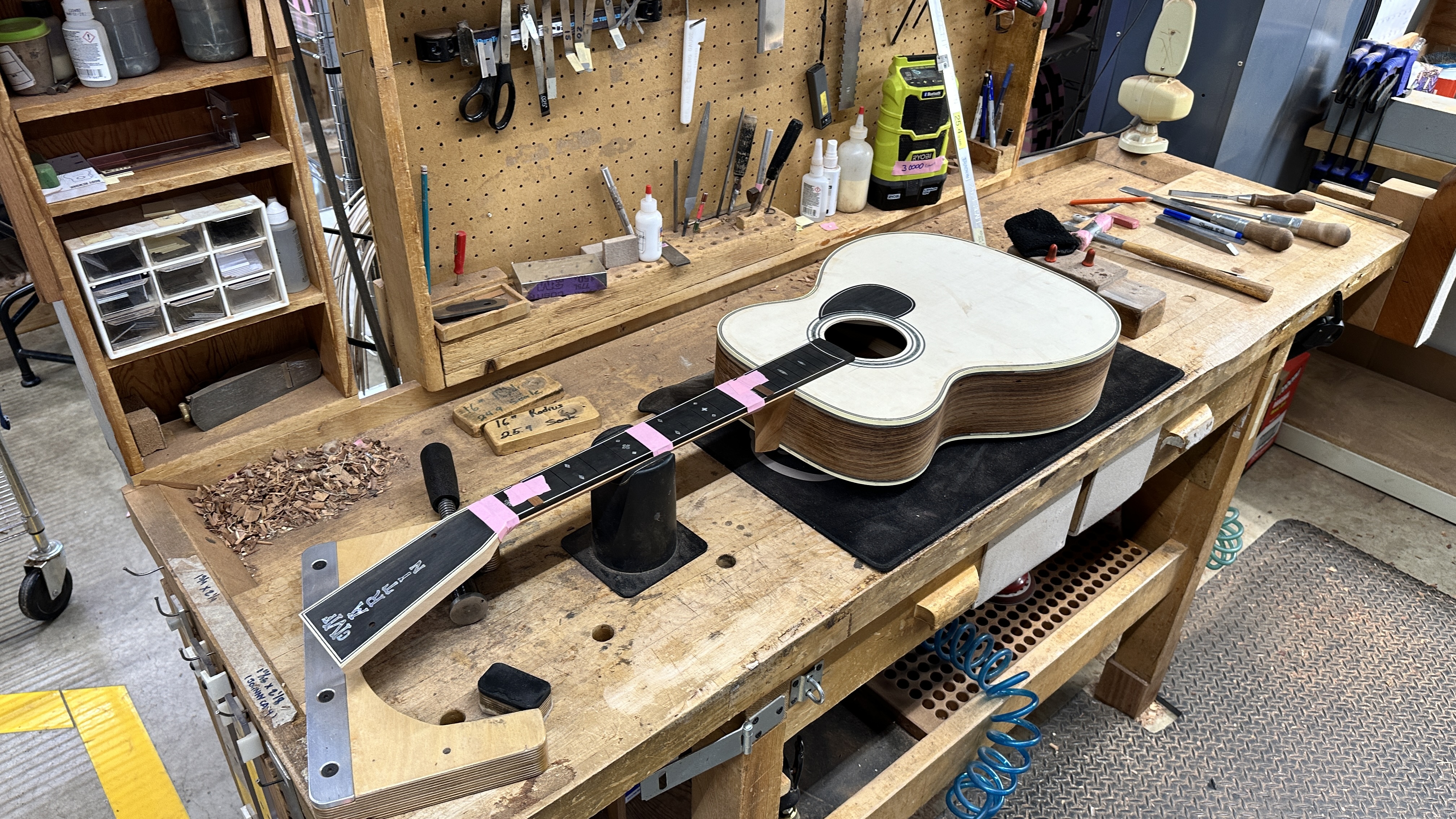
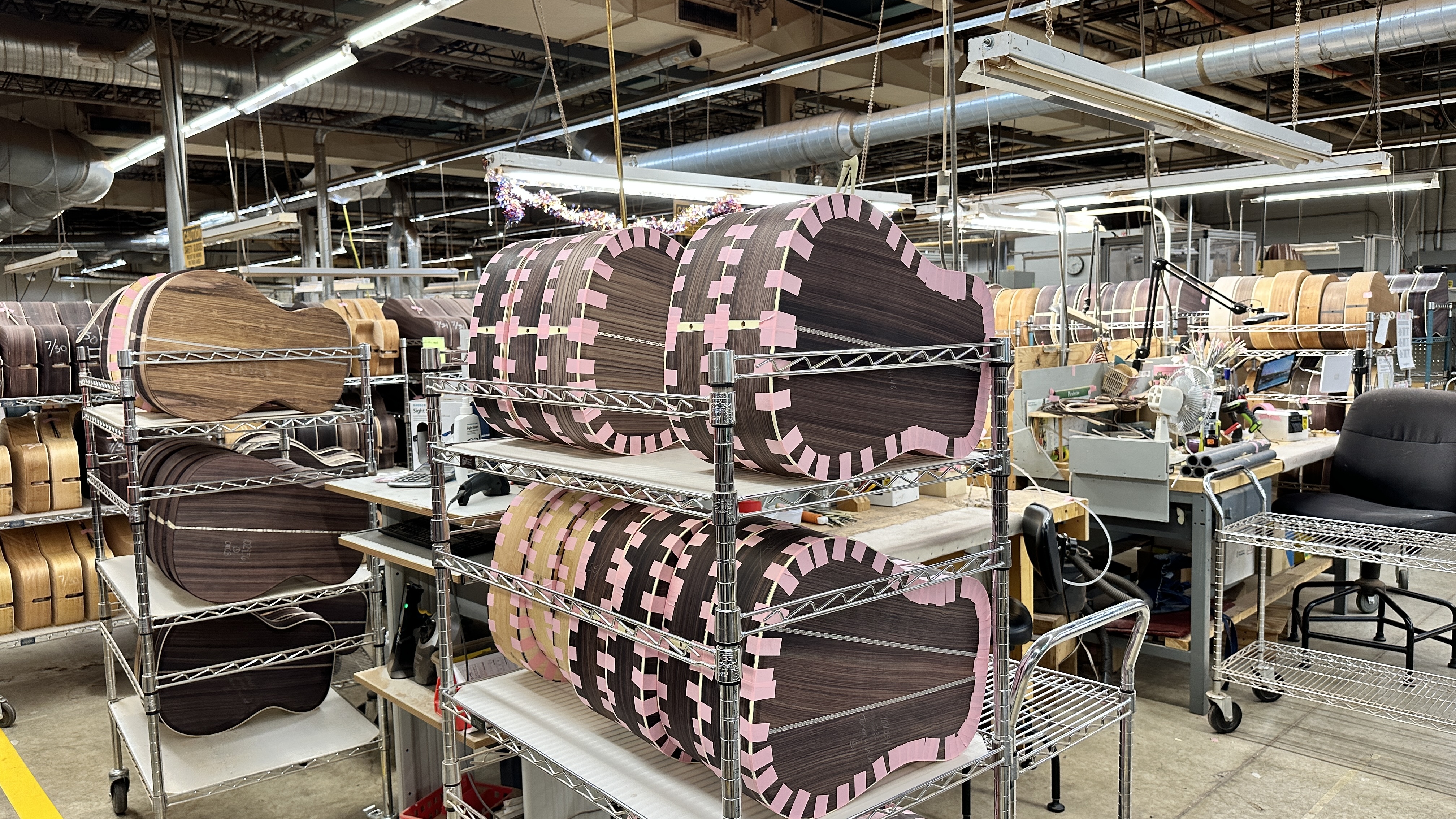
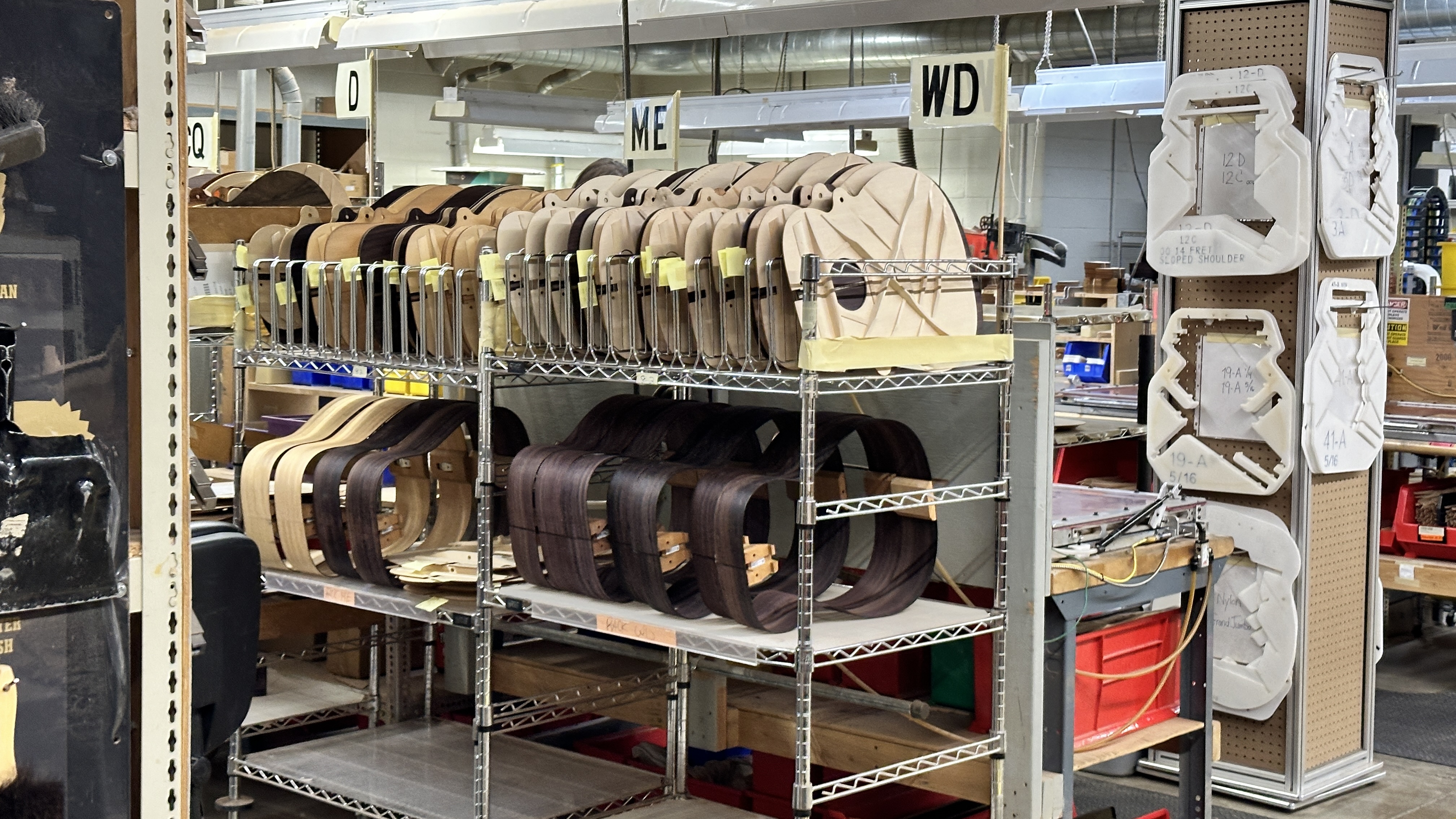
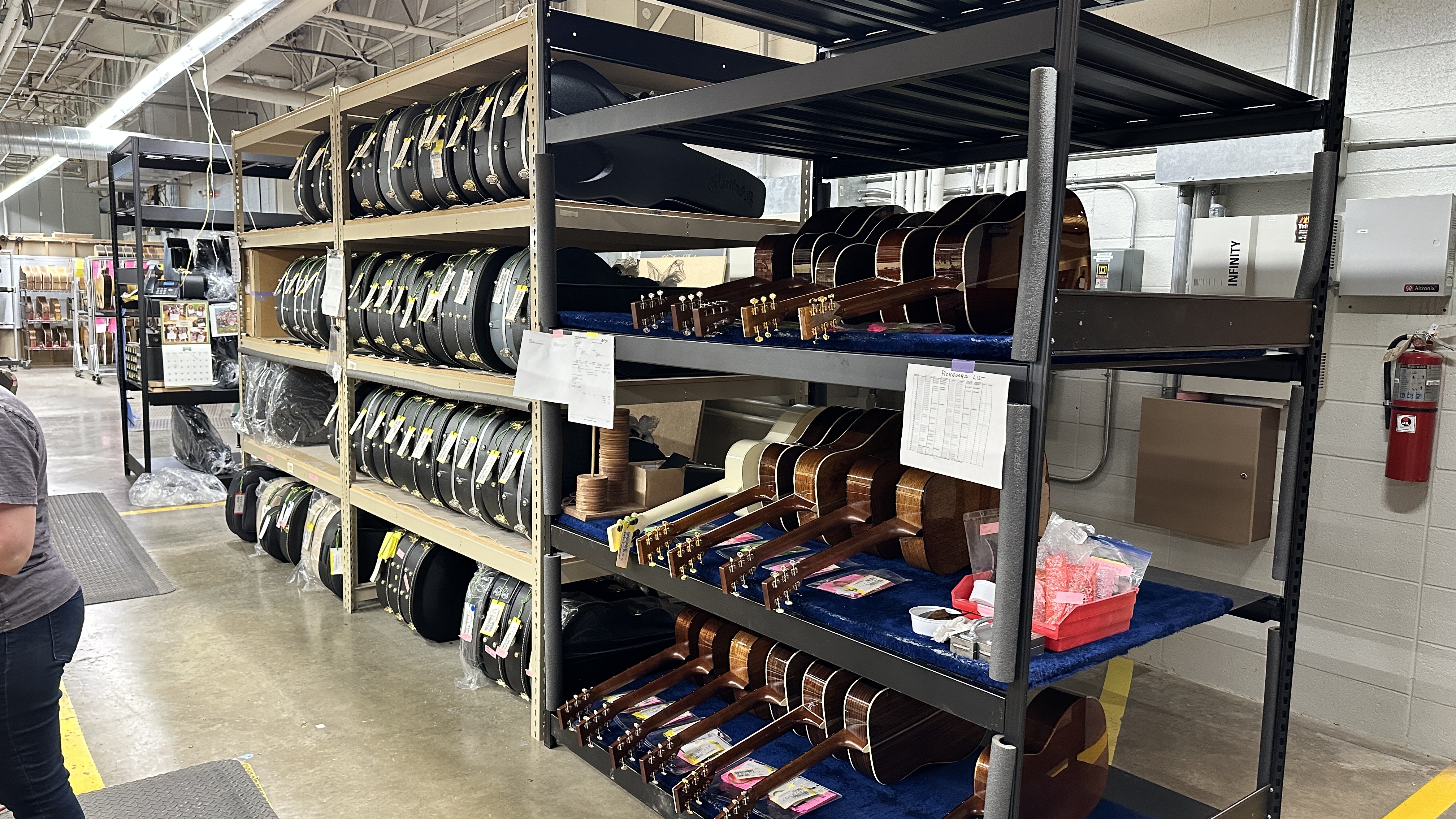
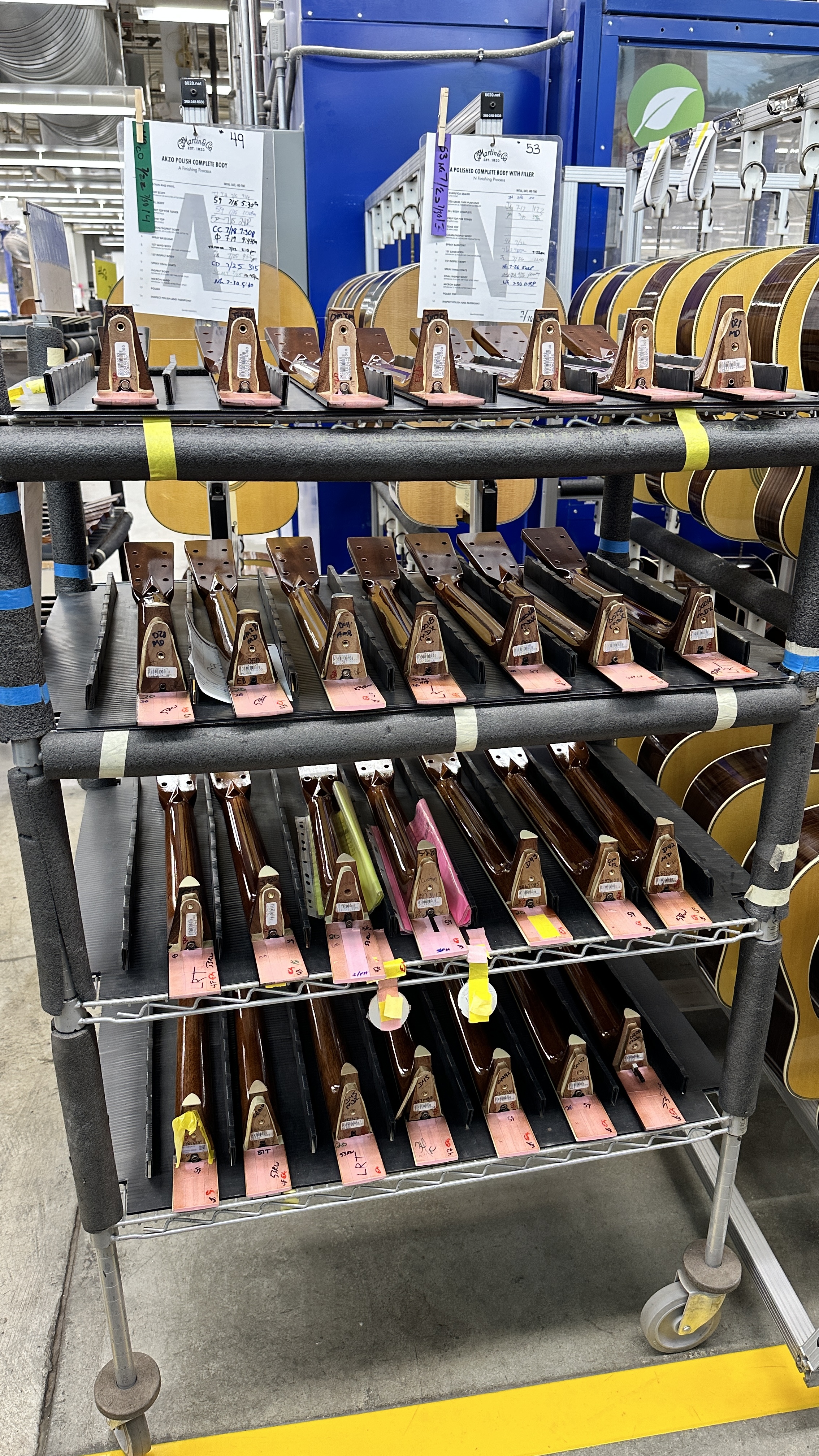
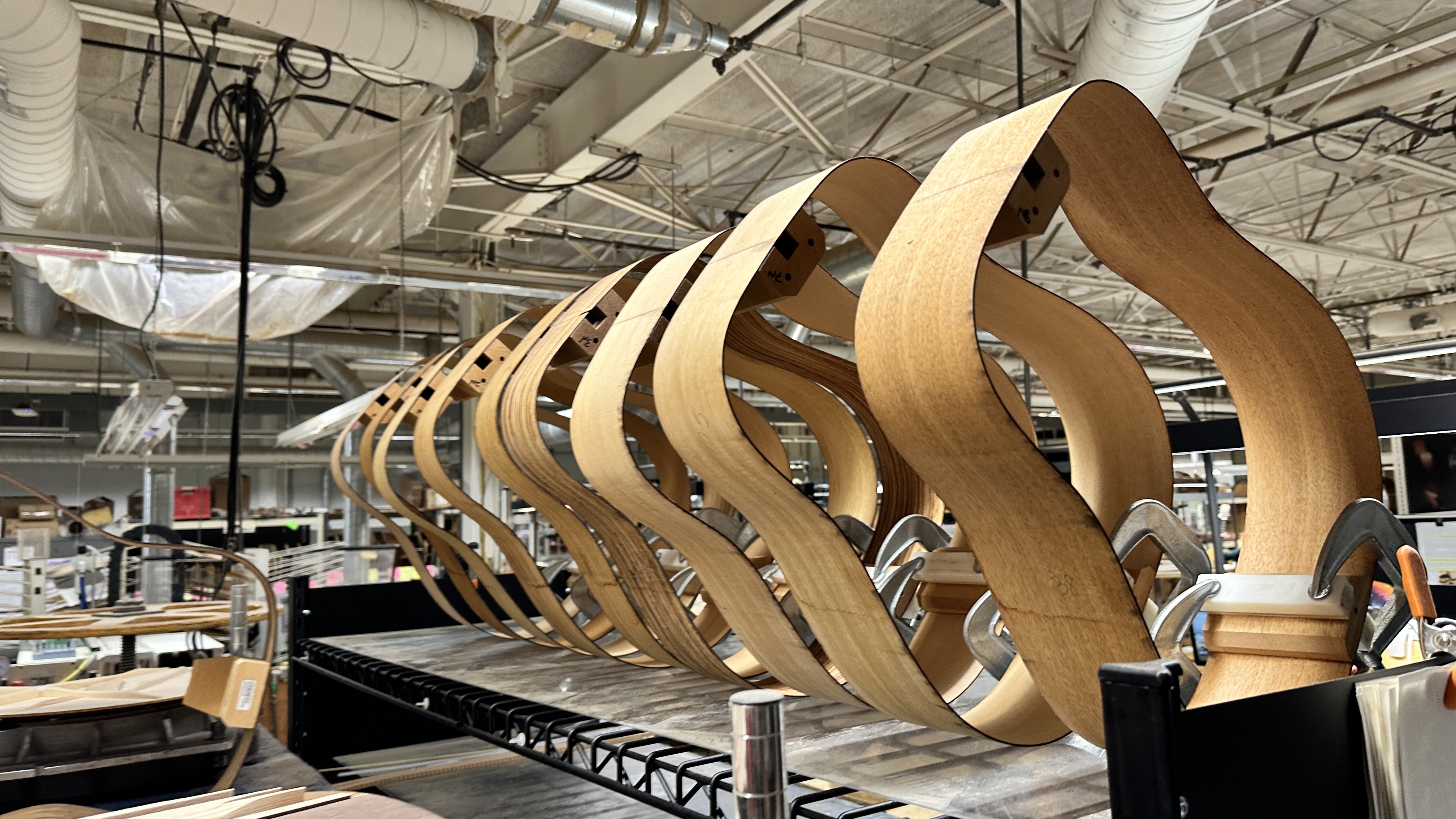
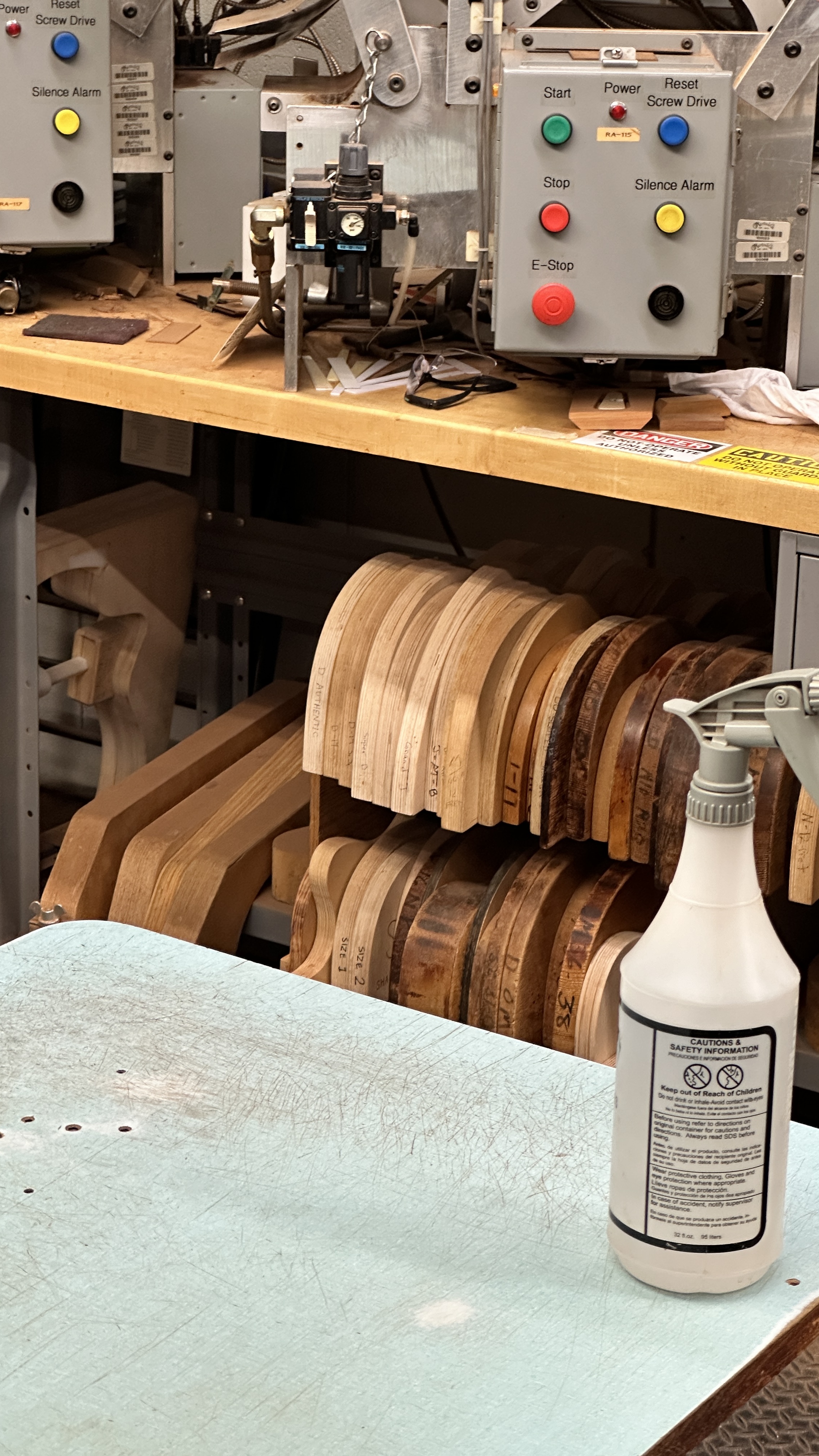
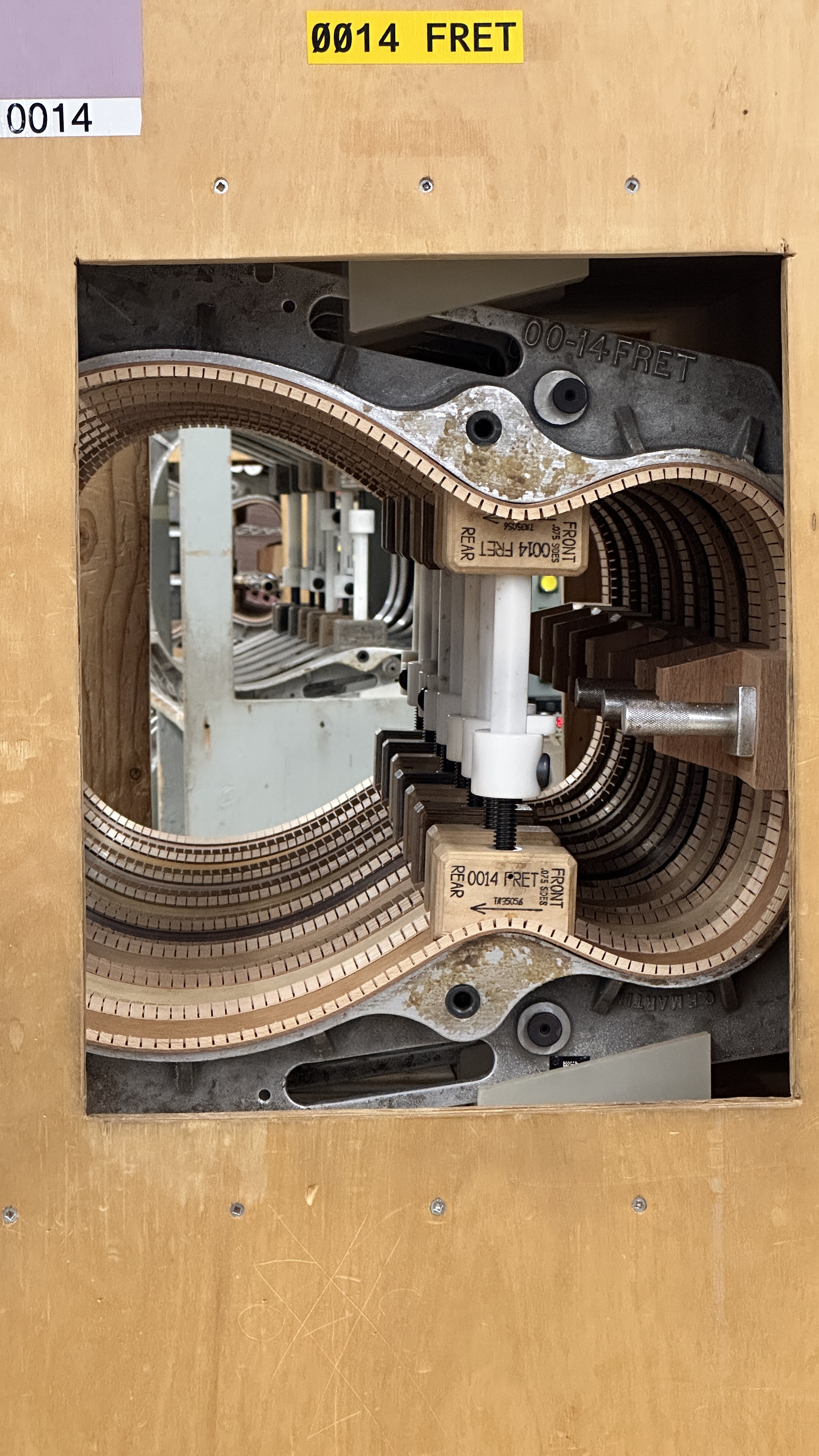
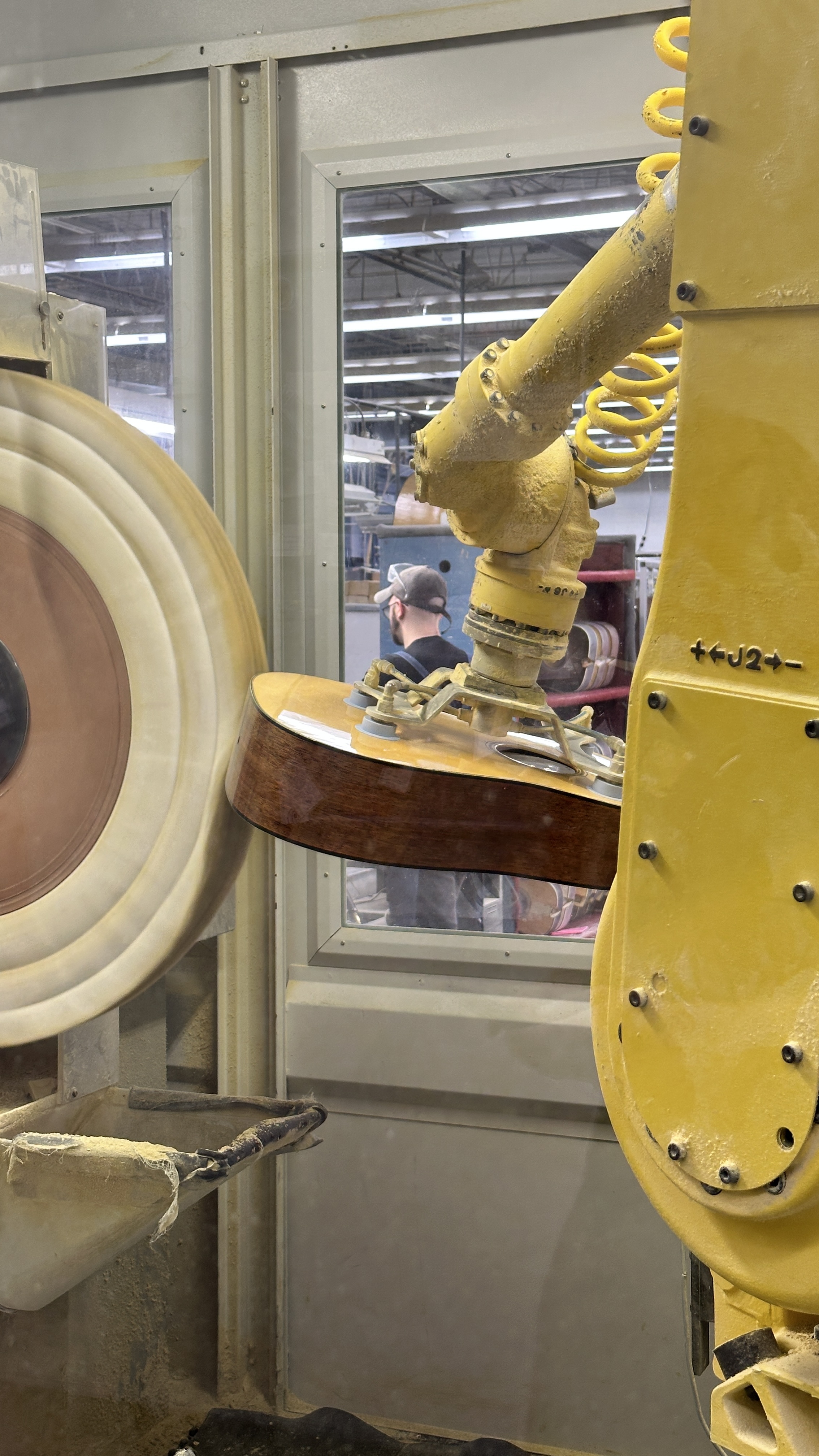
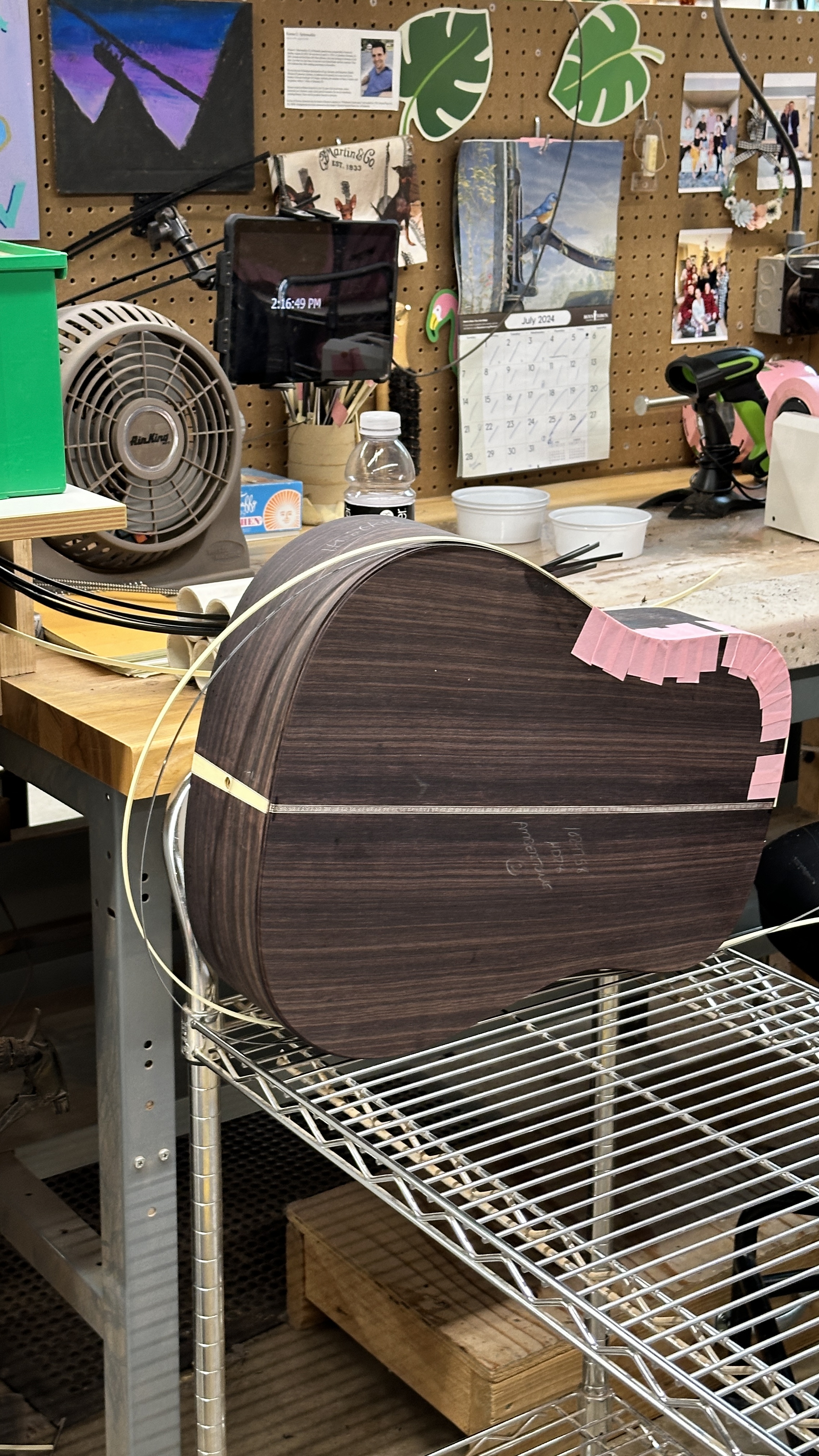
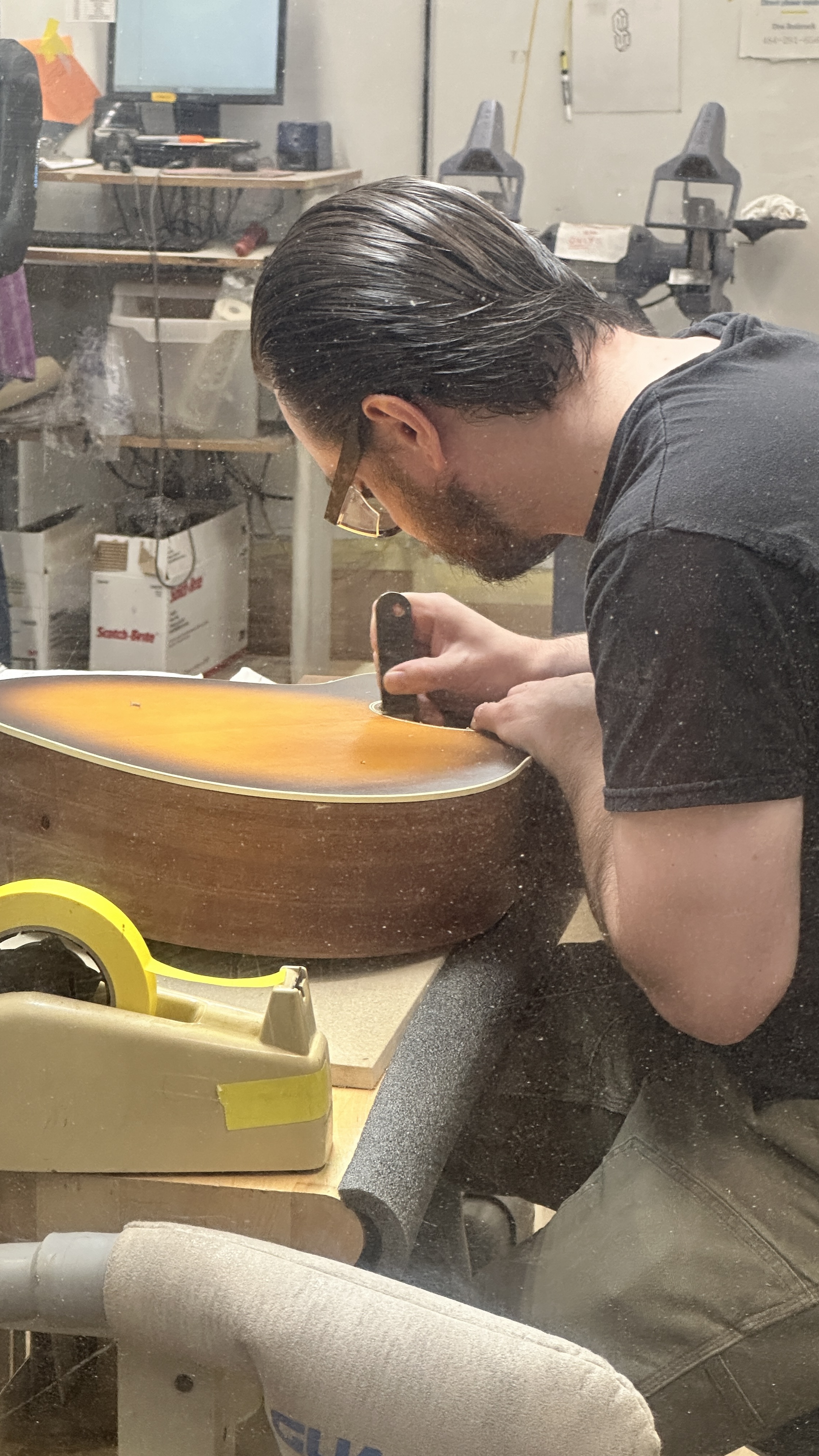
The tour was great – they had a tour guide walk us through the factory floor speaking to the history of the Martin family and the care they take to hand make all their guitars. It was really cool to see how all the individual parts are fabricated and then how they are all put together by hundreds of craftspeople. It was interesting to see how they did leverage a bit of technology (robot buffers/polishers) to perform functions that didn’t really require a specific skill set.

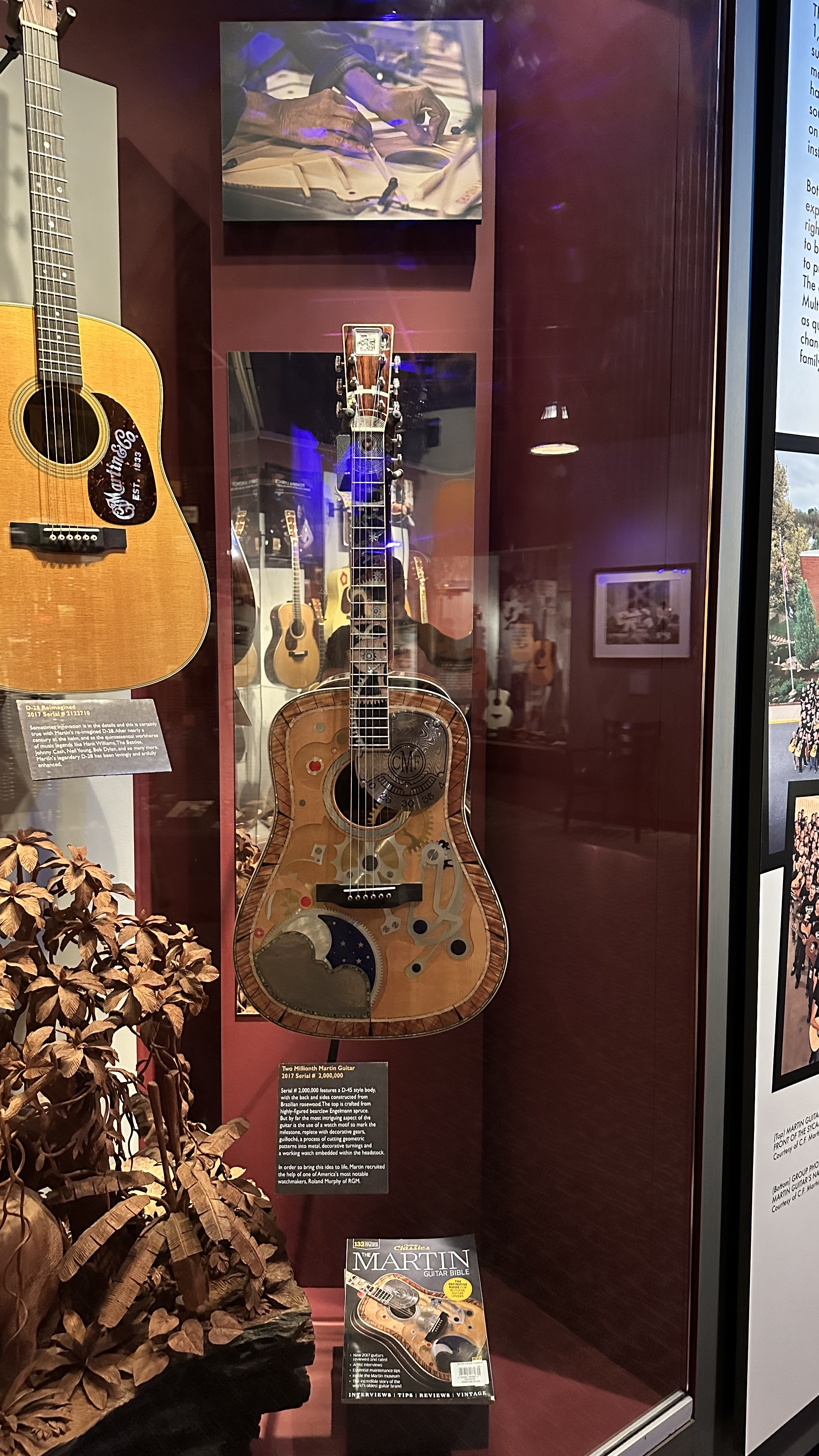
Once the tour was over I went to the museum to see all the artifacts on display -especially the one millionth and two millionth showpiece guitars. Simply gorgeous inlays and artwork. Once I was done learning about the history of Martin I popped into the Pickin’ room to strum out some tunes and test drive some of the guitars they had in the room. The D28 was really nice but I preferred the mid tones of the D-18 to match my voice better.

Inspired by the tour I arranged to buy and pickup a D18 from my local Music store – I took it home and proceeded to, as John C Mellancamp says, play it ’til my fingers bled. I love that guitar and I don’t play anything else now. I’m learning a few Nirvana unplugged songs just as a tribute to what started my love of this guitar.

Here’s my new baby (don’t worry kids I still love you more.. but it’s close!)

Here’s a variety of shots from the factory tour and museum in no particular order

Goal Met: 10 (or more) Outdoor Hikes

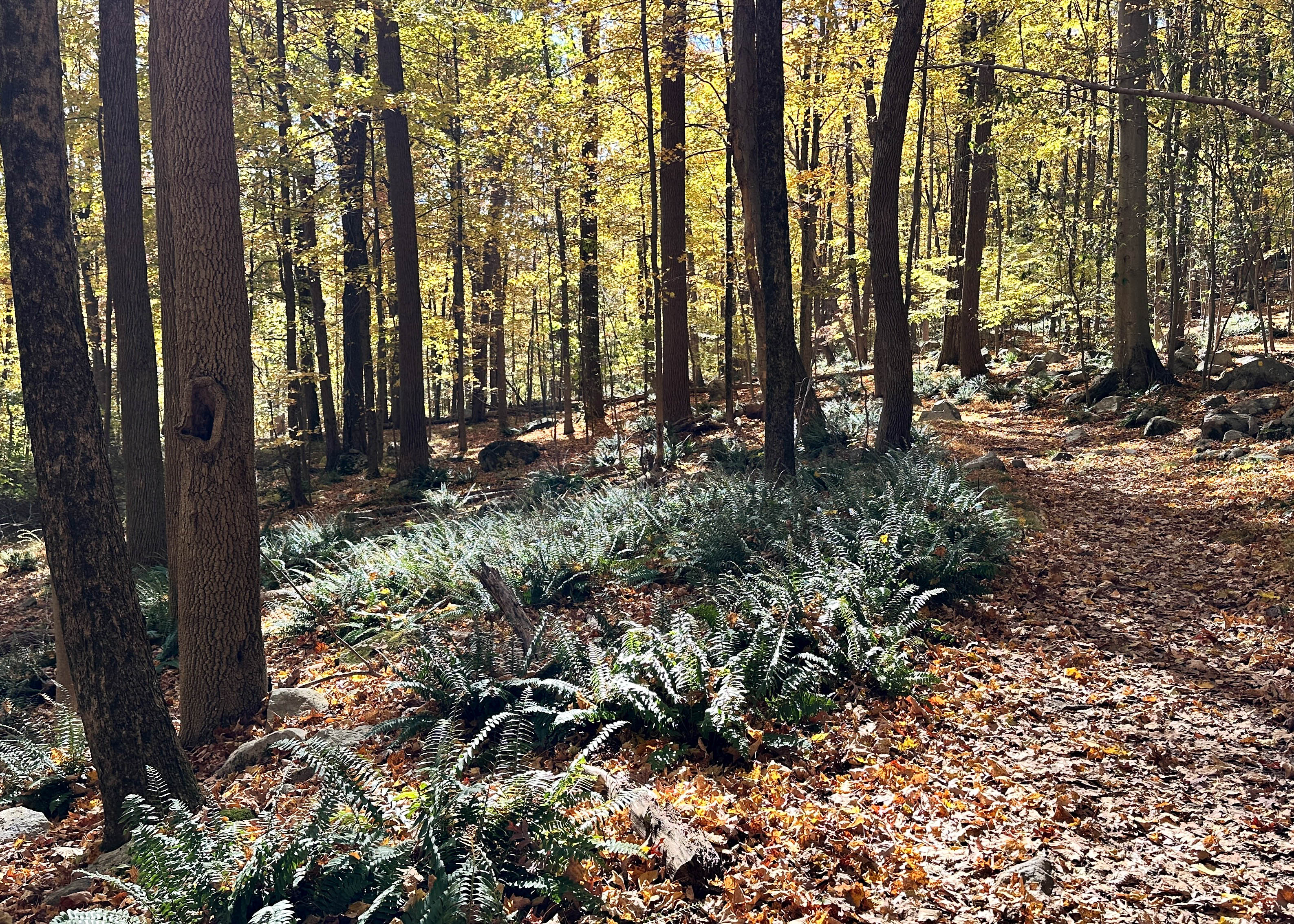
I’ve always liked being in the woods – as a child I would explore the scrub pine forest that was our backyard growing up. We’d wander around the white sands looking for cool stuff and just enjoying the primal feeling of being in nature, smelling the strong scent of pine and the earthy petrichor of the streams that dotted the forest. We found all kinds of things wandering the woods – beaver dams, fishing spots, fox dens, a weird amphitheater cut into the woods with a podium made of stone in the middle (OK so we never went back there because that shit was creepy). The serenity of the woods is ingrained in me and I always long to just go back. My dream vacation would be a cabin in the woods on a lake where I could just explore the forest with my family then come back to have a fire and make dinner then enjoy a scotch while relaxing and breathing in the cool night air.

All that being said – I never get to go on hikes much anymore. I just have a lot on my plate and so many activities to balance so I decided to make it a goal this year to get out at least 10 times. I picked 10 because that seems like something that would balance against all the other demands on my time and is often enough that I feel it would benefit me.

I usually go on hikes with the kids but there is one weekend a year where I go up on longer and more challenging hikes. I like do to them solo because it lets me stop at my leisure in picaresque spots to sit and just be present. Also – asking anyone else to climb a mile long 40 degree rock strewn trail to the summit just seems mean.

Lets take a look at the trails we hit in 2024:

Clayton Park Green Loop / Blue Pond Trail (1.8 miles) – This is the home park one that we frequent often because they have a nice mix of short scenic trails and a few longer loop trails. We took the green loop to the blue so we could visit the pond. It was early in the spring so not much to see but it was still a nice way to spend a morning.

Abbot Marshlands Spring Lake Trail (1.5 miles) – I found this by googling ‘hiking trails near me’ it was a short loop through the marshlands. It was mid spring and there was a prolonged period of rain before we went so it was lush and green and smelled like spring. It was a really flat trail so not that challenging

Sourland Mountain Devil’s 1/2 acre loop (3.15 miles) – this is a fun trail it starts off with a gradual climb over a pretty rocky trail then sharply rises to a boulder scramble which the kids did their best mountain goat impressions while also giving me anxiety attacks. We manged to get to the top without incident and took our lunch amidst the boulder field the finished off the loop on the gradually descending trail

Screenshot

Mount Vesuvius – The River of Lava (1.5 miles) – Nice winding trail starting from a higher elevation and sloping down through through a wooded area until it opens up to a giant scar in the woods where the eruption in the 1940’s burned its way through in a path of destruction. A short climb and you are standing right on the path of that lava flow and all around you is black lava rock but interestingly enough there’s also fields of wildflowers and so many butterflies showing how nature is slowly overtaking the destruction. A short climb up the slope and you can get a really clear view of the bay of Naples

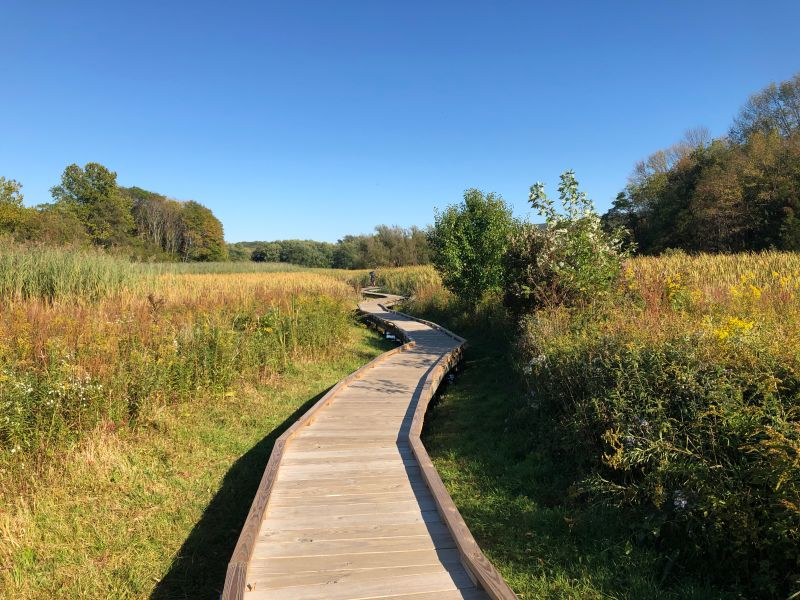
Watershed Institute: Creek side Trail (2.3) – Another local favorite this trail starts off with a nice clean boardwalks that winds through the watershed with fields of flowers and bird habitats. You step off the boardwalk onto the creek side trail and that loops around a with a lot if interesting spots (including a special ‘hobbit tree’ – a giant tree in a clearing) relatively flat trail with lots of muddy spots (it is a watershed after all)

Crystal Springs Nature Trail (3 miles) – We were staying at Crystal Springs for a little weekend getaway and one morning we decided to check out this nature trail that winded through the woods and across the golf course a few times. It had lots of informational posters on the trail talking about wildlife and nature in general which was in clear dissonance with the fact they built a giant golf course in the middle of the mountains. It was a nice day for a walk but it didn’t ‘feel’ like we were in the woods due to the noise from the resort.

Plainsboro Preserve Yellow Loop / White Trail (2.7 miles) – The Audubon society preserve is a haven for birdwatchers and on our hike we saw plenty of them! Herons, hawks, blue birds, jays, swallows, finches, ducks and of course the ever present Canada goose. This loop takes out you into the middle of the lake on a small peninsula where you get a great view of the lake and the surrounding area. Pretty flat trails but a variety of environments – from thickly canopied woods to bright and airy scrub trees.

Mount Tammany Red/Blue/Sunfish pond loop (11 miles) – One of the longer hikes it started with a very steep climb to the overlook via the red trail. I mean very steep – I had to stop a few times to just catch a breath as parts of it are more climbing than walking. The view from the top is great however and worth the climb and once I rested a bit I opted to do the sunfish loop adding almost 5 miles to the day. I thought I was done climbing so it wouldn’t be so bad – however I was gravely mistaken as the glacial pond was another 1000 feet of elevation at a steep incline. Once I got to the top it was a nice place to rest my aching legs and psych myself up for the last 5 miles down to the parking lot. The trail down wasn’t too bad – there were some spots where I had to use the hiking poles to keep my balance but overall it wasn’t too bad. Lots of water elements – however due to a prolonged drought they were mostly dry or brackish. I’d like to come back to see if during a normal rainy season.

Pyramid Mountain Yellow/Red/Yellow loop (5 miles) – This hike was an interesting adventure. Firstly my legs are toast from the 11 miles of climbing the day before and I was physically spent so I thought this short 5 miler should be pretty straightforward. It was not – I too the wrong trail marker and started at the end of the trail. Why does this matter because of the famous ‘100 stairs’ trail. It is what it says it is – 100 stairs cut into the mountain so you could get to the top quicker. It was also unseasonably warm that day and each ‘stair’ was a slab of stone so it took a while to scramble to the top (and I’m sure there were more than 100.. it was an arduous climb) once you get to the top though the rest of the rail is open, on flat ground and slowly descending so it was a pleasant walk to enjoy the fall foliage. The highly touted waterfall on this trail was bone dry due to the drought so it felt like a big letdown.. I was hoping for at least some water features but the land was parched.

Mercer County Park Red Loop (1 mile) – this is a beginner trail – completely flat and with little to no challenge. I was on it as part of my son’s cub scout troop’s hiking program. It was a fun hike led by the scoutmaster who showed them how to build a fire and what to put in a survival kit. It was so easy I considered not including it but a hike is a hike!

[no photo due for privacy reasons]

I still plan on doing a few more hikes as we get into the colder months and hopefully a snow hike at some point (if it ever snows here in the winter again) but for now these 10 were a lot of fun and I plan on keeping this goal going forward.

Of all the paths you take in life, make sure a few of them are dirt – John Muir

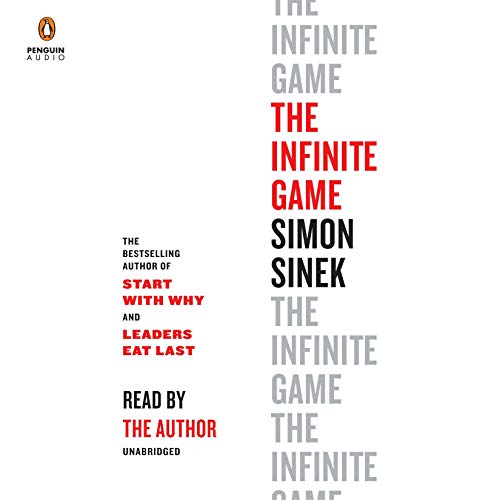
Simon Sinek – The Infinite Game

In “The Infinite Game”, Simon Sinek introduces the concept of the “infinite game” – a fundamental shift in how we approach competition, success, and the purpose of business.

Sinek contrasts the “finite game” with the “infinite game”. Finite games have clear rules, agreed-upon players, and a defined end point where a winner is declared. Examples of finite games include sports, board games, or business competitions. In contrast, the “infinite game” has no finish line – it is an ongoing, ever-evolving challenge without a clear winner.

Finite vs. Infinite Mindset

Sinek argues that many organizations and leaders approach business with a “finite mindset” – focused on short-term goals, beating the competition, and securing their position as the winner. In contrast, the “infinite mindset” looks at the long-term sustainability and resilience of the organization.

The key differences between the finite and infinite mindsets:

  • Purpose: Finite – to win. Infinite – to keep the game going.
  • Capability: Finite – to triumph over an opponent. Infinite – to build trust and cooperation.
  • Measurement: Finite – the financial bottom line. Infinite – the longevity and growth of the organization.
  • Rivals: Finite – opponents to be defeated. Infinite – worthy rivals to make you better.

The Just Cause

At the heart of Sinek’s “infinite game” concept is the “Just Cause” – a clear, inspirational vision for the future that guides the organization’s actions. A Just Cause is:

  • Inclusive: It calls all people to contribute, regardless of their status or position.
  • Service-oriented: It is not self-serving, but aims to advance a cause greater than the organization itself.
  • Resilient: It can withstand competition, disruption, and other challenges.
  • Idealistic: It represents an infinite, aspirational future that can never be fully achieved.

Sinek argues that organizations guided by a Just Cause are better able to adapt, innovate, and thrive in the face of an ever-changing business landscape.

The Infinite Mindset in Action

Sinek provides examples of companies and leaders that have adopted an infinite mindset, including Marriott, Unilever, and former Mastercard CEO Ajay Banga. These organizations focus on long-term sustainability, building trust with stakeholders, and creating value beyond short-term profits.

In contrast, Sinek criticizes companies and leaders who are trapped in a finite mindset, leading to shortsighted decision-making, eroding trust, and ultimately failing to succeed in the “infinite game” of modern business.

Key Takeaways

  • Distinguish between the “finite game” (with clear rules and winners) and the “infinite game” (an ongoing challenge without end).
  • Adopt an “infinite mindset” focused on purpose, capability, measurement, and relationship with rivals.
  • Develop a “Just Cause” – an inspirational, service-oriented vision to guide the organization.
  • Prioritize long-term sustainability and resilience over short-term gains.
  • Foster trust, cooperation, and adaptability to thrive in an ever-changing business environment.

(Summary AI assisted)

This book was interesting and I thought Simon had some solid ideas with a lot of real world data to back them up. In this current market drive business world I feel that long term success is often hurt by short term decisions based solely on getting the share price up to keep investors happy (and in turn, the CEO keeps his job)

I like incorporating Simon’s ideas as I develop my leadership style – always keeping an eye on the infinite game helps inform short term strategy decisions by balancing them with long term goals. I can burden my team now with all the demands from the customers and upper management or I can try to manage up as well as down. Setting expectations for work and providing a clear picture of the value of long term thinking.

I found the book thought provoking but a bit idealistic – mostly because while I agree fundamentally with his idea I have some pessimism that we can ever change the short term market thinking.

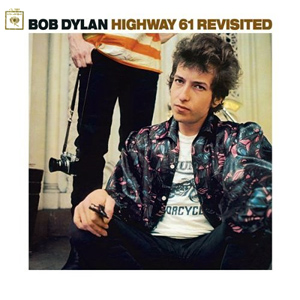
Bob Dylan – Highway 61 revisited

Bob Dylan’s ‘Highway 61 Revisited’: Genius, Madness, and the Occasional Whiff of Cat Litter

Look, let’s just get this out of the way right off the bat – Bob Dylan is a lyrical genius. When it comes to twisting the English language into kaleidoscopic new shapes, the man is second to none. He’s the kind of songwriter who can make a simple phrase like “the pump don’t work ’cause the vandals took the handles” sound like the most profound statement since the Gettysburg Address. But God help me, sometimes his voice makes me want to claw my own ears off.

Take the album opener, “Like a Rolling Stone” – a scorching, six-and-a-half minute epic that manages to simultaneously capture the sound of a soul being shattered and a middle finger being defiantly raised. The way Dylan spits out those lyrics, equal parts sarcasm and venom, is the musical equivalent of a John Wayne Gacy painting. It’s genius, no doubt, but also the kind of thing that’ll have you reaching for the Tylenol.

And then there’s “Ballad of a Thin Man,” a track so deliciously, gloriously weird that it makes Salvador Dali’s melting clocks look like a kindergarten art project. Dylan’s vocal delivery here is like listening to a deranged carnival barker who’s just mainlined a gallon of espresso – all urgent, nasal intensity with nary a hint of subtlety. But hey, when you’re trying to soundtrack the descent into madness, subtlety is the first thing to go out the window.

But let’s not forget the moments where Dylan’s seemingly limitless talent shines through the vocal haze. “Desolation Row” is a sprawling, kaleidoscopic masterpiece, a veritable parade of misfits, malcontents, and Biblical figures that unfolds like a surrealist fever dream. The way he weaves together literary allusions, social commentary, and pure unadulterated madness is the stuff that doctoral theses are made of.

And then there’s the title track, “Highway 61 Revisited” – a bluesy, apocalyptic stomp that sounds like it was recorded in the pits of hell itself. The lyrics are equal parts absurdist humor and existential dread, with Dylan spitting out lines like “God said to Abraham, ‘Kill me a son'” with a gleeful, almost manic energy. It’s the kind of song that makes you want to dust off your leather jacket, hop on a Harley, and embark on a one-way trip down the road to total oblivion.

But for every moment of transcendent brilliance, there’s a track that feels like it’s been loitering in the corner of the studio, picking its nose and waiting for the cool kids to notice it. “Can You Please Crawl Out Your Window?” is an undeniably catchy little ditty, but it also has all the depth and complexity of a kiddie wading pool. And let’s not even get started on “Just Like Tom Thumb’s Blues” – it’s the musical equivalent of that one weird uncle who keeps trying to explain the deeper meaning behind the lyrics to “The Monster Mash.”

In the end, “Highway 61 Revisited” is the sound of a true visionary operating at the absolute peak of his powers, even if his voice sounds like it’s been dragged through a gravel pit and set on fire. It’s an album that demands your attention, whether you want to give it or not. One minute, you’re marveling at Dylan’s unparalleled talent for turning the mundane into the sublime, and the next, you’re reaching for the volume knob, desperate to escape the aural onslaught of his distinctively abrasive croon.

But you know what? That’s Bob Dylan in a nutshell – a walking, talking contradiction who wouldn’t have it any other way. He’s a lyrical genius who could make the straightforward sound like the most convoluted word salad imaginable. He’s a musical maverick who’ll leave you alternately awestruck and reaching for the Advil. And in the end, that’s precisely why we keep coming back for more.

Rating: 4.5 out of 5 Existential Cigar Smoke Halos 🚬

Highs:

  • Dylan’s unparalleled lyrical prowess and ability to weave together disparate cultural references
  • The sheer sonic intensity of tracks like “Highway 61 Revisited” and “Ballad of a Thin Man”
  • The album’s refusal to conform to any sort of conventional structure or expectation

Lows:

  • Dylan’s notoriously abrasive vocal delivery, which can veer dangerously close to self-parody at times
  • The occasional moments of filler that feel like they’re just taking up space between the album’s more inspired moments
  • The nagging feeling that Dylan is sometimes just a little too in love with his own eccentricities

Final Thought: “Highway 61 Revisited” is the musical equivalent of taking a deep dive into the mind of a madman – it’s equal parts exhilarating, confounding, and likely to give you a raging migraine. But for those willing to strap in and take the ride, the rewards are immense. Dylan may not always make it easy, but when he’s firing on all cylinders, the results are nothing short of transcendent. Just be sure to keep a bottle of aspirin handy, because this is one journey that’s bound to leave your ears ringing.

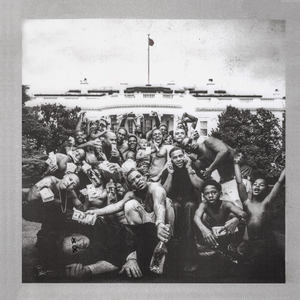
Kendrick Lamar – To Pimp a Butterfly

Kendrick Lamar’s ‘To Pimp a Butterfly’: Genius With a Side of Self-Indulgence

Look, I’m just going to come right out and say it – Kendrick Lamar is a goddamn lyrical virtuoso. The way he weaves together complex rhyme schemes, social commentary, and raw emotion is the stuff that keeps English professors up at night, frantically jotting down notes. But when it comes to his 2015 opus “To Pimp a Butterfly,” I can’t help but feel like he occasionally lets his own brilliance go a little too far off the rails.

From the moment that frenzied jazz intro of “Wesley’s Theory” kicks in, it’s clear we’re in for a wild ride. Kendrick wastes no time diving headfirst into a dizzying maelstrom of political rage, personal introspection, and searing cultural critique. The way he seamlessly transitions from spoken-word poetry to full-on funk freakouts is the musical equivalent of watching Muhammed Ali dance around the ring.

And the production – my goodness, the production. Flying Lotus, Terrace Martin, and the rest of Kendrick’s inner circle have crafted a sonic landscape that’s equal parts futuristic and timeless, blending elements of jazz, soul, and psychedelia into a heady, mind-altering concoction. “King Kunta” is a boisterous call to arms that sounds like it was recorded in the middle of a New Orleans block party, while “Alright” is a soaring, gospel-tinged anthem that could simultaneously soundtrack a riot and a church revival.

But herein lies the rub – for as much as I admire Kendrick’s sheer ambition and technical prowess, there are times when “To Pimp a Butterfly” just feels a tad…overwrought. The extended interludes and stream-of-consciousness spoken-word pieces, while undoubtedly thought-provoking, can also come across as self-indulgent and needlessly complex. I get that he’s trying to tackle heavy themes of racial identity, sociopolitical unrest, and personal struggle, but sometimes I just want to groove without having to take notes for my next college seminar.

Take “u,” for example – it’s a gut-punch of a song, with Kendrick’s raw, vulnerable vocals cutting straight to the bone. But the way it morphs into a disorienting, almost confrontational outro feels more like an attempt to be “deep” than a natural extension of the emotional journey. And let’s not even get started on that bonkers “Mortal Man” closer, which features a faux interview with Tupac that’s equal parts brilliant and baffling.

Don’t get me wrong, there are plenty of moments where Kendrick’s ambition pays off in spades. “Alright” is an undisputed modern classic, a rallying cry for a generation struggling to stay hopeful in the face of systemic oppression. “How Much a Dollar Cost” is a searing meditation on empathy and moral responsibility that’ll have you re-evaluating your own spending habits. And the way he weaves recurring motifs and lyrical callbacks throughout the album is the work of a true master storyteller.

But for every transcendent high, there’s an indulgent low that threatens to pull the whole enterprise crashing down. It’s the musical equivalent of watching a virtuoso tightrope walker perform jaw-dropping feats – you can’t help but be awed, even as you cringe at the prospect of them taking one wrong step.

In the end, “To Pimp a Butterfly” is the sound of a generational talent pushing the boundaries of what hip-hop can be. It’s bold, it’s challenging, and it’s undeniably the work of a creative visionary. But it’s also messy, self-serious, and at times, a little too enamored with its own perceived importance.

It’s the kind of album that’ll have the glassy-eyed intellectuals debating its merits for years to come. And you know what? I respect that. I just wish Kendrick would occasionally remember that making great art doesn’t have to mean subjecting your listeners to an hour-long symphony of existential angst.

Rating: 4 out of 5 Beret-Wearing Intellectuals 🤓

Highs:

  • Kendrick’s lyrical virtuosity and storytelling prowess
  • The mind-bending, genre-blurring production
  • Moments of raw emotional catharsis that’ll have you punching the air

Lows:

  • Overly indulgent interludes and spoken-word pieces
  • An occasionally self-serious tone that verges on pretentiousness
  • The nagging feeling that Kendrick is trying a little too hard to be “important”

Final Thought: “To Pimp a Butterfly” is the musical equivalent of a triple-shot espresso – it’ll jolt your senses and leave you buzzing with ideas, but it might also give you a bit of a headache if you’re not careful. Kendrick Lamar is undoubtedly a generational talent, but sometimes, even geniuses need to remember that it’s okay to just kick back and let the music do the talking.

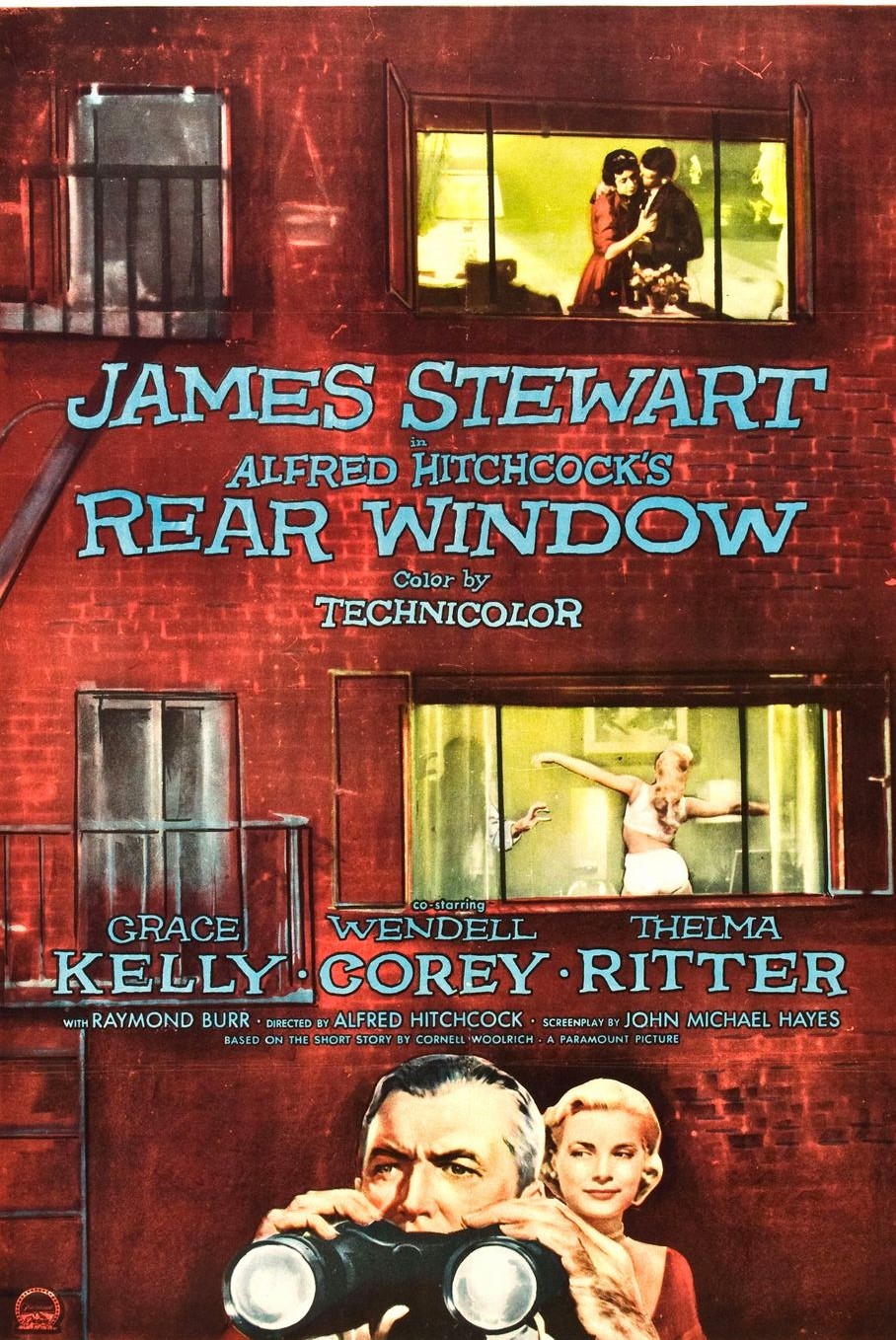
Rear Window

Ah, “Rear Window,” a cinematic gem that proves the old adage, “curiosity killed the cat, but satisfaction brought it back.” This 1954 masterpiece, directed by the legendary Alfred Hitchcock and starring the incomparable James Stewart and Grace Kelly, is a thrilling exploration of voyeurism, suspicion, and the dark underbelly of human nature.

The story follows L.B. “Jeff” Jefferies (Stewart), a globe-trotting photographer confined to his apartment after breaking his leg on assignment. With nothing but time on his hands, Jeff takes to spying on his neighbors through the rear window of his apartment, his trusty binoculars and telephoto lens his only companions.

At first, Jeff’s voyeuristic tendencies seem harmless enough – a bit of harmless people-watching to pass the time. But as he becomes more and more engrossed in the lives of his neighbors, he begins to suspect that one of them, a salesman named Lars Thorwald (Raymond Burr), may have murdered his invalid wife.

Aided by his glamorous girlfriend, Lisa Fremont (Kelly), and his wisecracking nurse, Stella (Thelma Ritter), Jeff sets out to unravel the mystery of Thorwald’s wife’s disappearance. But as he becomes more and more obsessed with the case, he begins to lose sight of the line between observation and invasion, putting himself and those he loves in grave danger.

Hitchcock, the master of suspense, is at the top of his game in “Rear Window.” His use of the confined apartment setting is a stroke of genius, creating a sense of claustrophobia and unease that permeates every frame. The camera becomes Jeff’s eyes, panning across the courtyard and zooming in on the lives of his neighbors, each window a mini-drama waiting to unfold.

Stewart is brilliant as Jeff, his affable charm masking a deeper sense of unease and frustration. Kelly, in one of her most iconic roles, is a vision of grace and beauty, her outward poise belying a fierce intelligence and determination. And Burr, in a chilling turn as the enigmatic Thorwald, is a study in quiet menace, his every move laden with sinister intent.

But it is the film’s exploration of voyeurism and the ethics of observation that truly sets it apart. As Jeff becomes more and more enmeshed in the lives of his neighbors, he begins to question his own morality, wondering if he has the right to pry into the private lives of others. In a telling moment, Lisa chastises him for his behavior, reminding him that “we’ve become a race of Peeping Toms.”

As the tension mounts and the danger becomes more and more palpable, “Rear Window” builds to a heart-stopping climax. In a scene that has become iconic in the annals of cinema, Lisa infiltrates Thorwald’s apartment, searching for evidence of his crimes. The camera becomes Jeff’s eyes once more, his helpless gaze fixed on the woman he loves as she puts herself in harm’s way.

In the end, “Rear Window” stands as a testament to the power of cinema to explore the darkest recesses of the human psyche. It’s a film that asks uncomfortable questions about the nature of privacy, the ethics of observation, and the thin line between curiosity and obsession. Hitchcock’s mastery of the medium is on full display, his every shot a mini-masterpiece of composition and tension.

So if you’re in the mood for a pulse-pounding, thought-provoking exploration of the human condition, look no further than “Rear Window.” Just remember, as Jeff so aptly puts it, “I wonder if it’s ethical to watch a man with binoculars and a long-focus lens. Do you suppose it’s ethical, even if it’s in the cause of justice?” It’s a question that will linger long after the final credits have rolled.

3/5 suspenseful stars. This movie exudes 1950’s charm – from the movie poster, the music, down to the clothing it encapsulates the time period perfectly. Jimmy Stewart is great and Grace Kelley provides a charming counterpoint to Jimmy’s gruff character. It starts out slow and builds up suspense until the armrest gripping final 10-15 minutes where things get really tense and.. well.. the guy with the broken legs falls off the balcony. I mean – this guy can’t catch a break (hey now!) but hey – this is on him. If he wasn’t spying on the neighbor they would have gotten away with murder and probably skipped town without endangering his girlfriend or him. I always enjoy Hitchcock movies and Jimmy Stewart and I recall watching this as a young kid with my mom but not really getting what was going on so it was interesting 40+ years later seeing it again and reconciling my young mind with my current experiences.

Goal Met – 50 Hours of Informational Podcasts

First off – I’m not one of those people that listens to podcasts all day so I can reference them at cocktail parties and seem enlightened (yes, I’ve met those people) plus I have a hard time maintaining focus for more than a few minutes – my mind will invariably wander and when I snap back into focus 20 minutes of the podcast will have gone by and I didn’t hear any of it (this is also the reason I struggle with audio books)

However – I knew I had two captive hours every day during my commute to work that I could leverage. I usually just listened to sports radio or Apple music but I started thinking that’s probably not the greatest use of that captured time. So I decided to lean into informational podcasts so I can use that time to learn and broaden my mind (not that sports radio doesn’t do that…)

Since I started a new job as a people manager it’s a bit heavy in the beginning on management tools and strategies since I was trying to build a management style but as the work picked up I started leaning into productivity podcasts to help balance work, life, and this 50for50 goals.

It was a bit of a struggle to maintain focus in the beginning since my mind tended to wander often but I think the meditation I was trying was helping me focus and be present and a few months in I found I could focus on most of the episodes without having to rewind

Since I was doing it so often it became a bit of a habit and now whenever I drive somewhere I’m usually trying to listen to something interesting but sometimes my brain just doesn’t want to work that hard and that’s when I crank the tunes and just enjoy the drive. In fact for a few months I split it up mornings for podcasts, afternoons for listening to the ‘Top 50 albums of all time’ maximizing that captive time to achieve my goals!

Here’s the list of the podcasts I’ve listened to while achieving this goal. There’s a few I listen to often because they’re consistently interesting enough that I didn’t feel the need to go and find new podcasts to listen to as I only had two hours a day

Manager ToolsHow to set annual goals
Work Life with Adam GrantYour hidden personality
Hidden BrainMaking the most of your mistakes
Hidden BrainHow to Believe in yourself
Beyond the to-do listSelf-Awareness
Manager toolsOne on Ones Part 1
Manager ToolsGiving Effective Feedback
Hidden BrainFinding Focus
Manager ToolsGiving Effective Feedback Part 2
A Bit of Optimism w/Simon SinekAtomic Habits with James Clear
Manager ToolsGiving Effecive Feedback Part 3
A Bit of Optimism w/Simon SinekTheory of everyone
Manager ToolsEffective Meetings 1/4
Work Life with Adam GrantYour Brain on Art
Beyond the to-do listHarnessing Creativity at Work
Work Life with Adam GrantThe Problem with Optimizing our Lives
Beyond the to-do listSuper power of clear communicators
Beyond the to-do listRepurpose your content
Manager ToolsCulture: Core Behaviors
Work Life with Adam GrantDaniel Kahneman: Don’t trust your instinct
The Next Big IdeaMIDLIFE: Once a crisis, now an opportunity
A Bit of Optimism w/Simon SinekSweting the small stuff with Steven Bartlett
Work Life with Adam GrantHow to be productive w/o burning out
Beyond the to-do listMyths Surrounding Memory
Hidden BrainEscape the Matrix
Work Life with Adam GrantAI and the future of creativity
HBR on LeadershipHow to be persuasive at work
HBR on LeadershipHow the best leaders drive innovation
HBR on LeadershipHow to lead great conversations
Beyond the to-do listFinding the right productivity tools
HBR on LeadershipWhan you make the leap to manager
HBR on LeadershipHow to become a better manager
The Next Big IdeaLook again: How to debabitualize
Hidden BrainAre you listening? (The skill of active listening)
Manager ToolsProactive Manager: Meetings
The Learning LeaderThe Score that Matters – Growing Excellence in yourself
The Learning LeaderAdding Surplus Value (Discussion with Scott Galloway)
Hidden BrainCurious Science of Cravings
The Next Big IdeaSlow Productivity w/Cal Newport
The Learning LeaderDiscussion with Scott Belsky of Adobe
Ten Percent HappierAncient Strategies for managing stress
A Bit of Optimism w/Simon SinekHow to eat with Jessie Inchauspe
Manager ToolsOne on Ones (Updated for 2024)
Beyond the to-do listApplying Enneagrams to Your Business
Beyond the to-do listExtending your mind via better note taking
Manager ToolsUpdated Feedback Model P1
The Learning LeaderObsessing over quality and details over amount of work done
The Next Big IdeaWhy the Civil War Matters Today
The Learning LeaderGrowing without goals (talk with Jason Fried)
Ten Percent HappierThe Science of Getting out of your head
Hidden BrainParents Keep Out! Benefit of free / unsupervised play
The Next Big IdeaWhy We Remember: The Science of Memory
Work Life with Adam GrantJohn Green – Paying attention to your attention
Hidden BrainInnovation 2.0 – Do less
The Next Big IdeaHow AI will revolutionize learning
The Learning LeaderCreating a flexible mind
Hidden BrainWhy trying to hard can backfire on you
HBR IdeaCastGetting the most out of digital collaboration tools
Beyond the to-do listThe relationship between productivity and proper documentation
Ten Percent HappierLongevity Secrets of the Blue Zones
Work Life with Adam GrantRe-imagining Technology
Ten Percent HappierThe last podcast you ever need to hear about exercise
Work Life with Adam GrantRichard Branson on saying yes now and figuring it out later
The Next Big IdeaFriction: How smart leaders make things easier
Work Life with Adam GrantHow to enjoy failure with Gabrielle Zevin
Hidden BrainMaking the world sparkle again
Work Life with Adam GrantFighting against the status quo
HBR: Coaching Real LeadersMaking the most of your work day
Ten Percent HappierThe 5 Pillars of brain health
Hidden BrainFighting Despair
Harvard Business ReviewWhat it takes to be a manager
The Learning LeaderHow to fix your craving mindset w/Michael Easter
The Learning LeaderSeth Godin: How to be remarkable
The Next Big IdeaThe Anxious Generation part I
The Next Big IdeaThe Anxious Generation part 2
The Next Big IdeaWork of Art: How something comes from nothing
Beyond the to-do listDispel the Myth and Stigmas around ADHD