Goal Met 50 Ted Talks

I’ve always liked TED Talks – present the key points of your information in 20 minutes or less. If I want to follow up and do a deep dive of the subject well that’s on me. I feel strongly about this – too many times I’ve slogged through a book where I felt at the end it could have been a 20 page pamphlet – there was an app that did just that for a while but now I use Claude AI tools to summarize books for me if I start to feel they are full of padding (it really does a great job – I highly recommend this usage of AI)

This was a relatively easy goal to finish due to the 20 minute nature of TED Talks – anytime I had some downtime I’d fire up the app and pick a talk I found interesting. I rarely ran into an issue finding a talk to listen to there’s such a variety and a few of the TED talks resonated with me so much I change the way I approached certain things

The subjects I chose are varied and I tried to be as diverse as possible but if you look at the data you can see patterns – I watched a lot of videos about introspection (changing yourself), AI, and children. All things I feel strongly about so I can see where this bias crept in but overall I felt it was a good variety.

So here’s the first 50 TED talks I watched this year – if any of the titles seem interesting please check them out – it’s only 20 minutes and it might change your life.

What’s your leadership language?Rosita Najmi
The power of introvertsSusan Caine
You aren’t at the mercy of your emotions — your brain creates themLisa Feldman Barrett
How to stop screwing yourself overMel Robbbins
It’s time for infectious generosity. Here’s howChris Anderson
The power of time offStefan Sagmeister
How “digital twins” could help us predict the futureKaren Wilcox
The mind behind LinuxLinus Torvalds
To raise brave girls, encourage adventureCaroline Paul
Let curiosity leadYara Shahidi
Intermittent Fasting: Transformational TechniqueCynthia Thurlow
Fasting: A Path To Mental And Physical TranscendencePhil Sanderson
asting: Awakening the Rejuvenation from WithinValter Longo
Starving cancer awaySophia Lunt
How to 3D print human tissueTaneka Jones
The pharmacy of the future? Personalized pills, 3D printed at homeDaniel Kraft
How to make learning as addictive as social mediaLuis von Ahn
Why your life needs novelty, no matter your ageKenneth Chabert
Why AI will spark exponential economic growthCathie Wood
How AI can save our HumanityKai-Fu Lee
From Perception to Pleasure: How Music Changes the Brain |Dr. Robert Zatorre
Why fasting bolsters brain powerDr. Mark Mattson
Great leadership is a network, not a hierarchyGitte Frederiksen
Why the secret to success is setting the right goalsJohn Doerr
Does AI actually understand us?Alona Fyshe
The puzzle of motivationDan Pink
A comedian’s take on how to save democracyJordan Klepper
5 lessons on happiness — from pop fame to poisonous snakesMike Posner
My philosophy for a happy lifeSam Berns
What it takes to be a great leaderRosilinde Torres
What is an AI anyway?Mustafa Suleyman
How AI will step off the screen and into the real worldDaniela Rus
How fantasy worlds can spark real changeAnnalee Newitz
Is your partner “the one?” Wrong questionGeorge Blair-West
My journey to thank all the people responsible for my morning coffeeAJ Jacobs
Where joy hides and how to find itIngrid Fetell Lee
All it takes is 10 mindful minutesAndy Puddicombe
How to let go of being a “good” person — and become a better personDolly Chugh
How to raise successful kids — without over-parentingJulie Lythcott-Haims
For parents, happiness is a very high barJennifer Senior
The Problem of being too nice at workTessa West
Can you be yourself at work?Linden Vazey
The surprising habits of original thinkersAdam Grant
Smash fear, learn anythingTim Ferris
Why we do what we doTony Robbins
The benefits of not being a jerk to yourselfDan Harris
A journey through the mind of an artistDustin Yellin
You are fluent in this language (and don’t even know it)Christoph Niemann
The intersection of storytelling, cinema and AIStacy Spikes
How to get better at the things you care aboutEduardo Briceno

The Third Man

Our story begins with the arrival of Holly Martins, a writer of dime-store cowboy novels, who’s come to Vienna at the invitation of his childhood chum, Harry Lime. But hold on to your hats, because things are about to take a dark turn. No sooner does Holly set foot in the city than he learns that Harry has been killed in a traffic accident. Cue the dramatic music!

Not one to take things at face value, Holly starts digging deeper. He attends Harry’s funeral and meets a colorful cast of characters, including the lovely Anna Schmidt (Harry’s girlfriend), the jovial Baron Kurtz, and the cynical British officer, Major Calloway. But here’s the kicker: each of these people seems to have a different version of how Harry died. Inconsistencies abound, and Holly’s spidey senses are tingling.

Major Calloway drops a bombshell on Holly: Harry was actually a notorious black marketer, responsible for stealing penicillin from hospitals, diluting it, and selling it on the streets. This caused the deaths of many innocent people, including children. Talk about a plot twist! Holly, ever the loyal friend, refuses to believe it and sets out to clear Harry’s name.

As Holly plays amateur detective, things start to get dangerous. Witnesses clam up or wind up dead. A mysterious “third man” is spotted at the scene of Harry’s accident. Holly realizes he might be in over his head, but he’s in too deep to back out now.

Just when you think things can’t get any crazier, Holly spots none other than Harry Lime himself, lurking in a shadowy doorway. Plot twist number two: Harry’s been alive this whole time! Turns out, he faked his death to escape the heat from the police and his double-crossed partners in crime.

Harry arranges a clandestine meeting with Holly on the famous Wiener Riesenrad, the Giant Ferris Wheel. In a scene dripping with tension and moral ambiguity, Harry delivers a chilling monologue, justifying his evil deeds with a twisted philosophy. He even compares the insignificant dots of people below to mere dots on a page, ripe for the taking. Sociopathic much, Harry?

The climax of the film is a heart-pumping chase through the sewers of Vienna. Harry tries to escape, but Holly and the police are hot on his trail. In a moment of poetic justice, Holly has the chance to shoot Harry but hesitates, torn between his loyalty and his conscience. Calloway steps in and finishes the job, putting an end to Harry’s reign of terror.

The final scene is a masterclass in understated emotion. Anna, Harry’s girl, walks right past Holly at Harry’s second funeral, ignoring his affections. Calloway delivers the film’s iconic final line, “Death’s at the bottom of everything, Martins. Leave death to the professionals.” Mic drop.

So there you have it, a story of friendship, betrayal, and the depths of human depravity, all wrapped up in a stylish film noir package. The Third Man is a cinematic masterpiece that keeps you guessing until the very end.

(plot summary AI assisted)

This one is an easy 4/5 stars. I like Orson Welles and film noir so this is right up my alley. I came in clean to this having heard very little about it so the plot twist caught me by surprise or perhaps I couldn’t think straight due to god damn zither music. Very enjoyable movie that was well acted and the use of shadow and lighting was incredible – the lighting was a fourth star in this movie the long shadows distorting reality and making you second guess what you’re seeing were disorienting at times.

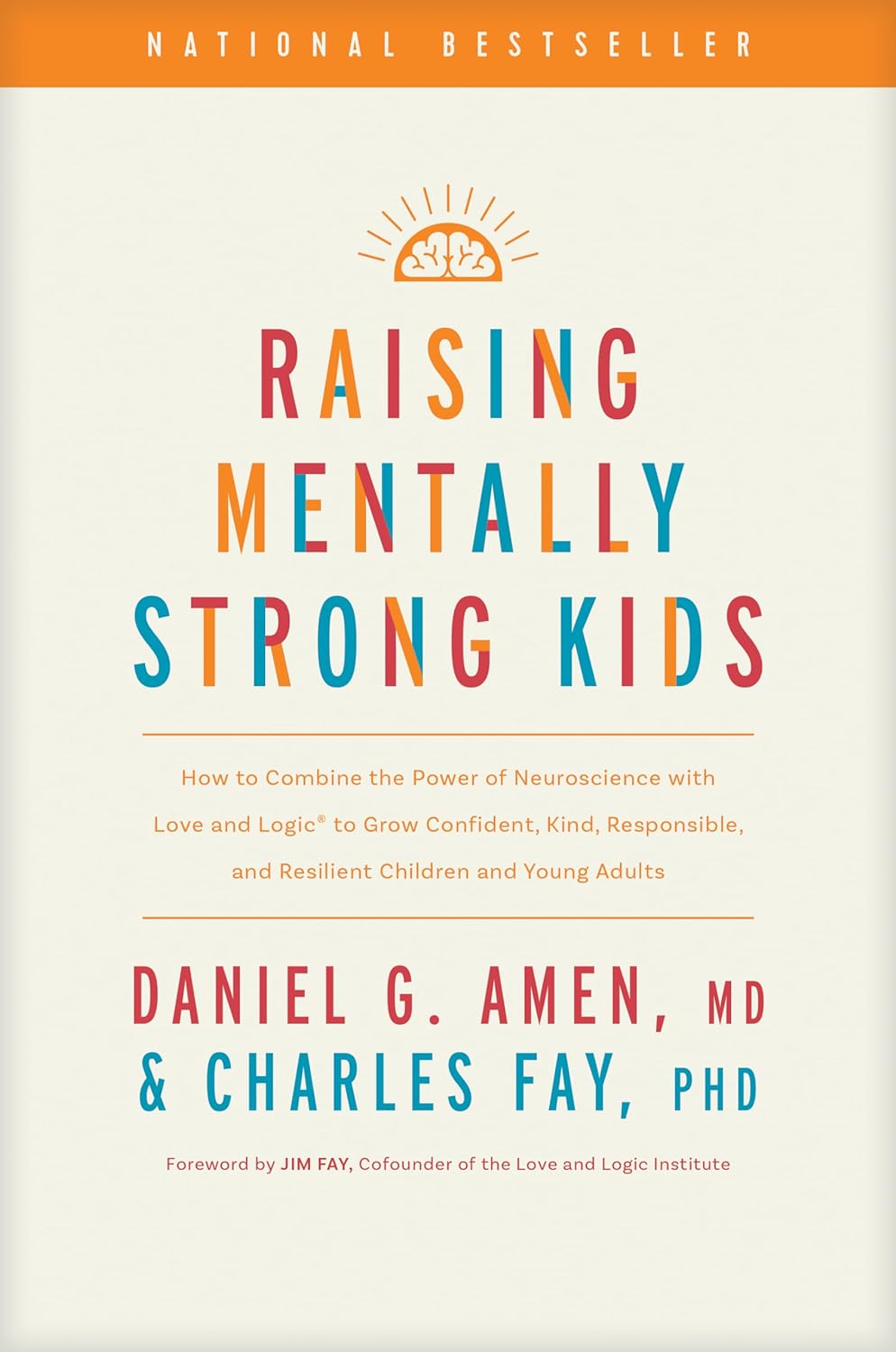
Raising Mentally Strong Kids – Daniel Amen

Raising Mentally Strong Kids

In “Raising Mentally Strong Kids”, psychiatrist Dr. Daniel Amen provides a comprehensive guide for parents on nurturing the mental health and resilience of their children. Drawing from his decades of clinical experience, brain science research, and insights as a parent, Amen lays out a holistic approach to building mental strength and emotional wellbeing in kids.

The Mental Health Epidemic

Amen begins by highlighting the troubling mental health crisis impacting today’s youth. He cites alarming statistics – 1 in 5 children in the US suffers from a mental illness, rates of teen depression and anxiety have skyrocketed, and suicide is the second leading cause of death for ages 10-24. Amen argues these trends are driven by a combination of genetic, environmental, and lifestyle factors, and that parents play a critical role in addressing this epidemic.

The 5 Pillars of Mental Strength

At the heart of Amen’s approach are the “5 Pillars of Mental Strength” that parents must focus on to raise resilient, emotionally intelligent kids:

  1. Brain Health: Ensuring children’s brains are nourished through proper nutrition, exercise, sleep, and stress management. This includes limiting screen time, avoiding substances, and encouraging activities that “exercise” the brain.
  2. Purpose: Helping kids discover their unique talents, values, and sense of meaning. Fostering purpose and a growth mindset builds motivation, self-worth, and the ability to overcome challenges.
  3. Emotional Intelligence: Teaching children to identify, express, and regulate their emotions in healthy ways. Developing EQ skills like empathy, impulse control, and conflict resolution.
  4. Relationships: Nurturing strong, supportive connections with family, friends, mentors, and community. Cultivating a sense of belonging and teaching social skills.
  5. Physical Health: Prioritizing children’s physical well being through active lifestyles, nutritious diets, and good sleep habits. Maintaining physical health supports brain function and overall mental resilience.

Amen emphasizes that these pillars are interconnected – progress in one area reinforces the others, creating an upward spiral of mental strength.

Strategies for Each Pillar

Throughout the book, Amen provides concrete, science-backed strategies for strengthening each pillar of mental health:

Brain Health:

  • Ensure adequate sleep, nutrition, and physical activity
  • Limit screen time and exposure to technology
  • Teach stress management techniques like meditation
  • Avoid alcohol, drugs, and other substances

Purpose:

  • Help kids discover and develop their natural talents
  • Foster a growth mindset and teach grit/perseverance
  • Encourage contribution to family and community
  • Expose children to diverse role models and experiences

Emotional Intelligence:

  • Name and validate children’s emotions
  • Teach emotion regulation skills like reframing
  • Model healthy emotional expression
  • Resolve conflicts through empathy and compromise

Relationships:

  • Prioritize quality time with family
  • Encourage social activities and friendships
  • Connect children with mentors and role models
  • Foster a sense of belonging in school/community

Physical Health:

  • Ensure adequate sleep, nutrition, and exercise
  • Limit sedentary activities and screen time
  • Teach children to care for their physical bodies
  • Address any physical health issues promptly

The Resilient Family

Amen emphasizes that building mental strength in children requires a whole-family approach. He provides guidance for creating a “resilient family ecosystem” where all members look out for one another’s mental health, set healthy boundaries, and reinforce the 5 pillars together.

The book also addresses specific challenges like divorce, trauma, learning disabilities, and neurodevelopmental disorders – outlining how parents can adapt the 5-pillar framework to support kids through adversity.

Key Takeaways

  • Mental health is a critical but often overlooked aspect of child development.
  • Raising mentally strong kids requires a multifaceted approach focused on the 5 pillars of brain health, purpose, emotional intelligence, relationships, and physical wellbeing.
  • Parents play a pivotal role in cultivating these pillars and creating a resilient family environment.
  • With the right strategies and support, all children can develop the mental strength to navigate life’s challenges.

Amen’s book provides an invaluable roadmap for parents committed to raising healthy, resilient, and emotionally intelligent kids in today’s complex world. By prioritizing the 5 pillars of mental strength, families can build a solid foundation for children to thrive.

(Summary AI assisted)

I have a confession – I was an emotional kid. I had what psychologist now call ‘big emotions’ quite often and I can remember just being emotionally exhausted by everything. I think figuring it out as a teen/early 20’s adult made me more resilient especially as I leaned into Stoicism as a way to manage my emotions. However the process wasn’t exactly great and when I saw my kids starting down the same path immediately started looking for information on how to make them more resilient.

This was one of the first books I saw – it was actually on a stand in the library in the new books so I took that as a sign that this was a book I needed to read (well, I kind of do that with all books but I digress). It was a fascinating read and I could see some of the issues my wife and I were having with our parenting styles and took away some valuable strategies I could use to help my kids manage their emotions better. I actually put them to use almost immediately with various degrees of success.

The one I find the most helpful is when the kids make a bad choice or feel upset about a choice instead of jumping in and telling them what you think is the ‘right’ way to handle it you simply ask them. “How did you think you handled it?” and “If someone else asked you how to handle that – what would you tell them?”. Reframing it so that the kids come up with the solution gives them more autonomy and reinforces that they can handle different issues.

The other major strategy is to start giving the kids responsibilities and chores – things that are relatively easy for them but give them a sense of accomplishment. These micro accomplishments build their internal self worth and bolster their self esteem so that when a real challenge comes along they are better prepared for it.

Overall I found the book very helpful and would recommend it to any parent out there who is struggling with kids who have big emotions.