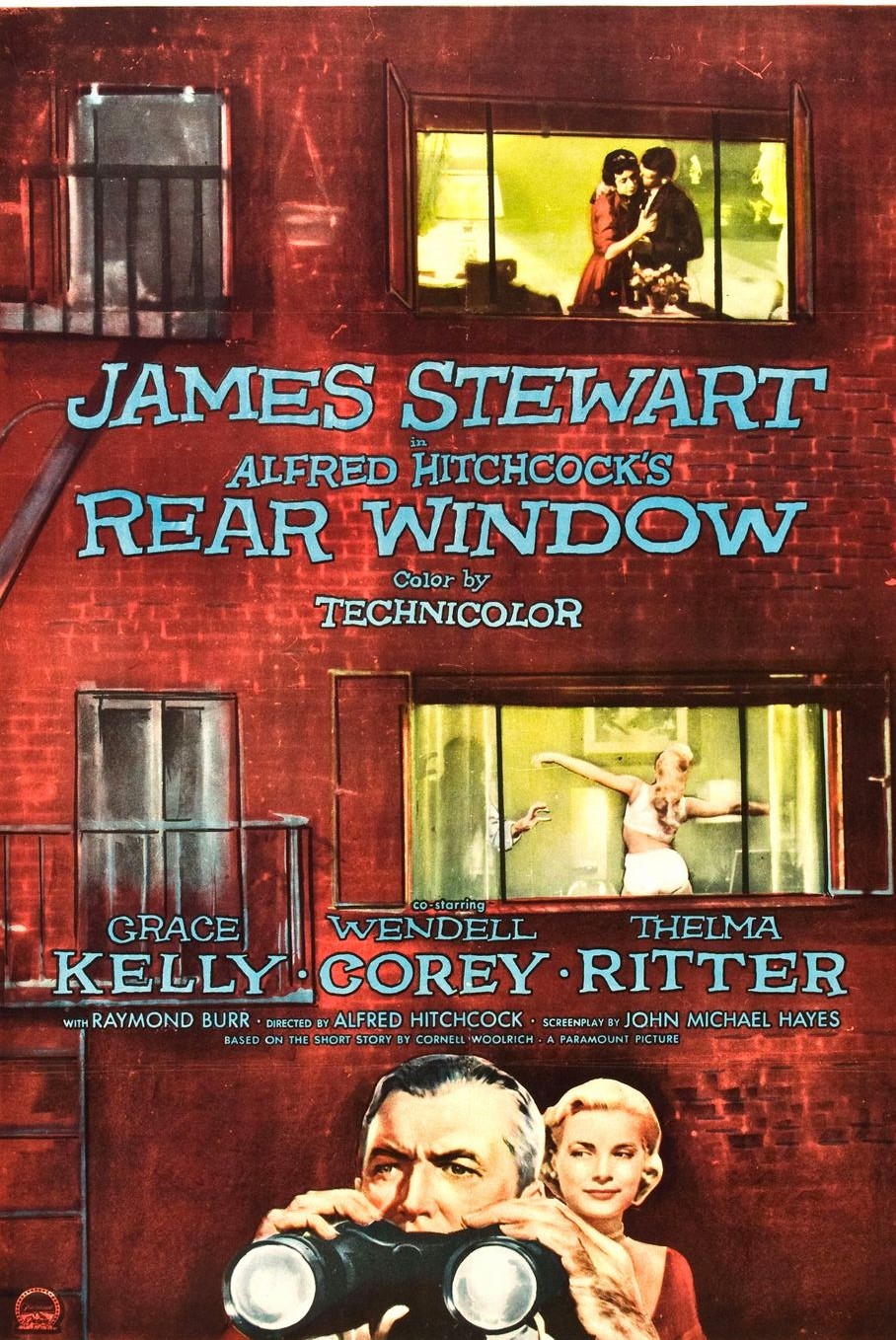
Rear Window

Ah, “Rear Window,” a cinematic gem that proves the old adage, “curiosity killed the cat, but satisfaction brought it back.” This 1954 masterpiece, directed by the legendary Alfred Hitchcock and starring the incomparable James Stewart and Grace Kelly, is a thrilling exploration of voyeurism, suspicion, and the dark underbelly of human nature.

The story follows L.B. “Jeff” Jefferies (Stewart), a globe-trotting photographer confined to his apartment after breaking his leg on assignment. With nothing but time on his hands, Jeff takes to spying on his neighbors through the rear window of his apartment, his trusty binoculars and telephoto lens his only companions.

At first, Jeff’s voyeuristic tendencies seem harmless enough – a bit of harmless people-watching to pass the time. But as he becomes more and more engrossed in the lives of his neighbors, he begins to suspect that one of them, a salesman named Lars Thorwald (Raymond Burr), may have murdered his invalid wife.

Aided by his glamorous girlfriend, Lisa Fremont (Kelly), and his wisecracking nurse, Stella (Thelma Ritter), Jeff sets out to unravel the mystery of Thorwald’s wife’s disappearance. But as he becomes more and more obsessed with the case, he begins to lose sight of the line between observation and invasion, putting himself and those he loves in grave danger.

Hitchcock, the master of suspense, is at the top of his game in “Rear Window.” His use of the confined apartment setting is a stroke of genius, creating a sense of claustrophobia and unease that permeates every frame. The camera becomes Jeff’s eyes, panning across the courtyard and zooming in on the lives of his neighbors, each window a mini-drama waiting to unfold.

Stewart is brilliant as Jeff, his affable charm masking a deeper sense of unease and frustration. Kelly, in one of her most iconic roles, is a vision of grace and beauty, her outward poise belying a fierce intelligence and determination. And Burr, in a chilling turn as the enigmatic Thorwald, is a study in quiet menace, his every move laden with sinister intent.

But it is the film’s exploration of voyeurism and the ethics of observation that truly sets it apart. As Jeff becomes more and more enmeshed in the lives of his neighbors, he begins to question his own morality, wondering if he has the right to pry into the private lives of others. In a telling moment, Lisa chastises him for his behavior, reminding him that “we’ve become a race of Peeping Toms.”

As the tension mounts and the danger becomes more and more palpable, “Rear Window” builds to a heart-stopping climax. In a scene that has become iconic in the annals of cinema, Lisa infiltrates Thorwald’s apartment, searching for evidence of his crimes. The camera becomes Jeff’s eyes once more, his helpless gaze fixed on the woman he loves as she puts herself in harm’s way.

In the end, “Rear Window” stands as a testament to the power of cinema to explore the darkest recesses of the human psyche. It’s a film that asks uncomfortable questions about the nature of privacy, the ethics of observation, and the thin line between curiosity and obsession. Hitchcock’s mastery of the medium is on full display, his every shot a mini-masterpiece of composition and tension.

So if you’re in the mood for a pulse-pounding, thought-provoking exploration of the human condition, look no further than “Rear Window.” Just remember, as Jeff so aptly puts it, “I wonder if it’s ethical to watch a man with binoculars and a long-focus lens. Do you suppose it’s ethical, even if it’s in the cause of justice?” It’s a question that will linger long after the final credits have rolled.

3/5 suspenseful stars. This movie exudes 1950’s charm – from the movie poster, the music, down to the clothing it encapsulates the time period perfectly. Jimmy Stewart is great and Grace Kelley provides a charming counterpoint to Jimmy’s gruff character. It starts out slow and builds up suspense until the armrest gripping final 10-15 minutes where things get really tense and.. well.. the guy with the broken legs falls off the balcony. I mean – this guy can’t catch a break (hey now!) but hey – this is on him. If he wasn’t spying on the neighbor they would have gotten away with murder and probably skipped town without endangering his girlfriend or him. I always enjoy Hitchcock movies and Jimmy Stewart and I recall watching this as a young kid with my mom but not really getting what was going on so it was interesting 40+ years later seeing it again and reconciling my young mind with my current experiences.

Goal Met – 50 Hours of Informational Podcasts

First off – I’m not one of those people that listens to podcasts all day so I can reference them at cocktail parties and seem enlightened (yes, I’ve met those people) plus I have a hard time maintaining focus for more than a few minutes – my mind will invariably wander and when I snap back into focus 20 minutes of the podcast will have gone by and I didn’t hear any of it (this is also the reason I struggle with audio books)

However – I knew I had two captive hours every day during my commute to work that I could leverage. I usually just listened to sports radio or Apple music but I started thinking that’s probably not the greatest use of that captured time. So I decided to lean into informational podcasts so I can use that time to learn and broaden my mind (not that sports radio doesn’t do that…)

Since I started a new job as a people manager it’s a bit heavy in the beginning on management tools and strategies since I was trying to build a management style but as the work picked up I started leaning into productivity podcasts to help balance work, life, and this 50for50 goals.

It was a bit of a struggle to maintain focus in the beginning since my mind tended to wander often but I think the meditation I was trying was helping me focus and be present and a few months in I found I could focus on most of the episodes without having to rewind

Since I was doing it so often it became a bit of a habit and now whenever I drive somewhere I’m usually trying to listen to something interesting but sometimes my brain just doesn’t want to work that hard and that’s when I crank the tunes and just enjoy the drive. In fact for a few months I split it up mornings for podcasts, afternoons for listening to the ‘Top 50 albums of all time’ maximizing that captive time to achieve my goals!

Here’s the list of the podcasts I’ve listened to while achieving this goal. There’s a few I listen to often because they’re consistently interesting enough that I didn’t feel the need to go and find new podcasts to listen to as I only had two hours a day

Manager ToolsHow to set annual goals
Work Life with Adam GrantYour hidden personality
Hidden BrainMaking the most of your mistakes
Hidden BrainHow to Believe in yourself
Beyond the to-do listSelf-Awareness
Manager toolsOne on Ones Part 1
Manager ToolsGiving Effective Feedback
Hidden BrainFinding Focus
Manager ToolsGiving Effective Feedback Part 2
A Bit of Optimism w/Simon SinekAtomic Habits with James Clear
Manager ToolsGiving Effecive Feedback Part 3
A Bit of Optimism w/Simon SinekTheory of everyone
Manager ToolsEffective Meetings 1/4
Work Life with Adam GrantYour Brain on Art
Beyond the to-do listHarnessing Creativity at Work
Work Life with Adam GrantThe Problem with Optimizing our Lives
Beyond the to-do listSuper power of clear communicators
Beyond the to-do listRepurpose your content
Manager ToolsCulture: Core Behaviors
Work Life with Adam GrantDaniel Kahneman: Don’t trust your instinct
The Next Big IdeaMIDLIFE: Once a crisis, now an opportunity
A Bit of Optimism w/Simon SinekSweting the small stuff with Steven Bartlett
Work Life with Adam GrantHow to be productive w/o burning out
Beyond the to-do listMyths Surrounding Memory
Hidden BrainEscape the Matrix
Work Life with Adam GrantAI and the future of creativity
HBR on LeadershipHow to be persuasive at work
HBR on LeadershipHow the best leaders drive innovation
HBR on LeadershipHow to lead great conversations
Beyond the to-do listFinding the right productivity tools
HBR on LeadershipWhan you make the leap to manager
HBR on LeadershipHow to become a better manager
The Next Big IdeaLook again: How to debabitualize
Hidden BrainAre you listening? (The skill of active listening)
Manager ToolsProactive Manager: Meetings
The Learning LeaderThe Score that Matters – Growing Excellence in yourself
The Learning LeaderAdding Surplus Value (Discussion with Scott Galloway)
Hidden BrainCurious Science of Cravings
The Next Big IdeaSlow Productivity w/Cal Newport
The Learning LeaderDiscussion with Scott Belsky of Adobe
Ten Percent HappierAncient Strategies for managing stress
A Bit of Optimism w/Simon SinekHow to eat with Jessie Inchauspe
Manager ToolsOne on Ones (Updated for 2024)
Beyond the to-do listApplying Enneagrams to Your Business
Beyond the to-do listExtending your mind via better note taking
Manager ToolsUpdated Feedback Model P1
The Learning LeaderObsessing over quality and details over amount of work done
The Next Big IdeaWhy the Civil War Matters Today
The Learning LeaderGrowing without goals (talk with Jason Fried)
Ten Percent HappierThe Science of Getting out of your head
Hidden BrainParents Keep Out! Benefit of free / unsupervised play
The Next Big IdeaWhy We Remember: The Science of Memory
Work Life with Adam GrantJohn Green – Paying attention to your attention
Hidden BrainInnovation 2.0 – Do less
The Next Big IdeaHow AI will revolutionize learning
The Learning LeaderCreating a flexible mind
Hidden BrainWhy trying to hard can backfire on you
HBR IdeaCastGetting the most out of digital collaboration tools
Beyond the to-do listThe relationship between productivity and proper documentation
Ten Percent HappierLongevity Secrets of the Blue Zones
Work Life with Adam GrantRe-imagining Technology
Ten Percent HappierThe last podcast you ever need to hear about exercise
Work Life with Adam GrantRichard Branson on saying yes now and figuring it out later
The Next Big IdeaFriction: How smart leaders make things easier
Work Life with Adam GrantHow to enjoy failure with Gabrielle Zevin
Hidden BrainMaking the world sparkle again
Work Life with Adam GrantFighting against the status quo
HBR: Coaching Real LeadersMaking the most of your work day
Ten Percent HappierThe 5 Pillars of brain health
Hidden BrainFighting Despair
Harvard Business ReviewWhat it takes to be a manager
The Learning LeaderHow to fix your craving mindset w/Michael Easter
The Learning LeaderSeth Godin: How to be remarkable
The Next Big IdeaThe Anxious Generation part I
The Next Big IdeaThe Anxious Generation part 2
The Next Big IdeaWork of Art: How something comes from nothing
Beyond the to-do listDispel the Myth and Stigmas around ADHD

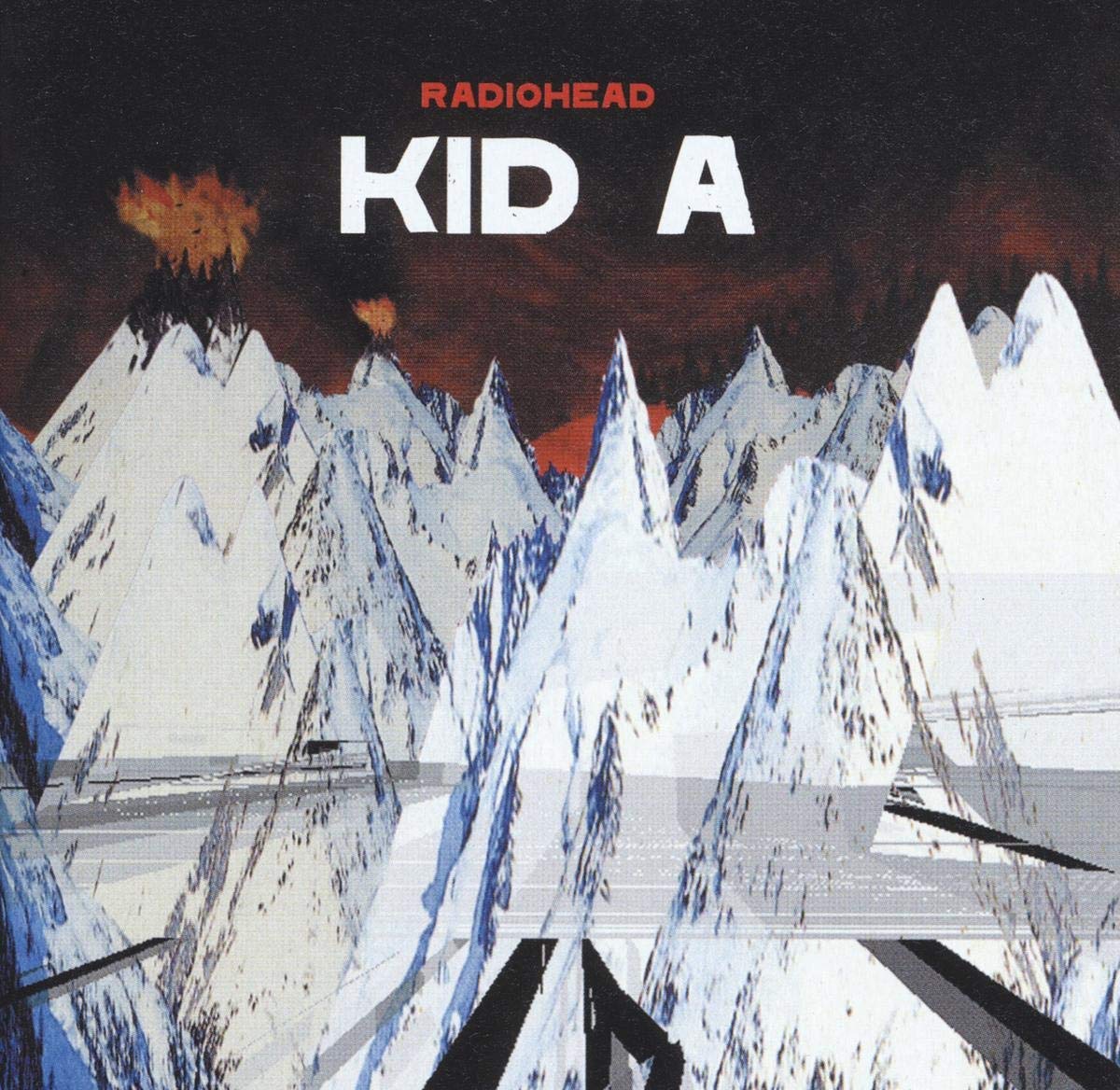
Radiohead – Kid A

Radiohead’s ‘Kid A’: When Pretension Becomes a Musical Genre

Look, I get it – Radiohead are a “critically acclaimed” band, the kind that have entire think pieces written about their album artwork. They’re the musical equivalent of that guy at the party who insists that the true meaning of life can only be found in the second movement of an obscure Shostakovich symphony. But sometimes, you just want to shake them and scream, “Can we just have a nice, normal album for once?”

Enter ‘Kid A’, the album that single-handedly solidified Radiohead’s reputation as the poster children for pretentious, navel-gazing art rock. It’s like they gathered in the studio, took a long, self-serious look at themselves in the mirror, and said, “You know what the world needs? More ominous synthesizers and emotionless vocal delivery.” And then they proceeded to foist that musical manifesto on the unsuspecting masses.

The opening title track sets the tone – a disjointed, glitchy mess that sounds like someone threw a bunch of rusty gears into a blender and hit “puree.” Thom Yorke’s vocals, which are usually the one reliable anchor in Radiohead’s musical maelstrom, have been digitally mangled to the point where he might as well be speaking in tongues. It’s the aural equivalent of getting lost in a maze constructed entirely of IKEA furniture.

And it just gets worse from there. “The National Anthem” is ostensibly a jazz-inflected protest song, but it ends up sounding more like a group of angry robots staging a coup at the United Nations. The way the competing brass sections clash and collide is undoubtedly “innovative,” but it also makes my head hurt just thinking about it.

Honestly, the only track that even remotely resembles a traditional “song” is “Motion Picture Soundtrack,” and even that feels like it’s been trapped in a sensory deprivation chamber for the last decade. Yorke’s plaintive vocals are the only glimmer of humanity in an otherwise cold, clinical landscape.

Look, I get that Radiohead were probably going for some grand, high-concept statement about the dehumanizing effects of technology and modern life. But sometimes, you just want an album that doesn’t require a graduate degree in philosophy to enjoy. ‘Kid A’ feels like the musical equivalent of that friend who won’t stop lecturing you about the merits of avant-garde jazz – technically impressive, sure, but also exhausting and, let’s be honest, more than a little pretentious.

And the worst part? Everyone and their mother seems to think this album is the second coming of Sgt. Pepper’s. “Oh, it’s so innovative, so genre-defying!” they’ll crow, as if Radiohead invented the concept of “not sounding like anyone else.” News flash: not sounding like anyone else doesn’t automatically make you good.

To be fair, there are moments of genuine beauty and emotional resonance buried beneath all the layers of studied obfuscation. The piano work on “Motion Picture Soundtrack” is genuinely haunting, and there’s an underlying sense of melancholy that shines through the technological haze. But those fleeting glimpses of humanity are quickly smothered by Radiohead’s relentless march towards artistic asceticism.

In the end, ‘Kid A’ feels less like a cohesive album and more like a highbrow musical version of the Emperor’s New Clothes. Everyone’s too afraid to admit that the emperor is, in fact, buck naked, lest they be labeled as philistines who “just don’t get it.” But sometimes, you’ve just got to call a spade a spade – and in this case, the spade is a pretentious, over-hyped mess.

Rating: 2.5 out of 5 Existential Crisis-Inducing Synthesizers 🎹

Highs:

  • Occasional moments of genuine emotional resonance
  • Impressive technical prowess (if you’re into that sort of thing)
  • The sheer audacity of Radiohead’s commitment to their own brand of high-minded weirdness

Lows:

  • An almost overwhelming sense of studied detachment
  • A complete lack of anything resembling a memorable melody or hook
  • The constant feeling that you’re being lectured by a particularly pretentious art school student

Final Thought: ‘Kid A’ is the musical equivalent of that friend who insists on only communicating via interpretive dance. Sure, it’s “unique” and “boundary-pushing,” but it’s also exhausting and, let’s be real, a little bit ridiculous. If you’re the kind of person who finds joy in painstakingly analyzing album artwork for hidden meanings, then by all means, dive right in. But for the rest of us, this is one Emperor’s wardrobe we’re happy to ignore.