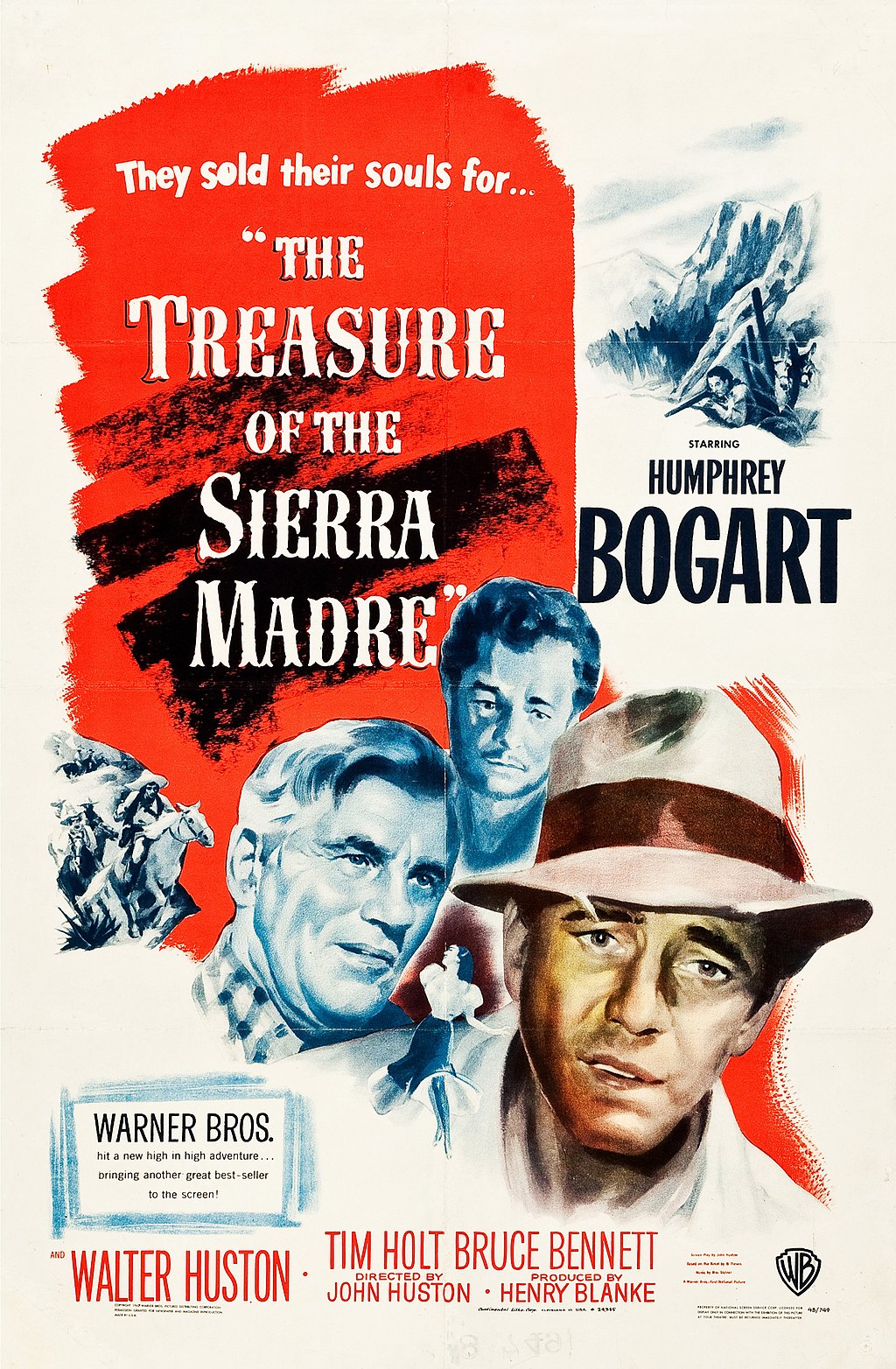
Ah, “The Treasure of the Sierra Madre,” a classic tale of greed, paranoia, and the corrupting influence of gold. This 1948 gem follows the adventures of three down-on-their-luck Americans as they seek their fortune in the rugged Sierra Madre mountains of Mexico. Directed by the legendary John Huston and starring the incomparable Humphrey Bogart, this film is a gritty exploration of the human psyche when faced with the temptation of untold riches.
The story begins in the bustling city of Tampico, where we meet Fred C. Dobbs (Bogart), a down-and-out American ex-pat struggling to make ends meet. Dobbs’ luck changes when he meets Bob Curtin (Tim Holt), a fellow vagrant, and Howard (Walter Huston), a grizzled old prospector with a nose for gold. The three men pool their resources and set out to strike it rich in the mountains, but little do they know that their journey will be fraught with peril, both external and internal.
As the intrepid trio makes their way through the unforgiving terrain, they encounter a host of colorful characters, each with their own hidden agendas. There’s Gold Hat (Alfonso Bedoya), a ruthless bandit with a penchant for philosophizing, and his gang of loyal followers. In a scene that has become iconic in cinematic history, Gold Hat confronts the Americans, demanding to see their badges. “Badges? We ain’t got no badges. We don’t need no badges! I don’t have to show you any stinking badges!” he sneers, a line that has been parodied and referenced countless times since.
As the men toil away in the mountains, their newfound wealth begins to take its toll on their psyches. Dobbs, in particular, becomes increasingly paranoid, convinced that his partners are plotting against him. In a chilling scene, Dobbs confronts Curtin, accusing him of stealing his share of the gold. The tension is palpable, the air thick with the stench of suspicion and betrayal.
Meanwhile, Howard, the wise old prospector, tries to keep the peace, but even he is not immune to the siren call of the gold. In a poignant moment, Howard reflects on the nature of greed, musing that “gold is a devilish sort of thing. Makes men do funny things.”
As the men’s paranoia reaches a fever pitch, the film takes a dark turn. Dobbs, consumed by his own madness, turns on his partners, leading to a shocking and violent confrontation. The once-strong bond between the men is shattered, their dreams of wealth and prosperity reduced to dust in the wind.
In the end, the treasure of the Sierra Madre proves to be a curse rather than a blessing. The gold, so coveted and sought after, brings nothing but misery and destruction to those who pursue it. It’s a powerful reminder that the true treasures in life are not material, but rather the bonds of friendship and the strength of one’s character.
“The Treasure of the Sierra Madre” is a masterful exploration of the human condition, a searing indictment of the corrupting influence of greed. Huston’s direction is masterful, his use of light and shadow creating an atmosphere of impending doom. Bogart’s performance is a tour de force, his portrayal of Dobbs a chilling reminder of the darkness that lurks within us all.
In the end, the film stands as a testament to the enduring power of cinema to explore the deepest recesses of the human soul. It’s a classic in every sense of the word, a film that rewards repeated viewings and leaves an indelible mark on all who experience it. So if you’re in the mood for a gritty, uncompromising tale of greed and betrayal, look no further than “The Treasure of the Sierra Madre.” Just remember, as Howard so wisely puts it, “the worst ain’t so bad when it finally happens. Not half as bad as you figure it’ll be before it’s happened.”
(Summary AI assisted)
4/5 – I’m a sucker for westerns and this kinda falls into that vein being set in the west and around the same time period. I enjoyed the tense interplay between the men once they found the gold and was shocked at the rapid decline into paranoia and fear that Bogart’s character had – I’m guessing a man down on his luck for so much time suddenly getting a fortune can change a man. Greed is the word of the day – and the fear of someone taking what is yours. I wasn’t expecting a psychological drama when I put this movie on but it was fascinating to see. I also chuckled extensively at the ‘Badges? We don’t need to stinkin’ badges line’ – I knew that was from an old movie but seeing it in real time was great.