Maafe has its origins in the Manding (Mande) people, who historically inhabited present-day Senegal, Mali, and Guinea. It is believed to have been created centuries ago, when groundnuts (peanuts) were introduced to Africa through Portuguese traders in the 16th century.
Over time, peanuts became a staple crop in West Africa, leading to the development of rich, peanut-based stews like Maafe. The dish spread across the Sahel region, becoming a fundamental part of the cuisines of Mali, Gambia, Guinea, Nigeria, and Ivory Coast.
While Maafe is most closely associated with Senegal, it is widely popular across Francophone West Africa, with slight variations in ingredients and cooking techniques depending on the region.
What is Maafe?
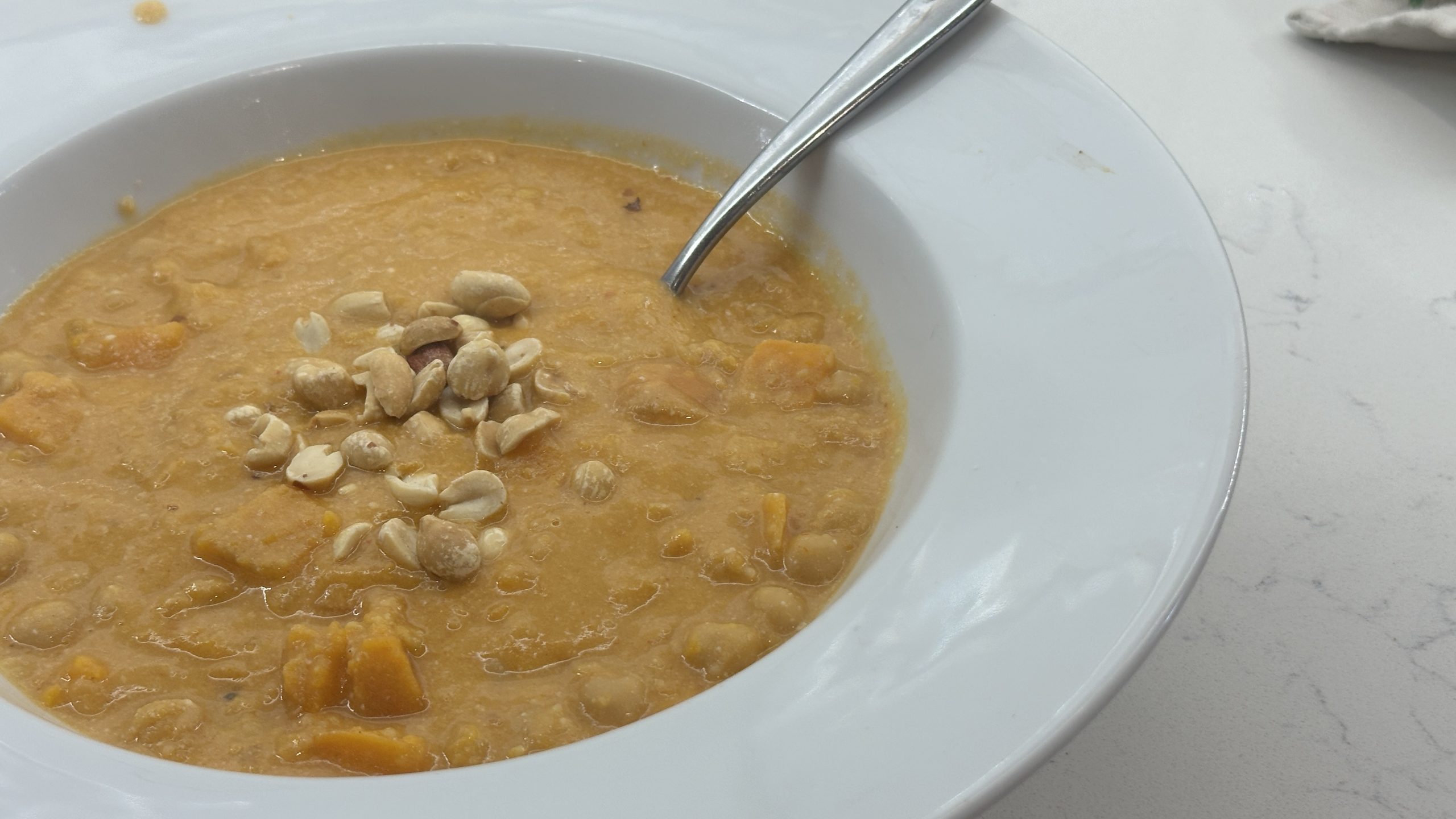
At its core, Maafe is a peanut-based stew, thickened with tomatoes, spices, and vegetables, and often served with rice, couscous, or fufu. The dish’s rich, nutty flavor is balanced by the acidity of tomatoes, the savoriness of slow-cooked meat, and the earthy warmth of West African spices.
Essential Ingredients of Maafe:
- Meat (or Protein): Typically chicken, beef, lamb, or even fish. Some vegetarian versions use tofu or chickpeas.
- Peanut Butter (Groundnut Paste): The defining ingredient, giving the dish its signature creamy texture and nutty richness.
- Tomatoes & Tomato Paste: Adds depth, acidity, and umami.
- Onions & Garlic: Provide a strong aromatic base.
- Vegetables: Often includes carrots, sweet potatoes, cabbage, okra, or potatoes for added heartiness.
- Spices:
- Ginger & Bay Leaves – For warmth and fragrance.
- Chili Peppers or Scotch Bonnet – For a spicy kick (Maafe can be mild or fiery!).
- Cumin & Coriander – For subtle earthiness.
- Stock or Water: Helps create the luscious, thick sauce.
Some regional versions add coconut milk for extra creaminess, while others incorporate mustard, tamarind, or fermented locust beans for a deeper umami flavor.
Tasting Notes: A Perfect Balance of Nutty, Savory, and Spicy
A bowl of Maafe is deeply satisfying and complex:
- The peanut butter gives it a creamy, silky texture, coating every bite with rich, nutty flavor.
- The tomatoes add a bright acidity, balancing the richness of the groundnuts.
- The meat is fork-tender, infused with the slow-simmered spices and sauce.
- The vegetables absorb the flavorful broth, adding natural sweetness and texture.
- The spices and chili bring a gentle heat, making every bite warming and fragrant.
Maafe’s comforting richness makes it the perfect dish for both everyday meals and festive occasions.
How Maafe is Served
Maafe is traditionally enjoyed as a communal meal, served with a starchy base to soak up the flavorful sauce.
Common Accompaniments:
- Steamed White Rice – The most common pairing, allowing the peanut sauce to shine.
- Couscous – Popular in Senegal and Mali, giving a light, fluffy contrast to the thick stew.
- Fufu (Pounded Yam or Cassava) – A traditional West African choice, perfect for scooping up the sauce.
- Bread – Sometimes served with crusty baguette (a French colonial influence).
In Senegal, Maafe is often eaten family-style, with people gathered around a large communal bowl, scooping up the stew with rice or bread.
Beyond Senegal: Maafe’s Influence Across West Africa
While Maafe is most famous in Senegal, it has many variations across West Africa:
- In Mali, it’s called Tigadegena and often includes more vegetables.
- In Gambia and Guinea, it is spicier and sometimes made with fish instead of meat.
- In Nigeria and Ghana, peanut stews are similar but use local spices and ingredients.
No matter the version, the rich, nutty, and deeply comforting essence of Maafe remains the same.
Why Maafe is One of Senegal’s Most Beloved Dishes
✔ Rich & Flavorful – A perfect harmony of peanuts, tomatoes, and spices.
✔ Comforting & Hearty – A warming, satisfying meal that fills you up.
✔ Versatile – Can be made with chicken, beef, lamb, fish, or even vegetarian.
✔ A Dish with History – A centuries-old recipe with deep cultural roots in West Africa.
✔ Perfect for Sharing – A communal dish that brings people together over good food.
Whether you’re enjoying it in Dakar, Bamako, or your own kitchen, Maafe is a taste of West African tradition in every spoonful.