
76ers at NY Knicks

Sixers 79 – Knicks 7

I’ve been a Knicks fan since the 90’s with Ewing, Oakley, Starks, and Mason. I’m sure if it wasn’t for Michael Jordan they would have at least one chip from those years. Frustrating as those losses were, the team was so much fun to watch. However, once that team all retired the Knicks proceeded to trot out terrible teams for over 20 years (other than the brief Linsanity period of time which was fun) so I stopped watching them especially when we cut cable and it was difficult to watch them on TV.

So it as surprising to me when they started to get good the last few years. Hiring Thibs as a coach turned out to be inspired and then assembling an all Villanova team was fun (while it lasted) and Brunson turning into a superstar was really great to see. They were exciting again and the team of Brunson, Hart, DiVencenzo, OG, and Hartestein showed amazing chemistry. I started watching games again (When they were streamed on TBS / Max) and when they tore off 10 wins in a row I decided I needed to see them – this could be the year they go to the finals! So I  bought good seats for what should have been a premiere game – the 76’ers coming into MSG and a battle for the East.

What I got was the most godawful game of basketball I’ve ever seen. I’ve see better play at my old man’s pickup league. The score was the lowest total score in the NBA in 15 years. There were more bricks than the third little pig’s house. Airballs all over the place, turnovers, bad fouls and overall poor play dominated the floor like MJ dominated the Knicks in the 90s.  The people next to me in the seats started making bets on who would manage to actually sink a basket. I’m sure Fanduel probably had a prop bet open you could wager on.

Some would say “What a defensive game!”. They would be wrong – there was no defense shots were going up uncontested and they were still clanging off the rims with disturbing frequency. I stayed to the bitter end because the score, as low as it was, was pretty close.

So not only did I witness the bad kind of basketball history – the Knicks lost on top of it. That’s OK though because come playoff time they bested the sixers and this sequence will live on in my memory forever (also damn you for trading the Italian GOAT)
https://www.youtube.com/shorts/Paws2lC3GKE

Worldwide Food Tour – Pakistan

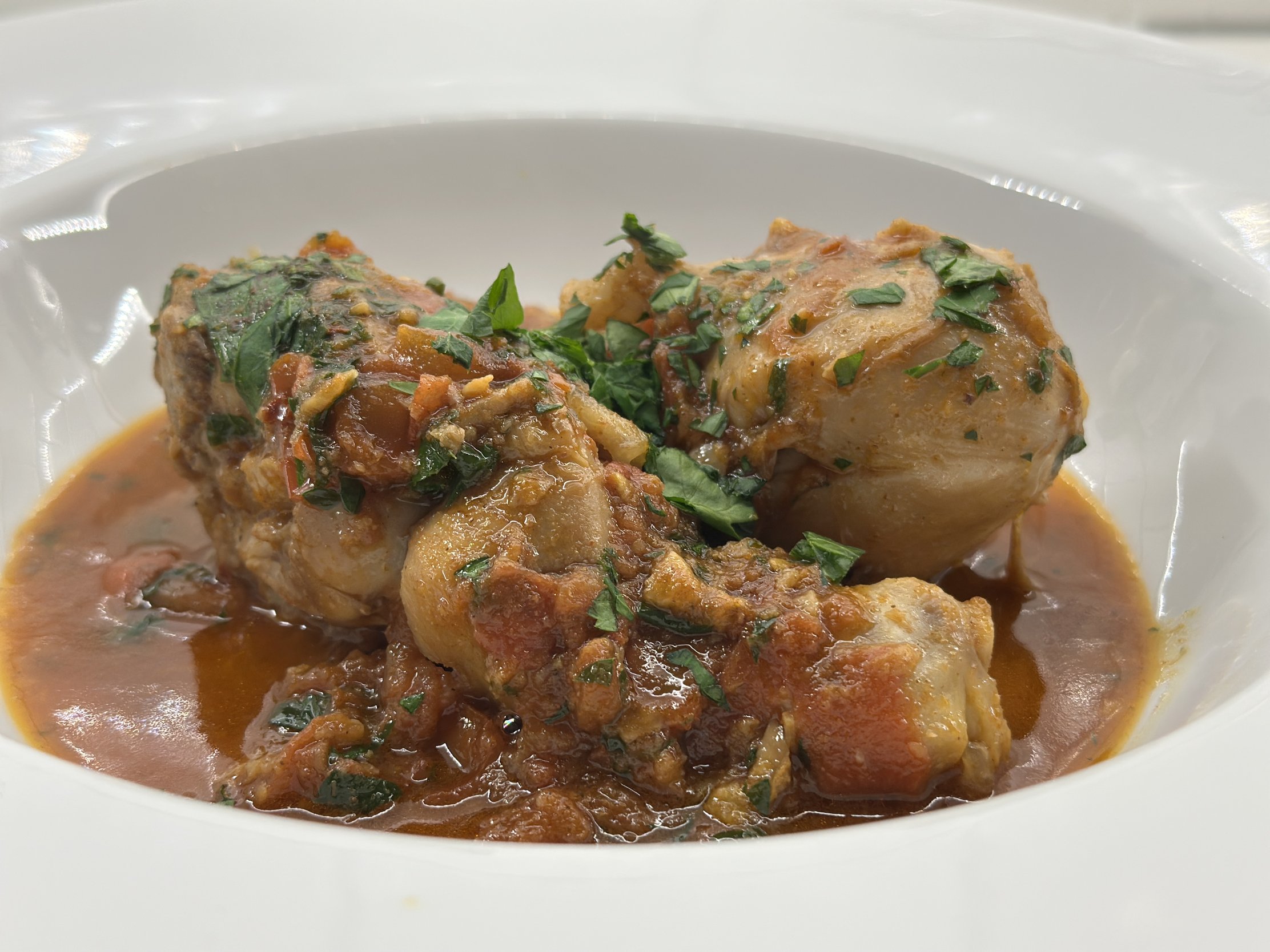
Karahi (also spelled Kahari or Kadai) is a rich, aromatic Pakistani/North Indian dish named after the deep, circular cooking pot it’s traditionally prepared in. The dish features chicken cooked in a thick tomato-based gravy with ginger, garlic, and fresh green chilies.

The sauce is characterized by its concentrated, intensely spiced flavor profile, typically featuring whole spices like cumin, coriander, and black peppercorns. Fresh tomatoes are cooked down until they form a thick, clingy sauce that coats the tender chicken pieces.

The dish originated in the North-West Frontier Province (now Khyber Pakhtunkhwa) of Pakistan and gained popularity throughout the subcontinent. It’s typically served sizzling hot in its namesake karahi vessel, garnished with fresh coriander, julienned ginger, and served with naan or roti to scoop up the rich gravy.

Unlike many Indian curries, Karahi uses minimal ground spices and doesn’t typically include onions in its base, giving it a distinctively fresh, bright flavor that highlights the tomatoes and aromatics.

NY Sicilian Pizza

Lets start with a little history lesson.

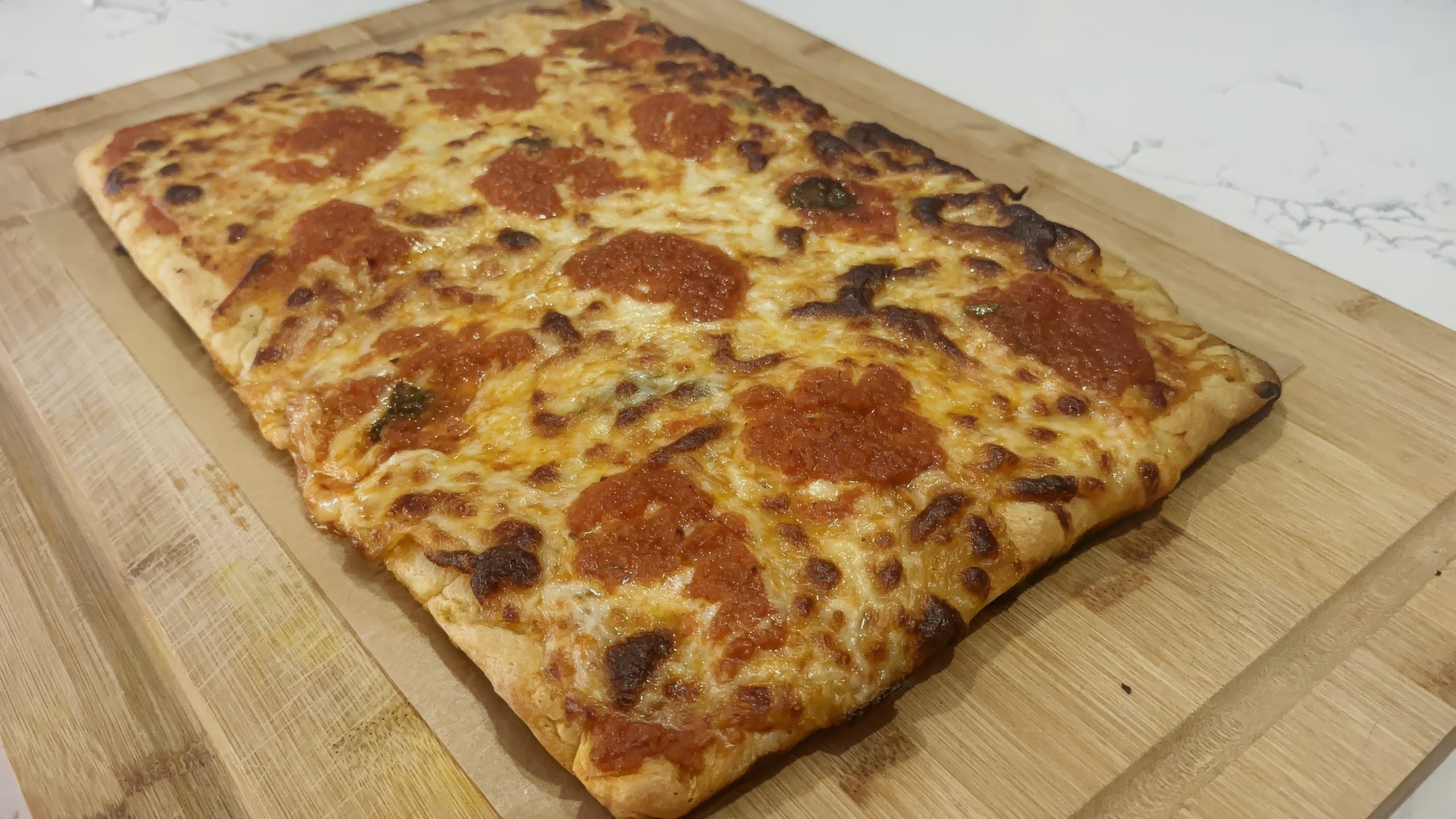
Step into any New York pizzeria, and among the rotating carousel of thin-crust slices, you’ll likely spot a distinctive rectangular pie with a thick, pillowy crust that commands attention. This is Sicilian pizza – a style that has evolved from its Mediterranean origins to become a beloved fixture in the American pizza landscape.

Unlike its round Neapolitan cousin, Sicilian pizza traces its lineage to sfincione, a focaccia-like bread topped with tomatoes, anchovies, and hardy mountain cheese that sustained workers in Palermo’s ancient streets. The word sfincione itself comes from the Latin “spongia,” meaning sponge – an apt description for the light, airy dough that characterizes this style.

When waves of Sicilian immigrants arrived in New York in the late 19th and early 20th centuries, they brought this hearty tradition with them. But like all immigrant foods, it adapted to its new home. American abundance meant more cheese – typically a generous layer of mozzarella rather than the traditional caciocavallo. The anchovies often disappeared, replaced by more familiar toppings. What remained constant was the distinctive thick crust, achieved through a long fermentation process that creates a bread-like base sturdy enough to support a generous layer of toppings while maintaining its characteristic lightness.

In New York, the Sicilian slice underwent another transformation. Pizzerias began baking it in well-oiled square pans, creating a crispy bottom that contrasts beautifully with the fluffy interior. This technique, combined with the generous portions typical of American pizzerias, turned the Sicilian slice into a filling meal that could sustain workers during long shifts – much like its ancestor did in the streets of Palermo.

Today’s New York Sicilian pizza is a study in textural contrasts. The bottom crust develops a golden-brown crackle from its contact with the oil-slicked pan. The interior crumb stays tender and airy, while the top crust becomes a canvas for sauce and cheese, which often caramelizes at the edges during baking. A proper Sicilian slice should have corners worth fighting over, where the cheese has become one with the crust in a feat of delicious alchemy.

While some pizzerias treat their Sicilian pies as an afterthought, the best practitioners approach them with the same reverence as their round pies. The dough requires careful attention – too much handling will deflate the precious air bubbles that give it its characteristic texture. The sauce needs to be thick enough to avoid soggy bread but not so heavy that it weighs down the crust. It’s a delicate balance that, when achieved, creates something greater than the sum of its parts.

This transformation – from Sicilian bread to New York slice – represents the beautiful evolution of immigrant foods in America. It honors its origins while embracing new ingredients and techniques, creating something both familiar and distinctive. The Sicilian slice is more than just pizza; it’s a testament to the way food cultures can adapt and thrive in new environments while maintaining their essential character.

In an era where artisanal pizza-making often focuses on Neapolitan authenticity, the Sicilian slice remains proudly Italian-American, neither fully Italian nor typically American, but something uniquely its own. It’s a reminder that some of our most beloved foods come from this cultural interchange, where old-world traditions meet new-world abundance to create something entirely unique.

I’ve always been a fan of Sicilian pizzas – especially the sweet sauce that usually accompanies it. The issue here is that it’s so hit and miss when it comes to local pizzerias. There was a spot where I used to live called Joe’s pizza that crushed the Silician pie. I used to crave it and sometimes, even after I moved 40 minutes away, I’d swing back and get it just to scratch that itch. I haven’t been able to find a good Sicilian pizza around me so I’ve been tinkering with different combos of dough, sauce, and cheese to try to recreate that memory of the perfect square slice.