Pacers at Nets

Nets 115, Pacers 111

I remember when the Nets were in Jersey – they were kind of a second class team for most of my childhood memory but I always kinda rooted for them as one of the two Jersey teams (them and the Devils) and they had a few good years that were exciting to watch (I really enjoyed how Jason Kidd moved the ball).  When they moved to Brooklyn I stopped paying attention. They didn’t get a lot of TV time and the Barclay’s center was a pain to get to. They had a small resurgence in the first few years when they signed Durant, Irving, and Harden but while they were all transcendent players, as a team it just never clicked and after a few years that big three broke apart.

I was going to be in NYC for another event so I decided now’s a good a time as any to check out the Barclays center. I grabbed a resale ticket and hopped on the subway to begin my trek out to Brooklyn. I had to switch a few times but it was nice that the subway station is right under the stadium so all I had to do was walk out and it was right there.

I must say the arena really is beautiful – I really liked the curved architecture and the interiors were modern and had some really diverse food and drink choices. I was pleasantly surprised at how easy it was to walk around and get to my seat (compared to some arenas where it felt like a cattle chute)

The game was pretty exciting – a back and forth affair that was fast paced and high scoring (a good palette cleanser for that awful sixers/knicks game). It was interesting to me how interactive the non-game elements were compared to more conservative teams. They had dance crews, flag teams, contests, and at the half they had some local rappers come out and spit some verses. I felt like they were intentional in making it a more local grounded product than those guys over at MSG. I felt like they understood that young fans need constant entertainment to stay engaged and they were leaning into it.

As much as Halliburton annoys me as a fan he was on fire and pretty much carrying the Pacers. There were a few really standout plays – notably the fake pass/windmill dunk by Claxton and the full court alley-oop that Toppin slammed down. The score was close at the end and Halliburton tried to bring them back but a long three pointer clanged off the rim and the Nets got the board sealing the win and stopping the furious comeback attempt.

I enjoyed my first visit to the Barclay’s center – it is a good place to watch some basketball. Too bad it’s such a pain to get to from where I live.
Argentinian Pizza

In Buenos Aires, pizza isn’t just food – it’s a cultural institution that rivals the city’s famed steakhouses. Born from the massive Italian immigration wave of the late 19th and early 20th centuries, Argentine pizza evolved into something distinctly its own, reflecting both its Italian roots and the abundance of its new home.

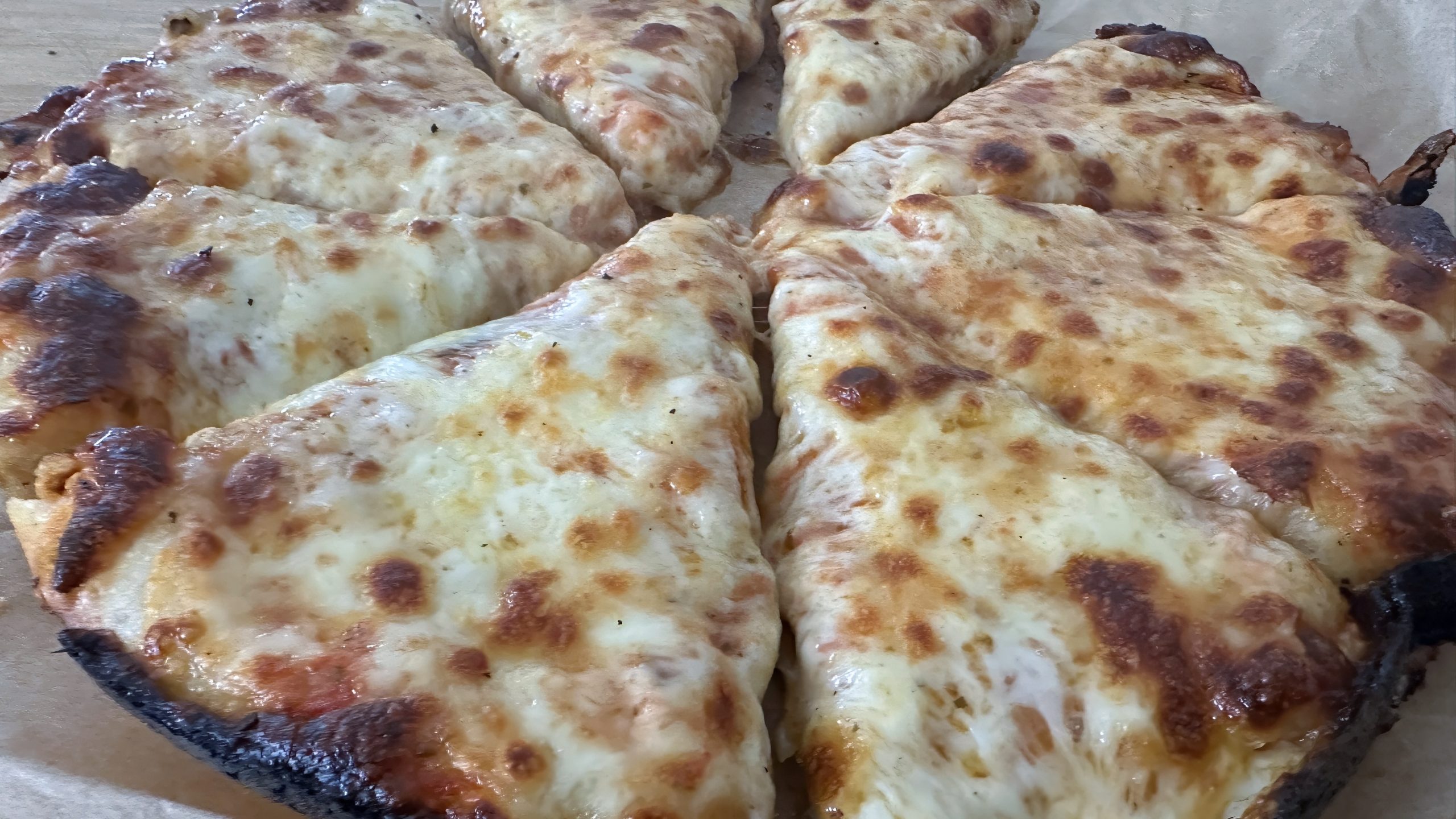
The defining characteristic of Argentine pizza is its cheese – and lots of it. While Neapolitan pizzas use a restrained amount of mozzarella, Argentine pizzerias pile on thick layers of mozzarella, often using locally produced quesillo that creates the signature chewy, stretchy texture locals call “correoso.” The cheese doesn’t just cover the pizza; it blankets it completely, often approaching a half-inch in thickness.

The crust provides another point of departure from Italian tradition. Argentine pizza bases are thicker than Neapolitan style but thinner than Sicilian, with a texture closer to focused bread. This hearty base is necessary to support the generous toppings that characterize the style. The dough is often enriched with fat, creating a more tender crust that still maintains enough structure to handle the weight of its abundant toppings.

Perhaps most distinctive is the “media masa” (half dough) variant, where the usual crust is doubled in thickness. This style, particularly popular in Buenos Aires’ pizzerias, creates something closer to a cheese-topped focaccia than a traditional pizza. It’s often served as a starter or late-night snack, demonstrating how thoroughly pizza has been integrated into Argentine dining culture.

Toppings reflect local tastes and ingredients. The “fugazza,” a direct descendant of Genoese focaccia, comes loaded with sweet onions and sometimes without tomato sauce. The “fugazzeta” adds that distinctive thick layer of cheese to the onion-laden base. Another popular variant is the “fainá,” a chickpea flatbread served atop the pizza slice – a custom that originated in Genoa but has been preserved in Argentina while fading in its homeland.

The pizza is typically eaten at traditional pizzerias where it’s served on metal trays and often consumed standing at high tables. Unlike the individual pies common in Italy and America, Argentine pizzas are generally large and shared, reflecting the communal dining culture of the country. The slices are cut smaller than their American counterparts, encouraging sharing and sampling of multiple varieties.

This adaptation of Italian pizza represents more than just culinary evolution – it’s a metaphor for Argentine culture itself, where European traditions were transformed by local abundance and preferences into something uniquely porteño. In every overflowing slice of mozzarella and generous portion of fainá, you’ll find the story of immigration, adaptation, and the creation of a new culinary tradition that pays homage to its roots while proudly asserting its own identity.

This went over very well – who knew that loading an entire block of cheese onto a pizza would be a hit? The dough was chewy but with crispy edges providing a counter texture. The sauce was tangy and reminiscent of NY pizza. It was one of the pizzas that is likely to enter a more permanent rotation once I go back to my regularly scheduled pizza program.

Worldwide Food Tour – Nigeria

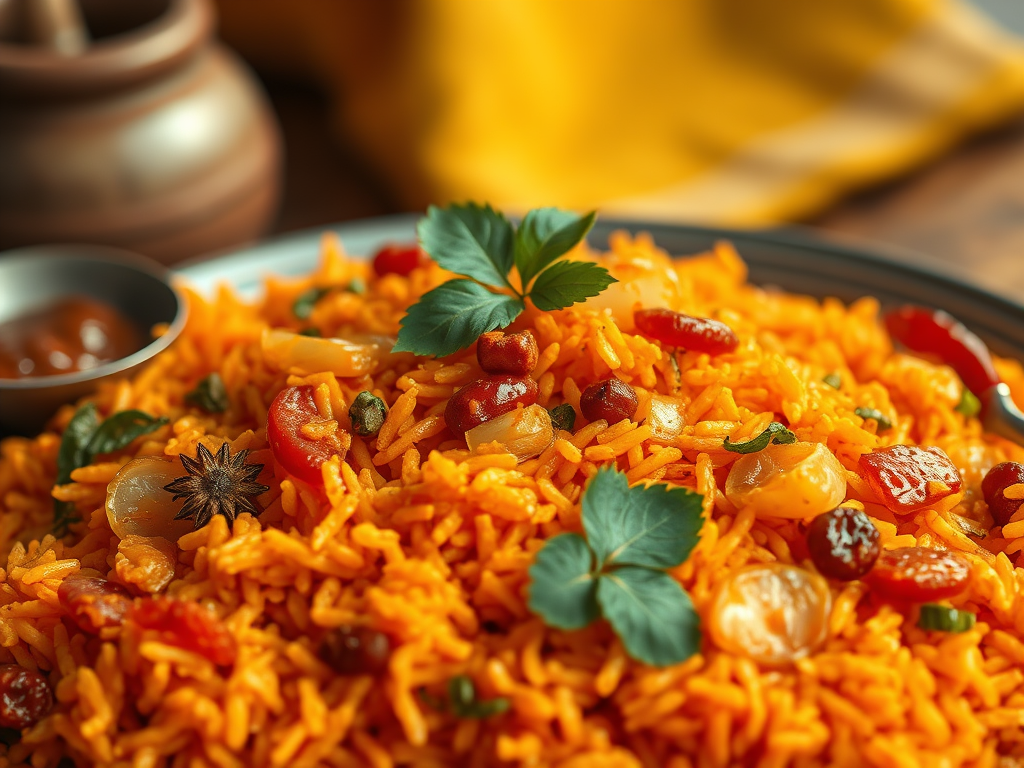
Jollof rice is a beloved West African dish consisting of rice cooked in a rich tomato-based sauce with onions, peppers, and a complex blend of spices. The rice absorbs the sauce as it cooks, taking on a distinctive orange-red color and intense flavor.

The dish typically includes garlic, ginger, thyme, curry powder, and sometimes Scotch bonnet peppers for heat. Regional variations exist – Nigerian Jollof often uses long-grain rice and a smokier flavor, while Ghanaian Jollof tends to use jasmine rice and a different spice profile.

Jollof’s origins are traced to the Wolof people of Senegal, where it was known as “thieboudienne.” It spread throughout West Africa during the Mali Empire’s trading period. Today, it’s a source of friendly rivalry between West African nations, particularly Nigeria and Ghana, over who makes the best version.

The dish is essential at celebrations and gatherings, from weddings to family dinners. Its popularity has spread globally, becoming a symbol of West African cuisine and cultural identity.

Detroit Pizza

Detroit-Style Pizza: Motor City’s Square Slice Revolution

In the pantheon of American pizzas, Detroit-style stands apart – a testament to industrial ingenuity and the city’s automotive heritage. Born in the post-war boom of the 1940s, this distinctive square pie first emerged at Buddy’s Rendezvous, where automotive parts trays, originally used to store small machine parts, were repurposed as pizza pans. These blue steel pans, with their high sides and excellent heat conductivity, would become the cornerstone of a new pizza tradition.

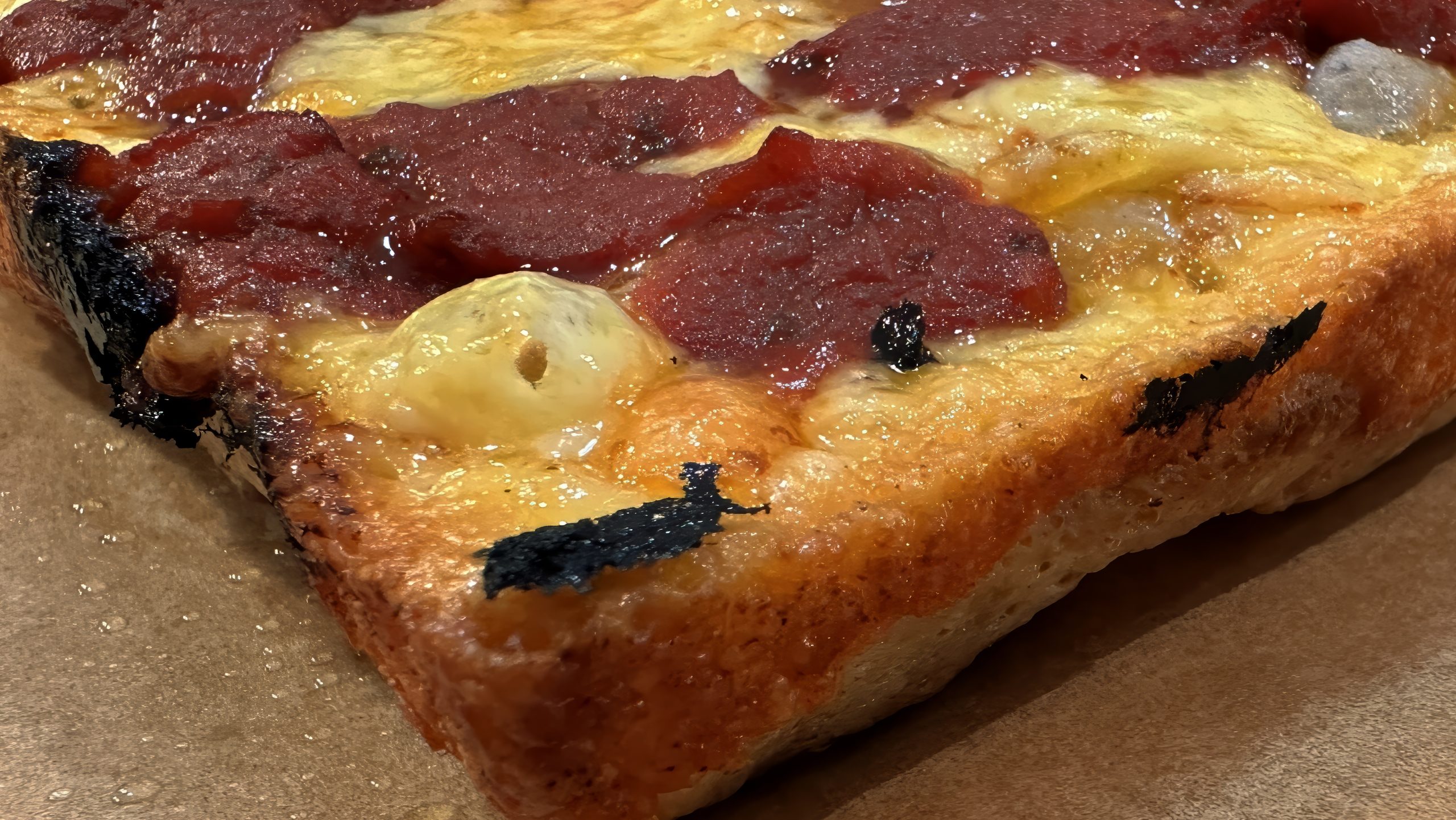
What sets Detroit-style pizza apart is its architectural approach to layering. Unlike traditional pizzas, it begins with a thick, high-hydration dough that, when baked, creates a light, airy crumb structure reminiscent of focaccia. The high edges of the industrial pans allow the dough to climb during baking, creating a caramelized crust that pizza enthusiasts call “the crown.” This crust, when properly executed, offers a satisfying crunch that gives way to a chewy interior.

Perhaps most iconoclastic is the layering sequence. Wisconsin brick cheese, a semi-soft cheese with a high butterfat content, is cubed rather than shredded and spread edge to edge. During baking, the cheese melts into every corner of the pan, creating the signature caramelized edges that Detroit pizza is famous for. The sauce, rather than forming the base, is typically applied last in thick, bold stripes across the top – a technique known as “racing stripes” in homage to the city’s automotive culture.

This reversal of the traditional pizza construction isn’t mere novelty. The cheese-first approach allows the fats to protect the dough from becoming soggy, while its direct contact with the hot pan creates a lacy, crispy cheese crust that has become the style’s hallmark. The late application of sauce ensures it remains bright and vibrant, providing a fresh contrast to the rich, caramelized underpinnings.

The style remained a regional specialty for decades, beloved in Michigan but relatively unknown elsewhere. However, in the past decade, Detroit-style pizza has emerged as a national phenomenon. Artisan pizzerias across the country now offer their interpretations, while major chains have introduced Detroit-style options to their menus. This expansion hasn’t diluted its character – if anything, it’s strengthened the appreciation for the technical precision required to achieve those perfectly caramelized edges and airy crust.

Detroit-style pizza embodies its city’s spirit – practical in its origins, innovative in its execution, and unapologetically bold in its presentation. It’s a reminder that great food often emerges from the intersection of necessity, available materials, and the creative spirit of working-class communities. In every pan-formed corner and racing stripe of sauce, you’ll find a slice of Detroit’s industrial heritage, transformed into something uniquely delicious.

I’ve always been a fan of Sicilian pizzas – especially the sweet sauce that usually accompanies it. The issue here is that it’s so hit and miss when it comes to local pizzerias. There was a spot where I used to live called Joe’s pizza that crushed the Silician pie. I used to crave it and sometimes, even after I moved 40 minutes away, I’d swing back and get it just to scratch that itch. I haven’t been able to find a good Sicilian pizza around me so I’ve been tinkering with different combos of dough, sauce, and cheese to try to recreate that memory of the perfect square slice.