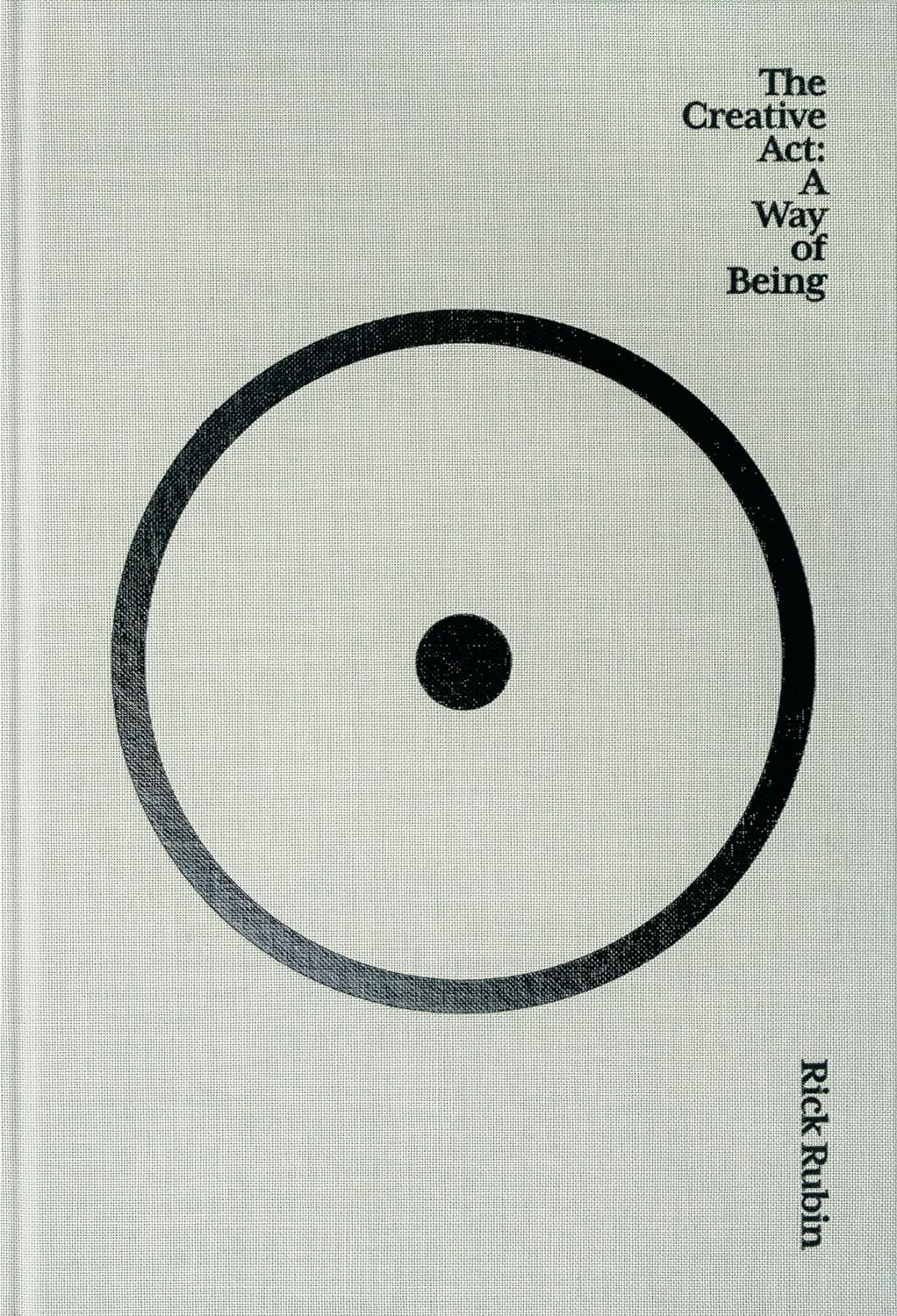
Rick Rubin – The Creative Act: A Way of Being

You know those zen masters who somehow manage to say profound things while sounding like they’re talking about what they had for breakfast? That’s Rick Rubin for you. The legendary music producer (who’s worked with everyone from Johnny Cash to Jay-Z) has written a book that’s essentially a meditation on creativity disguised as a series of fortune cookies. And I mean that in the best possible way.

Let’s get one thing straight – if you’re looking for a behind-the-scenes tell-all about how Rubin convinced the Beastie Boys to ditch their leather pants, or how he got Black Sabbath to sound like Black Sabbath again, this isn’t that book. Instead, what you get is something far more valuable: a philosophical guide to unleashing your creative potential that’s so simple it’s profound, and so profound it’s simple.

The book is structured as a series of short chapters, each focusing on different aspects of the creative process. It’s like a choose-your-own-adventure book for your artistic soul, except every path leads to some form of enlightenment. Or at least a really good idea for your next project.

Rubin’s central thesis is that creativity isn’t something you do – it’s something you are. It’s less about technique and more about awareness. He suggests that the creative act is less about forcing something into existence and more about becoming receptive to what’s already there. It’s like he’s teaching us to be creative by teaching us how to get out of our own way. As someone who regularly trips over their own mental furniture, I found this perspective particularly refreshing.

One of the book’s most compelling ideas is what I like to call the “cosmic radio station” concept. Rubin suggests that creative ideas are always broadcasting, like radio waves, and our job is simply to tune in to the right frequency. It’s a beautiful metaphor that makes the creative process feel less like pulling teeth and more like adjusting an antenna. Though I must say, some days my antenna feels more like a coat hanger wrapped in tinfoil.

Throughout the book, Rubin emphasizes the importance of process over product. He argues that true creativity comes from a place of playful experimentation rather than rigid goal-setting. It’s about embracing uncertainty and treating every creative endeavor as an experiment rather than a test. As someone who once spent three hours deciding on the perfect font for a grocery list, this was both a relief and a challenge.

What’s particularly striking about the book is its universal applicability. Whether you’re a musician, writer, painter, or someone who arranges their sock drawer with artistic flair, Rubin’s insights apply. He strips creativity down to its essential elements: observation, experimentation, and the courage to follow your curiosity.

The book also tackles the thorny issue of creative blocks, though Rubin might argue that there’s no such thing. Instead, he suggests that what we call “blocks” are actually opportunities for deeper exploration. It’s like when you hit a wall while jogging – maybe it’s not the wall that’s the problem, but your relationship with walls. (Yes, I’m starting to sound like him now. It’s contagious.)

One potential criticism of the book might be its somewhat abstract nature. If you’re looking for specific techniques or step-by-step guides, you might find yourself frustrated. But that’s kind of the point. Rubin isn’t giving us a map; he’s teaching us how to navigate by the stars.

The Creative Act isn’t just a book about making art – it’s a book about being alive to the possibilities around us. It’s about developing a practice of attention and curiosity that enriches not just our creative work, but our entire experience of being human. Rubin has managed to write something that’s simultaneously a creativity guide, a philosophical treatise, and a spiritual handbook, all while maintaining the casual air of someone explaining how to make a really good cup of tea.

In conclusion, The Creative Act is like a Swiss Army knife for the soul – multi-functional, surprisingly simple, and invaluable once you learn how to use it. Rubin has created something special here: a book that doesn’t just inform but transforms, assuming you’re willing to sit with its ideas and let them work their magic.

While it might not give you the secret formula for producing a platinum record (sorry, aspiring music moguls), it offers something far more valuable: a way of seeing the world that makes creativity not just possible but inevitable. Just don’t expect to be the same person you were when you started reading it. As Rubin might say, that’s kind of the point.

Rating: ⭐⭐⭐⭐½ out of 5
Perfect for: Artists of all stripes, creative professionals, and anyone who’s ever stared at a blank page and wished it would stare back.
Not for: People looking for technical how-tos or industry gossip.
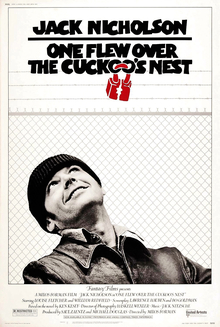

One Flew Over The Cuckoos Nest

When Your Prison Escape Plan Needs a Second Draft

Ever had one of those days where you try to dodge work by checking yourself into a mental hospital? No? Well, meet Randle Patrick McMurphy, a guy whose attempt to escape manual labor makes “quit your job and start a pottery business” look like a solid life choice.

McMurphy (played by Jack Nicholson, in a role that probably had method actors everywhere wondering if they should also get themselves committed) isn’t crazy – he’s just crazy like a fox who really didn’t think his plan through. After faking mental illness to dodge prison work duty, he finds himself in a psychiatric ward run by Nurse Ratched, a woman whose bedside manner makes Darth Vader look like a customer service trainer.

The ward is divided into two groups: the Acutes (potentially curable patients) and the Chronics (permanent residents who make the furniture look dynamic). Among the Acutes, we’ve got Billy Bibbit, whose stutter would give The King’s Speech’s Geoffrey Rush job security; Dale Harding, a man so deeply closeted he probably has winter coats in there; and Charlie Cheswick, whose emotional regulation makes a toddler at Toys “R” Us look zen. The Chronics include Chief Bromden, a Native American giant who’s perfected the art of playing deaf and mute – basically the world’s tallest mime.

McMurphy bursts into this environment like a food fight at a wine tasting. He immediately starts questioning everything: Why can’t they watch the World Series? Why does the ward’s music sound like elevator muzak composed by depressed snails? Why do their group therapy sessions feel like Twitter arguments in slow motion?

His battle with Nurse Ratched escalates from minor skirmishes over card games and TV privileges to full-scale warfare. It’s like watching a chess match where one player insists on using the pieces to act out scenes from WWE. McMurphy’s shocking discovery that many patients are there voluntarily leads to the greatest “wait, what?” moment since someone first explained cryptocurrency.

The plot thickens faster than institutional oatmeal when McMurphy organizes a ward party that makes your average college dorm shindig look like afternoon tea with the Queen. He smuggles in women and alcohol, and even gets Chief Bromden to break his silence – turns out the big guy was basically playing the world’s longest game of charades.

But because we can’t have nice things in this ward, everything goes sideways faster than a cafeteria jello cup. Billy Bibbit’s post-party encounter with Nurse Ratched proves that some people shouldn’t be allowed to weaponize guilt – it’s like watching your mom, your therapist, and your high school principal team up for an intervention, with tragic results.

The Verdict

What I Love:

  • Jack Nicholson’s performance, which makes other movie rebels look like hall monitors
  • Louise Fletcher turning passive-aggressive behavior into an Olympic sport
  • A supporting cast that could make group therapy actually worth attending
  • Direction so good it probably got Miloš Forman banned from hospital administration meetings
  • The most compelling argument against institutional healthcare since the invention of leeches

What Could’ve Been Better:

  • Might make you suspicious of every nurse offering medication
  • Will ruin your plans to fake mental illness to escape prison
  • Likely to make your next doctor’s visit more anxiety-inducing than it already was

This film swept the Academy Awards like Nurse Ratched sweeps away contraband cigarettes, winning all five major categories. It’s a masterpiece that will make you laugh, cry, and seriously reconsider any plans to avoid manual labor through institutional commitment.

Rating: 5 out of 5 suspiciously calm orderlies

P.S. – If you ever hear someone sweetly say “medication time,” run. Just run.

NY Giants vs. Minnesota Vikings

Viking 28, Giants 6

I don’t even know where to start with this game. It was the first game of the season and there was much pomp and circumstance for the Giants 100th season. They had on.. What could charitably be called a throwback uniform and I’m not sure what was worse the play on the field or those uniforms.

I suspect Metlife stadium was cursed at some point in the last few years by an angry witch or warlock because it defies belief that the JETS and the Giants are this bad. I’m not even a Giants fan and I was getting angry at how bad the Giants were playing. I mean that pick six from their own 5 yard line was just a signal of how the season was going to progress (although in true Giants fashion they won a few games at the end to drop out of the top of the draft)

In this case I had nicer seats so at least I could enjoy this debacle from the comfort of a padded chair and with an open bar and free food but man was the football product on the field terrible. Watching Jets castoff Sam Darnold tear it up was adding insult to injury – what could have been if the organization wasn’t so inept.

We did a bit of tailgating – hanging out in the lot and enjoying some fresh cut Philly cheesesteaks and some craft beers to help get us into the mood to watch terrible football. Metlife stadium continues to be the most boring stadium in all of sports and seeing it decked out in Giants blue instead of the Jets green I’m used to was pretty neat but overall it had nothing notable about it at all. It’s amazing to me how they decided that THAT was the design they were going to go with.

I remember seeing architecture mockups of what a new Jets stadium in Manhattan would look like and being really impressed with the designs. They opted to not do that, return to a partnership with the Giants and build a stadium with all the panache of a soviet housing block.

Still – it as a nice day and we were watching a football game with lots of food and drink so it still was a good day. I mean most of the fans left in the third quarter to beat the traffic and I kind of wish we were one of them as getting out of the stadium lots is a 40 minute endeavor sometimes.

https://www.nfl.com/games/vikings-at-giants-2024-reg-1?active-tab=highlights

Goal Met: Dopamine Detox

So.. I listen to a lot of podcasts and something that kept popping up across some of them was this idea of a dopamine detox. A dopamine detox is basically hitting the reset button on your brain’s reward system. Think of dopamine as your brain’s “feel good” chemical – it spikes when you do anything pleasurable, from scrolling social media to eating junk food. The problem is, we’re constantly bombarding ourselves with these quick dopamine hits in our modern world, which can make normal activities feel boring and unsatisfying.

During a dopamine detox, you temporarily cut out highly stimulating activities – things like social media, video games, excessive Netflix, or processed foods. It’s like turning down the volume on life’s constant excitement to help your brain recalibrate. When you’re constantly chasing these high-dopamine activities, it’s similar to turning up the volume on your headphones – eventually, you need it louder and louder to feel the same effect.

The benefits kick in when your brain adjusts to lower stimulation levels. After a detox (usually lasting anywhere from 24 hours to a week), people often report better focus, more enjoyment from simple activities, improved mood, and better impulse control. It’s not about permanently giving up enjoyable things – it’s more like pressing pause to help your brain remember how to find pleasure in everyday experiences. Just imagine how much sweeter that first bite of chocolate tastes after not having any for a week.

So I looked at all the things in my life that fall under the dopamine bucket and I just cut them out for 7 days. No social media, no movies/shows or video games, turning off all notifications on my phone, no reddit, no YouTube, no sweets, fast food, or processed junk food. Living a spartan lifestyle as off the grid as possible (with the exception of screens for work – but work emails don’t hit those dopamine receptors like personal stuff)

It was.. actually pretty difficult. My brain actively fought me on this trying to sabotage me by overriding my conscious thought and steering me towards something sweet, or social media. Knowing this is how it sometimes happens I took steps by blocking all the sites on my router for my devices and removing any tempting foods from easy access (hard to do with kids, but I managed)

Once I made it to 7 days I did start to notice some differences in my mood – I was more even keeled and when I did partake of something that creates a dopamine hit it had a bigger reaction for me.

I’m not much for such a Spartan lifestyle so after 7 days I reintroduce some things back into my life but the one I didn’t was reddit. I realized that I doom scrolled reddit in an echo chamber of just depressing stories and angry people. I feel so much more optimistic now about things and don’t miss Reddit at all – and I genuinely believe my mental health is better now that I’m not constantly bombarded with negativity.