Worldwide Food Tour – Jamaica

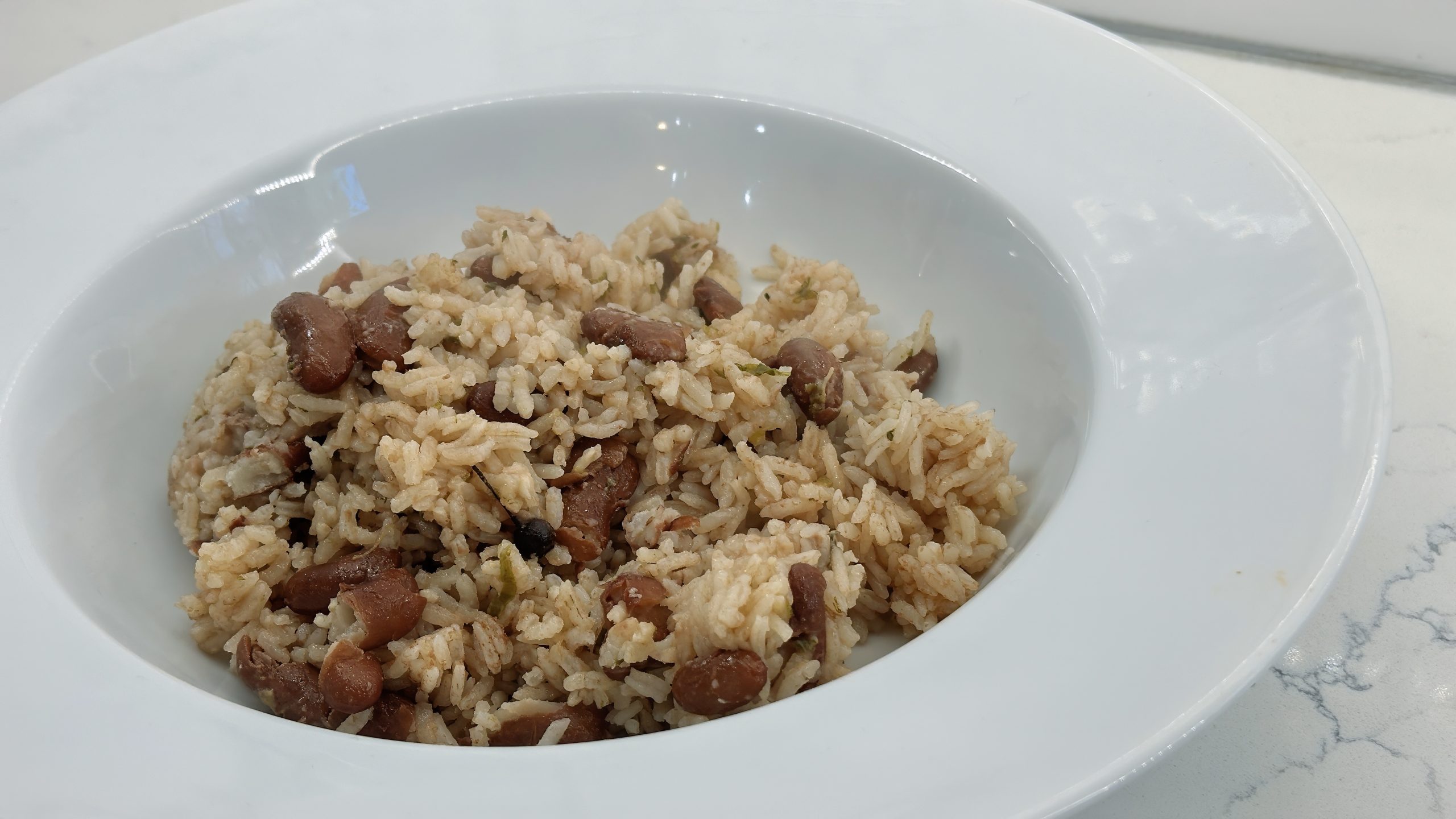
Jamaican rice and peas is a beloved staple of Caribbean cuisine, though interestingly, the “peas” in question are actually red kidney beans. This hearty dish combines rice and beans with coconut milk, giving it a rich, creamy texture and subtle sweetness that perfectly complements its savory elements.

The dish is flavored with aromatic ingredients including fresh thyme, scallions, garlic, and Scotch bonnet peppers (which are usually left whole to impart flavor without too much heat). A key ingredient is allspice (known as pimento in Jamaica), which adds a warm, distinctive flavor. The combination of coconut milk and these seasonings creates the dish’s characteristic aromatic and flavorful profile.

Traditionally served on Sundays and at special occasions, rice and peas has deep cultural roots tracing back to the days of slavery. The dish is believed to have West African origins, adapted by enslaved people using available Caribbean ingredients. The use of red kidney beans rather than black-eyed peas (which were more common in West Africa) represents this adaptation to local ingredients.

The dish is so fundamental to Jamaican cuisine that it’s often called “coat of arms” rice because of its ubiquity on Sunday dinner tables. While it’s traditionally a Sunday meal, it’s now enjoyed throughout the week and is a perfect accompaniment to other Jamaican dishes like jerk chicken, curry goat, or oxtail stew.

Fun fact: despite the common substitution of kidney beans, some traditional recipes still use pigeon peas (known as gungo peas in Jamaica), particularly around Christmas time, when they’re in season.

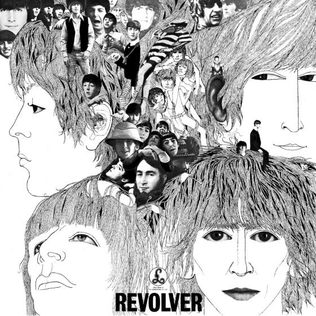
The Beatles – Revolver

The Beatles’ Psychedelic Revolution

Released: August 5, 1966

In the sweltering summer of 1966, The Beatles unleashed an album that would forever alter the landscape of popular music. “Revolver” isn’t just a collection of songs—it’s a declaration of artistic independence, a middle finger to the constraints of conventional pop, and quite possibly the moment when four mop-topped heartthrobs truly became legends.

Gone are the simple love songs and yeah-yeah-yeahs that defined their early career. In their place stands a kaleidoscopic journey through psychedelia, Eastern philosophy, orchestral arrangements, and tape loops that would make an avant-garde composer blush. The album opens with the biting taxation commentary of “Taxman,” George Harrison’s sardonic greeting to the British government, and from there, it’s clear we’re not in Hamburg anymore, folks.

Speaking of Harrison, “Revolver” marks his emergence as a songwriting force within the band. His contributions here are essential, not merely complementary. This is the album where George stopped being “the quiet one” and started being “the one you really need to pay attention to.”

McCartney’s contributions showcase his increasing sophistication as a composer. “Eleanor Rigby” pairs stark imagery with baroque strings, creating what might be pop music’s first legitimate art song. Meanwhile, “Here, There and Everywhere” proves he could still write a love song that would make your grandmother swoon—if your grandmother was into revolutionary chord progressions and sublimely complex vocal arrangements.

But it’s Lennon who pushes the envelope furthest into the bizarre and beautiful. His experiments with tape loops and reverse recordings on “Tomorrow Never Knows” created a template for psychedelic rock that artists are still trying to replicate today. It’s the sound of a man who’s discovered LSD and Indian mysticism, and decided that pop music needed both.

The production, helmed by George Martin, deserves its own chapter in recording history. The innovative use of ADT (Automatic Double Tracking), varied tape speeds, and close-mic techniques created sounds that engineers would spend the next decade trying to figure out. This is the album where the studio truly became an instrument in its own right.

What’s remarkable about “Revolver” is how it manages to be both experimental and accessible. Each sonic adventure is anchored by memorable melodies and harmonies that could only come from The Beatles. They’re pushing boundaries while remembering to bring their audience along for the ride.

The influence of this album cannot be overstated. Without “Revolver,” we might not have had Pink Floyd’s “Dark Side of the Moon,” Radiohead’s “OK Computer,” or any number of albums that dared to treat the recording studio as a playground rather than just a documentary tool.

⭐⭐⭐⭐⭐ (5/5 stars)

Final Thoughts: “Revolver” represents The Beatles at their creative peak—a perfect balance of innovation and accessibility, experimentation and pop craftsmanship. Its only flaw might be that it set the bar so high that rock bands have been struggling to reach it ever since. The album manages to sound both perfectly of its time and completely timeless, a rare feat that cements its place as one of the greatest albums ever recorded. If you only own one Beatles album (though why would you do that to yourself?), make it this one.
Goal Met: Intermittent Fast for 30 days

Now, I’ve done intermittent fasting (IF) a few times in the past, notably during covid out of necessity to stretch the groceries we had as we were only going one once a month to stock up. It’s a simple thing really – just don’t eat breakfast and stop eating at 6:00 pm every night. The food window was 12-6 and you can easily get all the food you need with a healthy lunch, a sizeable snack and dinner.

I had tried it in fits and starts before then – mostly inspired by a few Netflix documentaries I saw on the health benefits of fasting – specifically around autophagy and its role in disease control and weight loss. Armed with the knowledge that it was not just a diet but a way of aligning with how our bodies worked I did it for over two years until about halfway through 2022. I’m not sure what happened but I just kinda gave up on the idea and started eating breakfast again and sneaking in late night snacks.

I realized with this challenge that yes, I’m 50 now and the risk factors for certain diseases start rising – and I should be leaning into IF / periodic long fasts as a way to help control these risk factors. So I made sure there was a section in the goals for both of these fasting methods.

for the IF I used the free version of the zero app to help track the times. It’s pretty simple interface and allowed me to log fasts with a simple click of a button and it also tracked a countdown to my goal and when I started the different phases in a fast (glucose depletion, fat burning, autophagy). I found it helpful to keep me on track as I’d need to physically get my phone and click the button admitting that I didn’t fast as long as I wanted so it was a nice deterrent. I also used the streaks app to track how many days in a row I was doing (I used this app for most of my 30 day / 2 week goals) and getting to see that streak climb was another deterrent. I mean every little bit helps!

The first few days were filled with morning hunger pangs but on the third or fourth day my body remembers this is something we’re doing and I’m fine. I don’t feel hungry until lunch and I stop craving snacks at night. A week in and it was becoming routine again and something that I automatically did without thinking about it too much.

At the end of thirty days I felt a bit better – not much weight was lost (around 5 pounds) but I wasn’t focusing on lowering my caloric intake too much as I was playing basketball and training for a 5K and running a caloric deficit during this time would have impacted those activities.

I know that the things happening in my body during a fast have longer term metabolic effects so I wasn’t expecting some miracle where I suddenly felt 25 again but I was content with the knowledge that I was doing something good for my body.

After the 30 days I continued as best I could – usually doing IF during the week and enjoying a breakfast on Saturday morning (usually an egg sandwich on a bagel). Yes, there were days when I ate a snack late a night or grabbed some breakfast on the way to work because I was really hungry but overall I’m working IF into my life again and I hope to keep it that way for the foreseeable future.