
Goal Met: See All NJ/NY Sports teams

Sitting down and trying to come up with 50 goals for a year is not as easy as you think it would be. Once I got up to 30 or so I started to slow down and really struggle to come up with goals that were interesting and actionable (something you can measure with experience or learning). I had thought maybe seeing if I could cross of a few more baseball stadiums from my bucket list to visit all the stadiums might be a worthwhile goal but with kids there was no way to guarantee I’d find the time to accomplish it since the remaining stadiums are in far flung places like Minnesota or Kansas City. That got me thinking about sports and goals and I landed on seeing every NJ/NY based sports team in a 12 month span.

The first step is filtering out what sports to include, and what teams qualify and which teams to eliminate based on location or other factors. I landed on the big 5  (Baseball, Football, Basketball, Hockey, and Soccer) and constrained the teams to New Jersey and the 5 boroughs of  NYC. This eliminated teams like the Bills and The Islanders as they were outside of this scope. I also decided to not cheap out on seats. While I wasn’t going to spring for the $500 seats I also wasn’t going to sit at the top of the upper bowl. If I was going to do this I was going to find a good seat to enjoy the game from.

The list of teams confirmed I set about looking to fit these games into my already hectic schedule. Times when I was in New York for something else I always checked to see if any teams were playing and a few times I lucked out and was able to attend a game as a tack on for some other things I was doing. I also tried to ensure I went to games when the weather was nice. That meant midsummer for baseball and early in the football season. The first time I failed in this was going in early March to a Red Bull game but that was to see Messi. However, he pulled out of the game last minute due to hamstring issues so I sat in the freezing rain and never got to see him play. The second was going to a Jets game in December – I just couldn’t get any of the earlier dates to work because for some reason they had the Jets on primetime a bunch in the first few months and that conflicted with work and events for the kids.

I really enjoyed this goal. I don’t get to many games due to the costs and logistics so I was just used to watching the games on TV (Which, to be honest, is a great way to experience them – 4K on a large flat screen is a pretty sweet experience) so getting out there in the crowds and being part of that energy was really fun. I didn’t enjoy the cost however. Some sports were cheaper than others but they all were pretty pricey. The food and drink was also ridiculously priced and rarely was good enough to justify that cost. Also getting to these places can be a bit of a challenge as traffic into New York is always a problem and the trains/subways  can take upwards of two hours to get to Queens or the Bronx.

I think I’ll go back to relaxing on the couch with my kids watching the games and cheering in the comfort of my home. I’ll still try to go to a few Yankees games a year because I’m a diehard fan but for all the other teams and sports – I’ll see you on my TV screen.
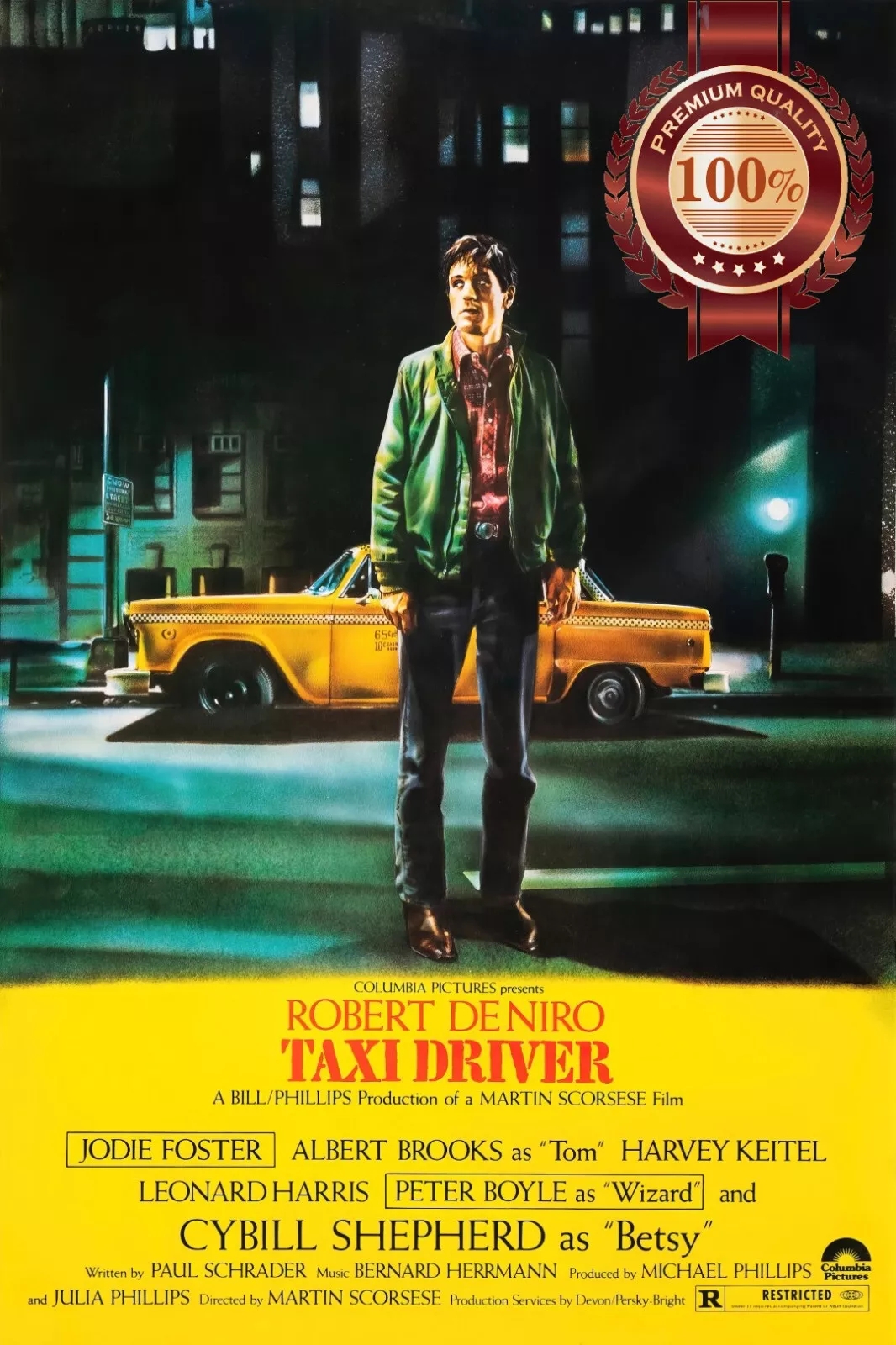
Taxi Driver

Ever had insomnia so bad you decided to become a taxi driver and slowly descend into violent psychosis? Meet Travis Bickle (Robert De Niro), a Vietnam vet whose idea of a self-improvement program makes Fight Club look like a mindfulness retreat.

Travis takes a job driving a taxi on New York’s night shift, which in 1976 was about as relaxing as being a rodeo clown with vertigo. He cruises through a Times Square that makes modern-day Times Square look like Disneyland, carrying passengers that would make an Uber driver’s one-star reviews seem quaint. His journal entries reveal a man who sees the city as a cesspool that needs cleaning, though his idea of urban renewal involves significantly more ammunition than most city planners would recommend.

Our sleep-deprived protagonist becomes fixated on two women: Betsy (Cybill Shepherd), a campaign worker for presidential candidate Charles Palantine, and Iris (Jodie Foster), a 12-year-old prostitute. Because nothing says “I’m totally stable” like taking your first date to a Swedish porn film, Travis manages to spectacularly bomb his chances with Betsy faster than you can say “poor choice of venue.” Pro tip: X-rated movies are generally not considered first-date material, unless you’re dating a film critic with very specific interests.

Meanwhile, Travis’s mental state deteriorates faster than a sandwich left in a hot cab. He starts working out, buying illegal guns from sketchy salesmen (played by Steven Prince, who probably didn’t have to act much), and practicing quick-draws in front of his mirror while delivering the now-iconic “You talkin’ to me?” monologue – which, by the way, is the worst self-help affirmation ever.

His apartment turns into what would happen if an army surplus store had a baby with a pharmacy’s worth of uppers. He straps a gun to his arm using a homemade sliding mechanism that would make Q Branch jealous, shaves his hair into a mohawk that would give any barber PTSD, and generally transforms himself into a one-man army whose recruiting officer really should have checked references.

The plot accelerates when Travis fixates on “saving” Iris from her pimp, Sport (Harvey Keitel, rocking a wardrobe that makes most disco outfits look understated). He also decides that presidential candidate Palantine needs to be assassinated, because nothing says “I’m helping” like attempting to shoot a politician. When that plan fails – turns out Secret Service agents don’t appreciate mohawked guys reaching for their pockets – Travis redirects his violent salvation complex toward Sport and Iris’s other exploiters.

The finale explodes into one of cinema’s most notorious bloodbaths, as Travis storms the brothel in a scene that makes The Shining look like a real estate walkthrough. He eliminates Sport, the hotel manager, and Iris’s client in a sequence that’s both horrifying and weirdly balletic, if your idea of ballet involves multiple gunshot wounds. Travis himself is shot several times but keeps going, demonstrating that crazy beats bullets every time.

The film’s coda is a masterpiece of irony: Travis survives and is hailed as a hero by the media for saving Iris. We see him back at work, now famous among his fellow cabbies, even getting a fare from Betsy who seems impressed by his newfound notoriety. But that final look in his rearview mirror suggests that New York’s most unstable cabbie hasn’t exactly found inner peace.

The Verdict

What I Love:

  • De Niro’s performance, which makes other method actors look like they’re doing dinner theater
  • The grimy portrayal of 1970s New York that makes modern tourists seem adorably naive
  • Bernard Herrmann’s last and possibly greatest score, which sounds like jazz having a nervous breakdown
  • Paul Schrader’s script that reads like Dostoevsky after three days without sleep
  • Michael Chapman’s cinematography that makes you want to take a shower, but in a good way

What Could’ve Been Better:

  • Might make you reconsider using ride-share services
  • Will definitely make you suspicious of anyone who owns multiple guns and hair clippers
  • Could affect tourism to New York (though modern Times Square has done that anyway)

“Taxi Driver” is a masterpiece that manages to be both a character study and a slap in the face to anyone who thinks mental health services are adequately funded. It’s like watching a train wreck if the train were consciousness itself, and the track were society’s failed support systems.

Rating: 5 out of 5 possibly imagined cab fares

P.S. – After watching this, you might want to take the bus for a while.

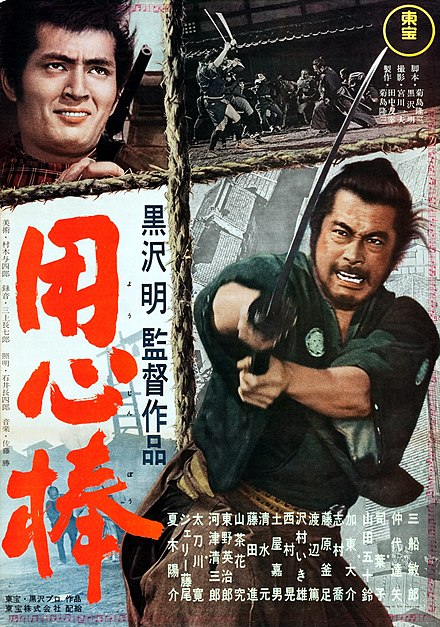
Yojimbo

When a Wandering Samurai Decides to Play Chess with Human Pieces

Ever have that moment when you walk into a town and think, “This place could use a good old-fashioned gang war”? No? Well, meet Sanjuro (Toshiro Mifune), a masterless samurai who does exactly that, though admittedly with more style and a better sword than most of us could manage.

The year is 1860, and our scruffy protagonist wanders into a town that’s about as cheerful as a tax office on April 14th. The first thing he sees is a dog trotting by with a human hand in its mouth. Most people would take this as a sign to try the next town over, but Sanjuro sees it as a career opportunity. Welcome to the world of Akira Kurosawa’s “Yojimbo.”

The town’s situation is more complicated than a corporate org chart. On one side, we have silk merchant Tazaemon and his gang, led by the hot-headed Ushitora, who recently split from his former boss Seibei. On the other side, we have sake merchant Tokuemon and his gang, led by the aforementioned Seibei. Both gangs are about as trustworthy as a chocolate teapot, and caught between them are the town’s few remaining honest citizens, including Gonji, the sake brewery owner who becomes Sanjuro’s primary source of information (and sake).

Our crafty samurai quickly figures out that the best way to clean up this town is to let it get even dirtier first. He approaches Seibei and offers his services as a yojimbo (bodyguard), demonstrating his skills by casually cutting down three of Ushitora’s men. The display is so impressive that both gangs want to hire him, which is exactly what he was counting on.

What follows is a masterclass in manipulation that would make Machiavelli take notes. Sanjuro plays both sides, intentionally leaking information back and forth, driving up his price, and watching as the gangs become increasingly paranoid. He gets hired by Seibei for the princely sum of 25 ryo, only to witness a fascinating display of cheapskate theater as Seibei’s wife suggests paying him after he wins the coming battle (spoiler alert: they never planned to pay him at all).

The plot thickens like a good miso soup when Ushitora’s gang brings in Unosuke (Tatsuya Nakadai), the younger brother who’s been away and has returned with a newfangled pistol. This is the feudal Japanese equivalent of bringing a gun to a sword fight, and it significantly complicates Sanjuro’s plans.

Things really get messy when our antihero helps a kidnapped woman escape back to her family. This act of kindness (his one deviation from calculated self-interest) nearly gets him killed. The gangs discover his double-dealing, and he receives a brutal beating that would have most people considering a career change. Instead, he recovers in hiding, watching as the town descends further into chaos.

The final act is a symphony of violence orchestrated by our now-recovered samurai. Having managed to get the gambling-addicted constable to free a prisoner (which led to said prisoner killing Seibei), Sanjuro sets up the final confrontation. In one of cinema’s most iconic showdowns, he faces off against six men, including the pistol-wielding Unosuke. The scene is a perfect blend of tension, skill, and that special brand of samurai cool that inspired countless filmmakers, including Sergio Leone, who would later remake this film as “A Fistful of Dollars.”

The Verdict

“Yojimbo” is what happens when you take a hardboiled detective novel, dress it in a kimono, and filter it through the genius of Akira Kurosawa. It’s a perfect blend of drama, dark humor, and action that somehow manages to be both deeply cynical and wildly entertaining.

What I Love:

  • Toshiro Mifune’s performance as Sanjuro is a masterpiece of subtle expressions and physical presence
  • The way Kurosawa frames every shot like a perfect photograph
  • The dark humor that runs throughout the film like a bitter thread
  • Masaru Sato’s score, which manages to be both playful and ominous
  • The intricate plot mechanics that click together like a perfect puzzle
  • The influential cinematography that would inspire generations of filmmakers

What Could’ve Been Better:

  • Some of the political machinations might be hard to follow on first viewing
  • The violence, while artistic, might be too stylized for some modern viewers
  • The film’s cynical worldview might be a bit much for those seeking traditional heroics

“Yojimbo” isn’t just a great samurai film; it’s a great film, period. It’s a story that transcends its genre and setting to become something universal – a tale about human greed, corruption, and the occasional need for a mysterious stranger to come to town and clean house. The fact that it manages to be darkly funny while doing all this is just icing on the rice cake.

Rating: 5 out of 5 strategically placed sake cups