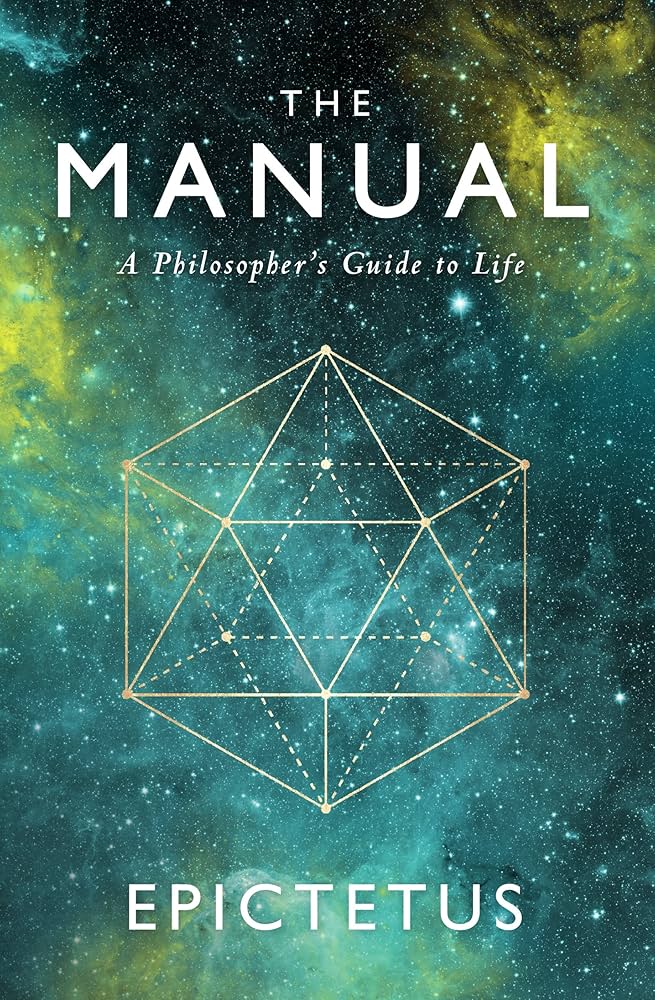
The Manual – Epictetus

Picture this: A former slave becomes one of history’s most influential philosophers, writes nothing down himself, and yet his wisdom survives two millennia to become a self-help sensation among Silicon Valley CEOs and Reddit stoics. That’s Epictetus for you, and “The Manual” is his greatest hits album.

This pocket-sized guide to living well is essentially ancient Rome’s answer to “Don’t Sweat the Small Stuff,” except it deals with big stuff too – like death, loss, and why your neighbor’s noisy chariot should not ruin your day.

Core Message:
The Manual’s central thesis is remarkably simple: we suffer not from events but from our judgments about them. Can’t control something? Don’t waste energy worrying about it. Can control something? Well, get to work then. It’s cognitive behavioral therapy avant la lettre.

The Good:

  • Remarkable practicality for a 2,000-year-old text
  • Brutal efficiency in delivery (no ancient Greek small talk here)
  • Universal applicability of its principles
  • Zero fluff – each passage packs a philosophical punch
  • Surprisingly modern psychological insights

The Critical Points:

  1. The Emotional Suppression Problem: Epictetus sometimes seems to advocate for a level of emotional detachment that borders on the inhuman. Sorry, but your dog died and you’re allowed to cry about it.
  2. Privilege Perspective: Written from the viewpoint of a man who rose from slavery to relative freedom and comfort, it sometimes oversimplifies the relationship between mindset and circumstance.
  3. Deterministic Worldview: The strict fatalism might be hard to swallow for modern readers who believe in social change and collective action.
  4. Gender and Social Issues: Let’s just say ancient Rome wasn’t winning any awards for progressive thinking. Some passages haven’t aged well.
  5. Missing Nuance: The manual’s aphoristic style, while powerful, sometimes leads to oversimplification of complex human experiences.

Standout Passages:
“It’s not things that upset us, but our judgments about things.” (Looking at you, person who just checked their ex’s Instagram)

“Some things are in our control and others not.” (Revolutionary stuff for chronic control freaks)

The Modern Impact:
It’s fascinating how this ancient text speaks to modern anxieties. In an age of endless notifications, social media FOMO, and constant outrage, Epictetus’s message about choosing our concerns wisely hits different. He’s basically telling us to curate our emotional news feed.

The Bottom Line:
The Manual is like a tough-love therapist from the ancient world – it tells you what you need to hear, not what you want to hear. Yes, some of its advice might seem harsh, and yes, some of its cultural context is outdated, but its core insights about human nature and happiness remain startlingly relevant.

Rating: ⭐⭐⭐⭐½ out of 5
Perfect for: Overthinkers, control freaks, and anyone trying to maintain sanity in a chaotic world
Not for: Those seeking warm fuzzies or validation of their daily dramas

Final Thought:
In a world of 300-page self-help books that could be condensed to a tweet, there’s something refreshing about The Manual’s brevity and directness. It’s like getting philosophical tough love from your no-nonsense ancient Roman grandfather. Just remember, like any manual from 2,000 years ago, some assembly of modern context is required.
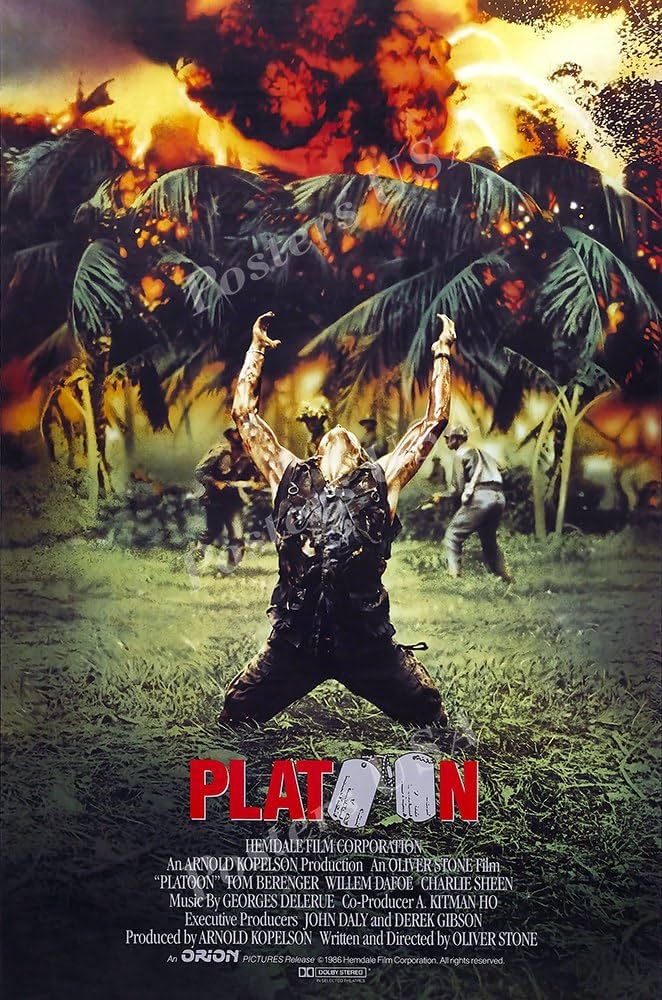

Platoon

If you’ve ever wondered what the opposite of a feel-good war movie looks like, Oliver Stone’s “Platoon” is your answer. This isn’t your grandfather’s World War II glory story – this is Vietnam in all its mud-soaked, morally ambiguous, soul-crushing reality.

Our guide through this green inferno is Chris Taylor (Charlie Sheen, back when that name meant “serious actor”), a college dropout who volunteered for Vietnam out of a naive sense of patriotic duty. Remember those idealistic college essays you wrote about making the world a better place? Yeah, this is like that, except with more leeches, less sleep, and the constant threat of stepping on a land mine.

Taylor finds himself caught between two father figures: Sergeant Elias (Willem Dafoe), the compassionate warrior who hasn’t quite lost his humanity, and Sergeant Barnes (Tom Berenger, sporting a face full of scars and a soul full of darkness), who embodies the war’s dehumanizing effects. If Elias is the platoon’s conscience, Barnes is its survival instinct gone rabid.

The film doesn’t so much unfold as it descends – into madness, into moral corruption, into the heart of darkness (and yes, that Conrad reference is entirely intentional). We watch as Taylor’s idealism crumbles faster than a cookie in a monsoon. The platoon faces not just external enemies but internal ones: fear, paranoia, and the growing realization that maybe the real war isn’t between Americans and Vietnamese, but between different visions of what America should be.

Stone, drawing from his own Vietnam experiences, crafts scenes that feel less like Hollywood set pieces and more like fever dreams. The night ambushes, where muzzle flashes briefly illuminate terrified faces. The village raid that spirals into an atrocity. The cannabis-hazed moments in the “underworld” bunker where soldiers escape through rock music and chemical recreation. It all feels horrifyingly authentic.

The film’s most iconic moment – Elias running from the NVA with his arms raised (spoiler alert: it doesn’t end well) – becomes a sort of crucifixion image, the death of whatever moral high ground America thought it had in this conflict. When Samuel Barber’s Adagio for Strings swells over scenes of destruction, it feels less like a soundtrack and more like a requiem for lost innocence.

What Makes It Hit:

  • The raw authenticity that only comes from a director who’s actually been there
  • Willem Dafoe and Tom Berenger delivering career-defining performances as the angel and devil on Taylor’s shoulders
  • Cinematography that makes you feel the suffocating heat and paranoia of the jungle
  • A supporting cast (including a young Forest Whitaker and Johnny Depp) that brings the diverse reality of Vietnam-era America to life
  • The gradual build-up of tension that makes the explosive moments all the more impactful

What Makes It Miss:

  • Some of the symbolism (good sergeant vs. evil sergeant) can feel a bit heavy-handed
  • Charlie Sheen’s performance, while solid, occasionally feels overwhelmed by his more experienced co-stars
  • The voiceover narration sometimes states themes that the visual storytelling already conveys
  • The pacing in the middle section can drag for viewers expecting constant action

The Final Word:
“Platoon” isn’t just a war movie – it’s an exorcism of America’s Vietnam demons caught on film. It’s brutal, uncompromising, and absolutely essential viewing. While “Apocalypse Now” gave us Vietnam as surreal nightmare and “Full Metal Jacket” gave us Vietnam as dark satire, “Platoon” gives us Vietnam as it was: a meat grinder that took young men’s bodies and souls.

This isn’t a movie you enjoy – it’s a movie you survive, much like the war itself. It’s also one of the most important war films ever made, precisely because it strips away all the glory and pageantry to show war’s true face. When the credits roll, you’ll feel like you’ve been through something significant, even if you’re not quite sure you want to go through it again.

Rating: 5 out of 5 shattered illusions

P.S. Watch for the scene where King (Keith David) explains the reality of who’s fighting this war: “You got your white-bread, college boys like you out here, fighting this war, alongside your poor, black, Spanish, and redneck boys who’d be the first to die.” It’s a moment of clarity that cuts through all the fog of war.