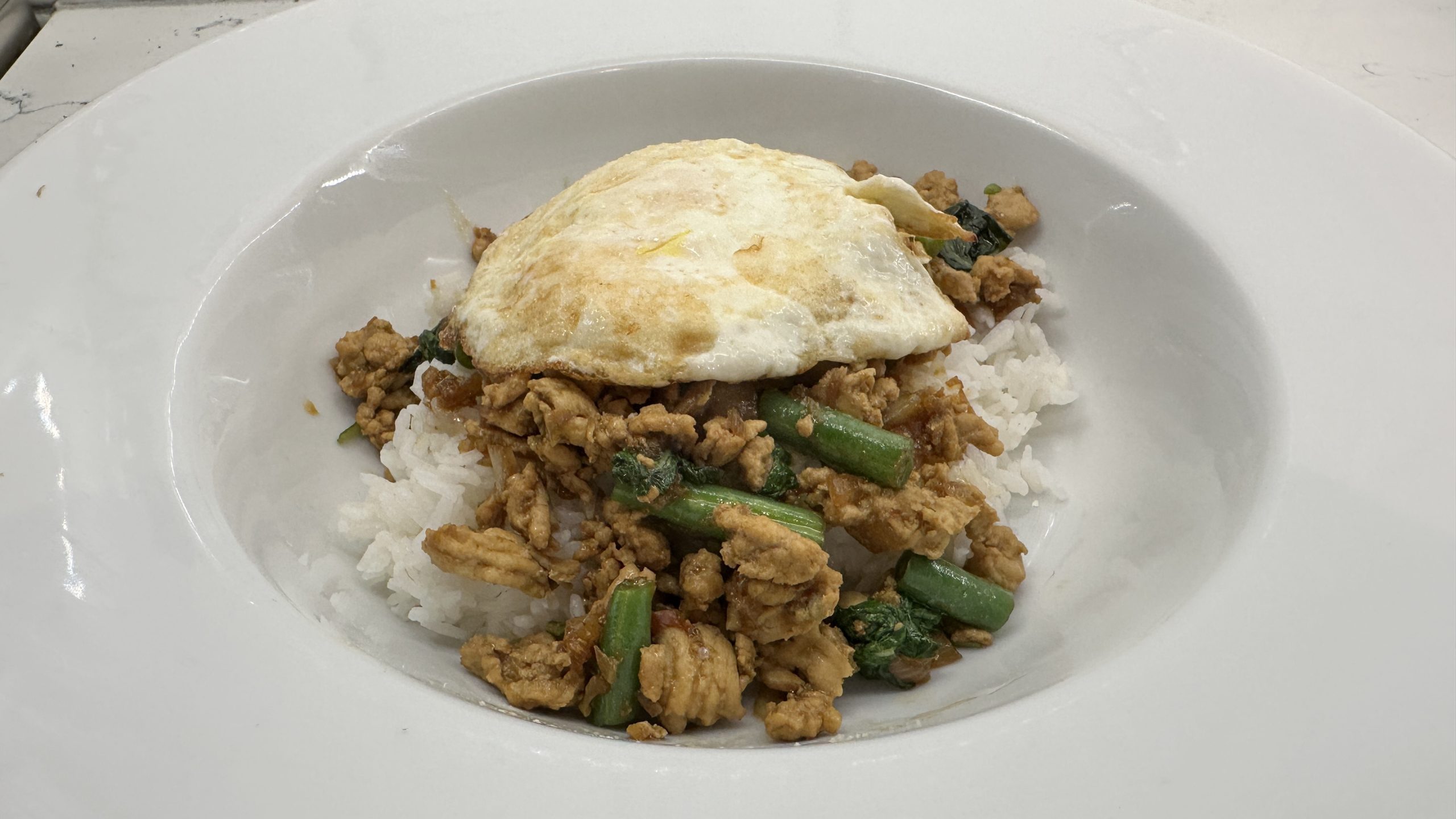
A Dish That Defines Everyday Thai Cuisine
In the world of Thai street food, few dishes are as ubiquitous or as beloved as Pad Kra Pao (ผัดกะเพรา). This fiery, fragrant stir-fry is Thailand’s answer to a no-fuss, quick, and deeply satisfying meal—a dish so popular that it’s often referred to as the “fast food of Thailand”. Whether ordered from a bustling Bangkok street vendor or cooked in a home kitchen, Pad Kra Pao is a staple that embodies the bold flavors and simplicity of Thai cuisine.
Featuring stir-fried meat (usually pork or chicken) infused with the unmistakable aroma of holy basil (kra pao), combined with garlic, chilies, and a savory sauce, Pad Kra Pao is a dish that hits hard with heat, umami, and herbal freshness. It’s typically served with steamed jasmine rice and often topped with a crispy-edged, runny fried egg (kai dao, ไข่ดาว), which balances the dish’s spice with rich, creamy yolk.
The History: A Dish Born from Chinese Influence and Thai Adaptation
Though now a quintessential Thai dish, Pad Kra Pao has roots in Chinese wok-fried cooking techniques. Stir-frying meats with aromatics and soy-based sauces was introduced to Thailand by Chinese immigrants, and over time, local ingredients were incorporated to create something uniquely Thai.
One of the key defining elements of Pad Kra Pao is holy basil (Ocimum tenuiflorum), known as kra pao (กะเพรา) in Thai. Unlike the sweet basil commonly used in Italian cooking, holy basil has a more peppery, slightly anise-like flavor with a distinct clove-like aroma. This gives Pad Kra Pao its signature spicy and herbaceous kick that sets it apart from other Thai stir-fries.
Today, Pad Kra Pao is one of Thailand’s most popular one-dish meals (อาหารจานเดียว, ahan jan diao), loved by office workers, students, and street food enthusiasts alike. It’s the go-to dish for anyone craving bold flavors without the fuss—fast, inexpensive, and bursting with Thai identity.
What is Pad Kra Pao?
At its core, Pad Kra Pao is a stir-fry consisting of a protein of choice, aromatics, seasoning sauces, and the all-important holy basil.
Essential Ingredients:
- Protein: Minced pork (moo sab, หมูสับ) is the most traditional choice, but variations include chicken, beef, shrimp, tofu, or even crispy pork belly (moo krob).
- Holy Basil (Kra Pao): The star ingredient—adds an unmistakable herbal heat. If unavailable, Thai sweet basil or Italian basil can be substituted, though they lack the same depth of flavor.
- Chilies (Prik Kee Nu, พริกขี้หนู): Small but fiery Thai bird’s eye chilies give the dish its characteristic spice.
- Garlic: Pounded together with chilies to create the dish’s aromatic base.
- Oyster Sauce & Fish Sauce: Provide deep umami and saltiness.
- Dark Soy Sauce: Adds a hint of sweetness and color.
- Sugar: Balances the heat and saltiness.
- Fried Egg (Kai Dao, ไข่ดาว): Optional but highly recommended—the crispy edges and runny yolk add richness to the dish.
The magic of Pad Kra Pao lies in its simplicity—ingredients are quickly stir-fried over high heat in a wok, ensuring the flavors meld together while retaining a fresh, vibrant quality.
Tasting Notes: A Perfect Harmony of Heat, Umami, and Fragrance
Pad Kra Pao delivers an explosion of flavors in every bite:
- Spicy: The bird’s eye chilies pack a fiery punch that lingers on the palate.
- Savory & Umami: The combination of fish sauce, oyster sauce, and soy sauce creates a deep, satisfying saltiness.
- Fragrant & Herbaceous: The holy basil provides an unmistakable peppery aroma that defines the dish.
- Rich & Balanced: The crispy fried egg’s runny yolk tames the heat and adds a luxurious texture.
Each element plays a crucial role, resulting in a dish that is bold yet balanced, making it one of the most addictively delicious dishes in Thai cuisine.
How Pad Kra Pao is Served
Pad Kra Pao is always served with rice, making it a complete meal in itself.
- Street-Style Pad Kra Pao – Ordered from a street vendor, usually made to order with your choice of meat, extra chilies, and sometimes topped with kai dao (fried egg).
- Home-Cooked Pad Kra Pao – Slightly milder but equally flavorful, often customized with preferred proteins and spice levels.
- Modern Variations – Some restaurants serve Pad Kra Pao with Wagyu beef, seafood, or plant-based proteins to cater to a wider audience.
While traditionally eaten with just a spoon and fork (no chopsticks!), Pad Kra Pao is a meal that doesn’t need any fancy accompaniments—it’s perfect just as it is.
Beyond Thailand: A Growing International Favorite
Pad Kra Pao has gained popularity beyond Thailand, thanks to its irresistible combination of spice, umami, and freshness. Thai restaurants around the world now offer their take on this classic dish, often adjusting the spice levels for local palates.
However, true Pad Kra Pao lovers know that the best versions are found in Thailand’s bustling street food markets, where the smoky aroma of stir-fried basil and chilies fills the air.