Worldwide Food Tour – Vietnam

A Dish of Comfort and Tradition

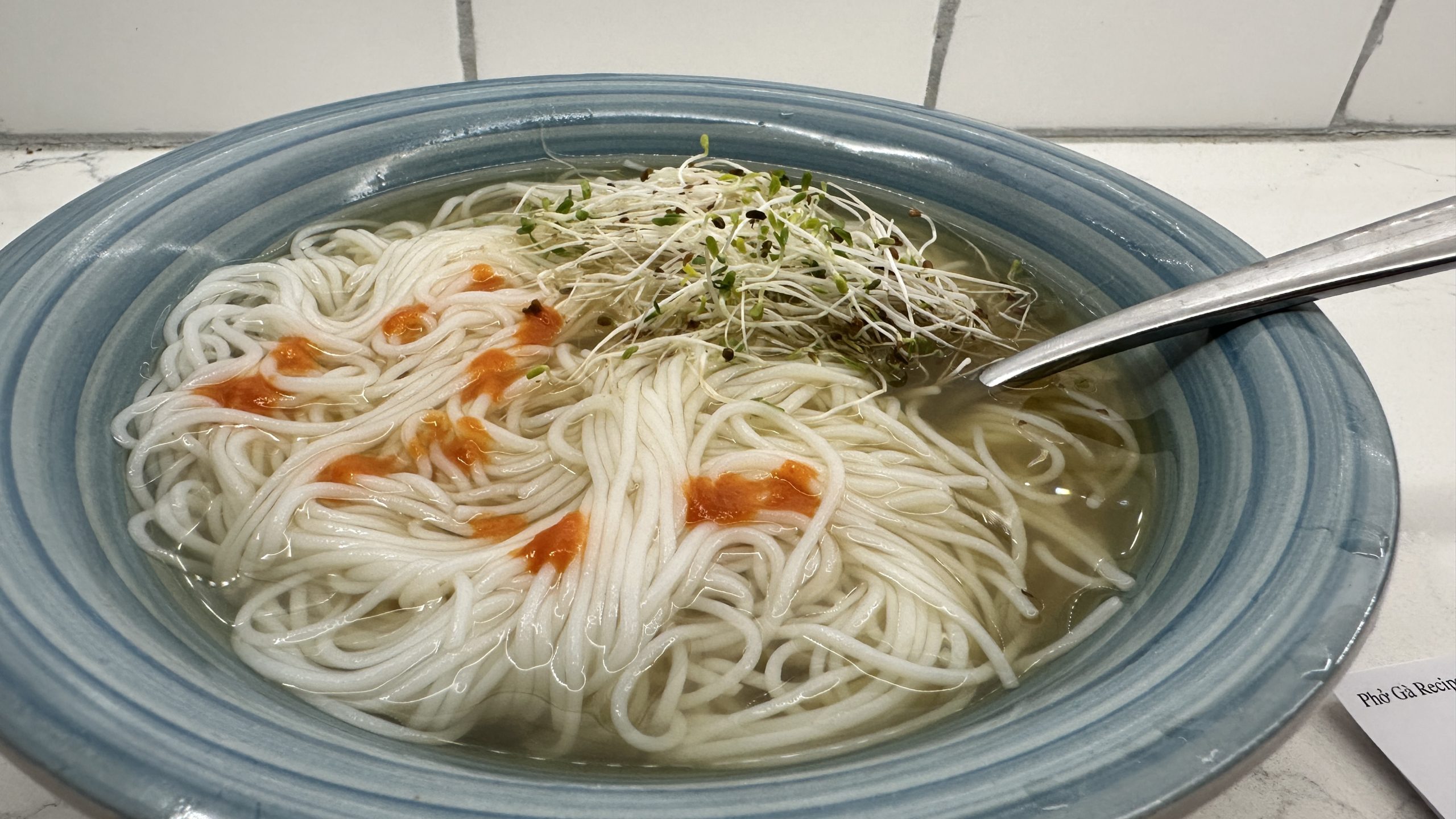
In the heart of Vietnamese cuisine, few dishes are as deeply cherished as Phở (pronounced “fuh”). While Phở Bò (beef pho) is the more internationally recognized version, Phở Gà (chicken pho) holds a special place in Vietnamese households as a lighter, more delicate alternative—one often associated with home-cooked comfort, early morning street food rituals, and the soulful essence of Hanoi.

With its aromatic, crystal-clear broth, silky rice noodles, and tender poached chicken, Phở Gà is both a meal and an experience—a dish that speaks of family, warmth, and tradition.


The History: A Humble Dish with French and Chinese Influences

Phở originated in northern Vietnam in the late 19th or early 20th century, likely influenced by both Chinese and French cooking techniques. The Chinese introduced rice noodles and slow-simmered broths, while the French contributed their love of rich stocks and slow-cooked meats (similar to pot-au-feu, which some believe influenced the name “phở”).

Originally, phở was made with beef, but during wartime and economic hardships, beef became scarce, and chicken emerged as a more affordable protein. Thus, Phở Gà was born—a dish that retains the depth of traditional beef pho while offering a lighter, cleaner, and more fragrant alternative.

Unlike Phở Bò, which requires hours of simmering bones to extract deep beefy flavors, Phở Gà can be made more quickly while still delivering an incredibly rich, aromatic broth.


What is Phở Gà?

At its core, Phở Gà is a chicken noodle soup, but it is far from ordinary. What sets it apart is its delicately spiced, clear broth and the balance of flavors achieved through a carefully crafted combination of aromatics, herbs, and condiments.

Essential Ingredients of Phở Gà:

  1. Chicken (Gà): A whole chicken is poached to create a naturally rich and fragrant broth. The meat is then shredded and added back to the soup.
  2. Rice Noodles (Bánh Phở): Flat, slippery rice noodles (similar to fettuccine) form the comforting base of the dish.
  3. Broth: The heart of Phở Gà, made by simmering chicken with:
    • Charred onion & ginger (for deep, caramelized sweetness)
    • Star anise & cinnamon (for warmth and subtle spice)
    • Cloves & coriander seeds (for added complexity)
    • Fish sauce & rock sugar (to balance umami and sweetness)
  4. Herbs & Garnishes: Fresh toppings like Thai basil, cilantro, scallions, lime, bean sprouts, and chili slices add layers of brightness and crunch.
  5. Condiments: Traditional additions include hoisin sauce, sriracha, and chili-garlic sauce, but purists often prefer to keep it simple to appreciate the broth’s delicate flavors.

Unlike beef pho, which has an earthier, more robust profile, Phở Gà is lighter, more aromatic, and slightly sweeter, making it an excellent option for those who enjoy a gentler yet deeply flavorful broth.


Tasting Notes: A Symphony of Subtle Flavors

A steaming bowl of Phở Gà is a multi-sensory experience:

  • The broth is clear and golden, with a delicate yet profoundly savory depth, kissed with warming spices like cinnamon and star anise.
  • The chicken is tender, juicy, and subtly infused with the broth’s aromatics.
  • The rice noodles are soft yet resilient, absorbing the soup’s rich flavors with every bite.
  • The fresh herbs and lime add a vibrant contrast, cutting through the warmth with citrusy brightness.
  • The optional chili and sriracha provide a fiery kick, for those who crave extra heat.

Each spoonful is a balance of comforting warmth, aromatic spices, and fresh vibrancy, making Phở Gà a dish that soothes the soul while invigorating the senses.


How Phở Gà is Served

Unlike Western-style chicken noodle soups, Phở Gà is assembled in layers just before eating, ensuring each component retains its texture and flavor.

  1. A bed of soft rice noodles is placed in a bowl.
  2. Shredded chicken is arranged over the noodles.
  3. Steaming, fragrant broth is ladled over the top.
  4. Fresh herbs, lime, and bean sprouts are served on the side for customization.
  5. Condiments like hoisin sauce and chili sauce can be added to taste.

Phở Gà is traditionally enjoyed for breakfast or lunch, though it’s comforting enough for any time of day.


Beyond Vietnam: A Global Comfort Food

Thanks to the worldwide popularity of Vietnamese cuisine, Phở Gà has become a global comfort food, found in restaurants from Paris to Los Angeles. While variations exist, nothing compares to the authenticity of a home-cooked or street-side bowl in Hanoi, where vendors have perfected the craft over generations.


Why Phở Gà is the Ultimate Comfort Food

  • It’s nourishing – A warming broth, lean protein, and fresh herbs make it both healthy and satisfying.
  • It’s aromatic and deeply flavorful – The carefully balanced blend of spices and umami-rich broth creates an unforgettable taste.
  • It’s versatile – Can be customized with different herbs, condiments, and proteins to suit individual preferences.
  • It’s deeply tied to Vietnamese culture – A dish that represents tradition, family, and the simplicity of a well-crafted meal.

Phở Gà proves that sometimes, the most humble ingredients—when treated with care and patience—can create something truly extraordinary.

Prelude

Prelude | 15 years ago

CCaldren curled up by the fire as his mother settled into her customary spot in the old wooden chair by the hearth. Sleep tugged at his eyelids, but he fought it, as small boys often do, afraid he might miss something important.

“Tell me a magic story,” he said, stifling a yawn. The stories of the old magic were his favorites—the ones where her voice wove spells of its own, making his imagination come alive.

His mother smiled, but it didn’t quite reach her eyes. “Cal, my dear, it’s time for bed.” She shifted in her chair, reaching for him as if to scoop him up, but he wriggled away.

“I’m not tired! Please?”

She sighed, though her lips still carried a ghost of amusement. “Fine, but only a short one. And you must go to bed after—do you promise?”

“Yes, Mom,” he said solemnly, excitement barely concealed as he settled against the warmth of the fire.

His mother turned toward the window, staring out for a long moment, as though watching something unseen in the night. When she faced him again, her usual playfulness had vanished, replaced by something heavier—something that made Caldren’s skin prickle. Then, she spread her hands in a familiar motion, the one she always used to begin a story of the old magic.

Only this time, her voice was different. This time, it carried a warning.

“Before the Empire came, there were men and women who could tap into magic, a power as vast and untamed as a storm. It was a river that could grant great miracles—or consume those who touched it. Only those with the strongest will could wield it without being burned to ash. There were those who healed, those who built, and those who destroyed. Wars were fought, fire rained from the heavens, and men vied for dominion over magic itself.”

Her green eyes met his, and for the first time, Caldren wasn’t sure he wanted to hear the rest.

“But there were others who twisted the power in forbidden ways—ways so dark I will not speak of them, for even knowledge of such things can stain the soul.”

A chill crept over Caldren’s skin. His tiredness evaporated.

“Mother… what’s wrong?” he whispered.

She stood, pulling back her auburn hair and fastening it in place with practiced ease. Her hands trembled. “I’m sorry, Cal. This story won’t end the way you want it to.”

Three sharp knocks at the door shattered the moment.

Caldren flinched, turning wide eyes to his mother. Out here in the marshlands, visitors were rare—especially at this hour.

Her expression hardened. The air around her shifted, crackling with something Caldren had never felt before. Her green eyes flickered, their depths catching an eerie, azure glow. Shadows danced across her face as she lifted her hands—not to weave illusions as she often did, but with intent.

When her fingertips touched his forehead, a jolt ran through him. A force pressed against his chest, like an unseen tide pushing him backward. Yet, somehow, he hadn’t moved at all.

“Cal, listen to me,” she murmured. “I’ve hidden you from them, but I must focus on maintaining the spell, or they will see through it. I cannot protect you if I do anything else.”

Tears stung his eyes. “They’re here for you, aren’t they? They’re going to take you away.”

His mother’s face twisted with pain, but she nodded.

The Empire’s Seekers. The ones who came for people with magic. The ones who were never seen again.

“I thought we were safe here,” she whispered. “I was wrong.”

More pounding. This time, a voice followed.

“Naeris, open the door. If my men have to break it down, it will go harder on the boy.”

The local watch captain. Elam. Caldren had never understood his hatred—only that it had always been there, simmering beneath the surface.

His mother closed her eyes for a brief moment, then turned to him with urgency. “Behind the cupboard, there’s money. Take it. Go to your uncle in Vaelkaris—he works in the Imperial Library. He will help you.”

The door shuddered under another blow.

Her hands found his face, warm and trembling. “Seek the old magic, Cal. Promise me.”

His breath hitched. The old magic? That was impossible. The Empire had eradicated it long before he was born.

But this was his mother. And she was about to be taken from him.

“I promise,” he whispered.

“Whatever happens, don’t move. The magic will make them overlook you, but you must stay still.”

The door finally gave way, crashing open. Elam strode in, followed by soldiers.

They seized his mother, binding her arms. She didn’t resist. Didn’t fight. Just watched them, defiant, as they pulled a hood over her head.

Then the Seeker entered.

Tall, gaunt, dressed in the Empire’s midnight-blue uniform. He walked with a slight limp, his polished boots whispering against the wooden floor. But it was his eyes that made Caldren shudder—or rather, his lack of them. In their place, silvery metal gleamed, streaked with pulsing veins of red.

Caldren froze. Arcinium. The Empire’s cursed gift to its hounds. If the Seeker looked at him, the magic would not hide him.

“Is this the witch?” the Seeker asked, his voice cold, tinged with an islander’s accent.

“Yes, sir,” Elam replied. Then, to his men, “Search the house. Find the boy.”

Caldren’s breath caught in his throat. His mother had healed these men. His father had trained them before he was sent to die in the Emperor’s wars. And yet, they turned on them without hesitation.

The Seeker’s gaze swept over the room, lingering on the table stacked with books. His mother’s books. Stories of heroes. Of magic. Of things the Empire wanted forgotten.

“Burn it,” he said with a dismissive wave.

A small sound escaped his mother’s lips.

Elam grabbed her arm. “Where is the boy, Naeris? My men have searched the house. I’ll see him sent to the Fifth Legion—he’s literate, so they’ll likely put him with the scribes. A hard life, but at least he will live.”

His mother’s voice was calm. “He is somewhere you cannot follow, Elam.”

Then, she stumbled. Fell to her knees. The soldiers yanked her upright and dragged her into the night.

Elam scowled. “Burn this place to the ground. And find that boy—I want him in chains by sunrise.”

The men rushed to obey.

Caldren crept toward the back of the house, easing the cellar door open with a faint creak. He stilled. Did they hear?

The sound of oil sloshing, of fire crackling, answered his question. No time.

He slipped inside, closing the door behind him. Crawled to the far wall, fumbling for the loose brick. His mother had shown him this tunnel long ago, but he’d never imagined he’d need it. Who would want to hurt them?

He pushed the brick. A faint click. A hidden door swung open.

Smoke seeped in from above. The house was burning.

He crawled into the darkness, gripping the guiding rope. His hands bled from rough stone. His knees scraped raw. The panic clawed at him, whispering of men waiting at the other end—waiting to drag him away.

Then—he slammed into the wall.

The tunnel’s end.

He slumped against the stone, chest heaving. She was gone.

His knuckles throbbed, split and bleeding. He punched the wall anyway.

“Why?” His voice cracked. “What did we ever do to them?

He sank to the ground, pulling his knees to his chest.

And when sleep finally took him, it was not rest.

It was escape.

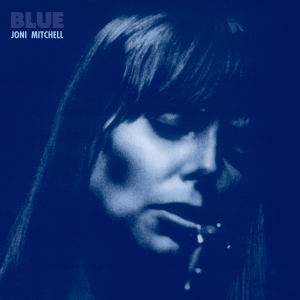
Joni Mitchell – Blue

There are albums that make you feel. And then there’s Blue, which doesn’t just make you feel—it undoes you. It strips you down to your rawest, most vulnerable self, forces you to stare directly into your own soul, and somehow, by the time it’s over, you’re grateful for the experience. There has never been, and likely never will be, an album more emotionally naked than this one. Joni Mitchell didn’t just write Blue—she bled it.

Released in 1971, Blue is the sound of a woman who has nothing left to hide. While rock and folk at the time were still playing around with the idea of confessional songwriting, Joni took it to an entirely new level. She didn’t just write about love—she wrote about love as it actually is: messy, euphoric, devastating, transformative. She didn’t just write about herself—she wrote about all of us. Every heartbreak, every moment of longing, every bittersweet memory—it’s all there, wrapped in her delicate, piercing voice and melodies so achingly beautiful that you can’t help but let them consume you.

It starts with “All I Want,” a song that sounds deceptively breezy until you realize it’s a desperate plea for love, fulfillment, and something more. Then comes “My Old Man,” a love song that refuses to romanticize love—it’s not about grand gestures, it’s about the way someone makes coffee in the morning, the way they exist in your space. And then we hit “Little Green,” and if you know, you know. The moment you realize she’s singing about the daughter she gave up for adoption, the weight of the song crashes down on you like a wave, and suddenly, Blue isn’t just an album anymore—it’s a private diary that you almost feel guilty for reading.

But if the first three songs make you lean in, “Carey” gives you a moment to breathe—a playful, free-spirited travelogue of her time in Greece with a man who was nothing more than a momentary escape. But just when you start to think she’s letting you off the hook, “Blue” arrives, and it’s devastating. It’s sadness distilled into song, the kind of song that doesn’t just express heartbreak—it is heartbreak.

Then there’s “California,” a love letter to home disguised as a road-weary traveler’s rambling thoughts, and “This Flight Tonight,” which captures regret in real-time as she second-guesses every decision she’s made. But the true emotional wrecking ball is “River.” It’s a Christmas song, but not in the way you think—it’s a song about wishing you could disappear, about drowning in your own sadness, about how even the most beautiful times of the year can be unbearable when you’re heartbroken. The loneliness in her voice is so palpable, so real, that even if you’ve never skated away on a frozen river, you feel like you have.

And just when you think you can’t take any more, she closes with “A Case of You” and “The Last Time I Saw Richard.” The former is one of the greatest love songs ever written, a song so intimate and poetic that it feels like it’s being whispered in your ear. The latter is a warning—a bitter, weary reflection on what happens when you let love make you cynical. It’s the perfect way to end an album that has spent the last forty minutes exposing every fragile, messy, beautiful part of the human condition.

What makes Blue one of the greatest albums of all time isn’t just its lyrics, its melodies, or even Joni’s hauntingly pure voice—it’s the fact that no one has ever made something this personal, this real, and this utterly fearless before or since. Artists like Taylor Swift, Brandi Carlile, and countless others have built their careers on the foundations that Blue laid down, but even they would tell you—there’s only one Joni, and there’s only one Blue.

This isn’t just an album. It’s an emotional experience. It’s a mirror. It’s a masterpiece. And if you’ve ever loved, lost, hoped, regretted, or simply felt—then Blue is already a part of you.